


From the moment a child steps into a classroom, unseen forces begin to shape their self-perception and influence their beliefs about who they can become. For many girls, these forces manifest as subtle messages: science is for boys, math is too difficult, or technology is not meant for girls. Even though young girls express an equal interest in science-related careers as boys, they frequently drift away from STEM fields as they grow up. Gender stereotypes do more than limit imagination; gender stereotypes shape futures.
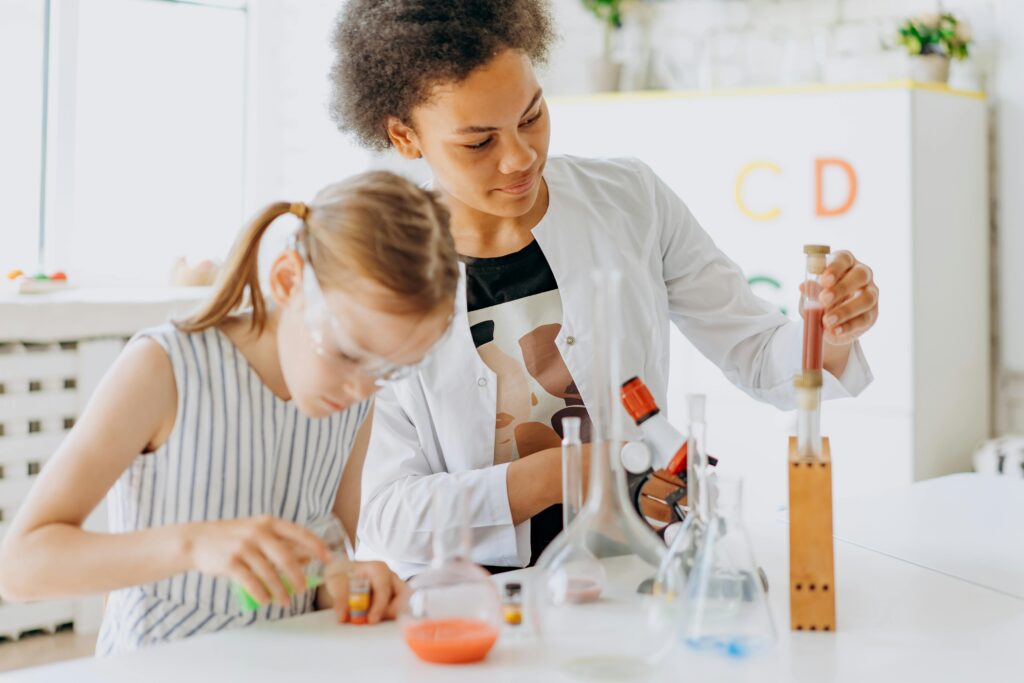
Gender Bias is Pushing Girls out of STEM
Although there has been progress in gender equality, big differences still exist. More than half (54%) of university students in the EU are women, but only 30% study STEM subjects. The gap is even bigger in vocational education (VET), where only 16% of STEM students are women. This is not because of lack of talent or interest, but because society has long pushed girls away from science and technology. When women do enter STEM jobs, challenges remain. In the EU, 41% of scientists and engineers are women, but they are still few in top and technical positions where important decisions are made. In the digital world, the gap is wider: only 1 in 5 ICT specialists are women, and just 24% of self-employed professionals in technical fields are women.
These numbers show more than just data; they show missed opportunities. When half the population is discouraged from fully participating, it affects economic independence, leadership chances, and innovation. Fighting gender bias is not only a matter of fairness, but of social and economic urgency.
EU’s Roadmap for Reducing Gender Bias in STEM
The European Commission is actively working to address the gender gap in STEM through strategic initiatives, regulations and funding programs designed to increase female participations at educational, research and employment levels.
Recognizing that innovation cannot flourish without inclusion, the European Union has elevated gender equity in STEM from a mere goal to a central pillar of its policy agenda. Since 2003, She Figures has provided data and analysis every three years on indicators of gender equality in R&I. This information offers policymakers and stakeholders empirical evidence and insights to support the development of targeted strategies aimed at advancing gender equality in R&I. Gender considerations are now integrated into every Horizon Europe project. Furthermore, all public bodies, higher education institutions, and research organizations participating in an HE project are mandated to have a Gender Equality Plan.
Gender gaps must be closed beginning with education. The EU’s STEM Education Strategic Plan sets ambitious targets for 2030, aiming to increase overall STEM enrolment while significantly boosting female participation. By then, at least 25% of STEM students in vocational education and training (VET) should be women, 40% of STEM students at the tertiary level should be female, and one in three students in ICT PhD programmes should be women. To attract more women into the field, the EU have launched various programmes:
- Girls Go Circular. Educational initiative aimed to equip students, especially women, with digital and entrepreneurial skills through free digital education. To date, over 80,000 students have been trained, with 86% of them being women.
- ESTEAM fests. Hybrid workshops where females of all ages gather to enhance their digital and business skills.
- Girls Go STEM will be introduced in October 2025, aiming to draw more women into STEM fields by training 1 million girls by 2028. This initiative will be supported through Erasmus+, the European Universities alliances, the European Alliance for Apprenticeships, digital skills academies, and the EIT.
Innovative Paths: Promoting Female Participation in STEM Through Arts
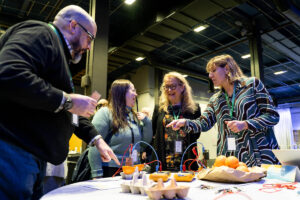
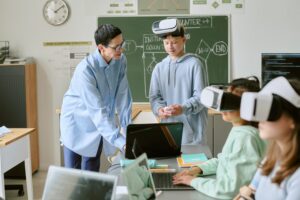
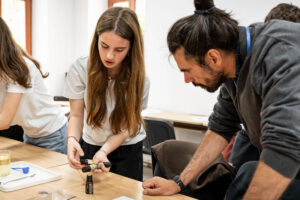
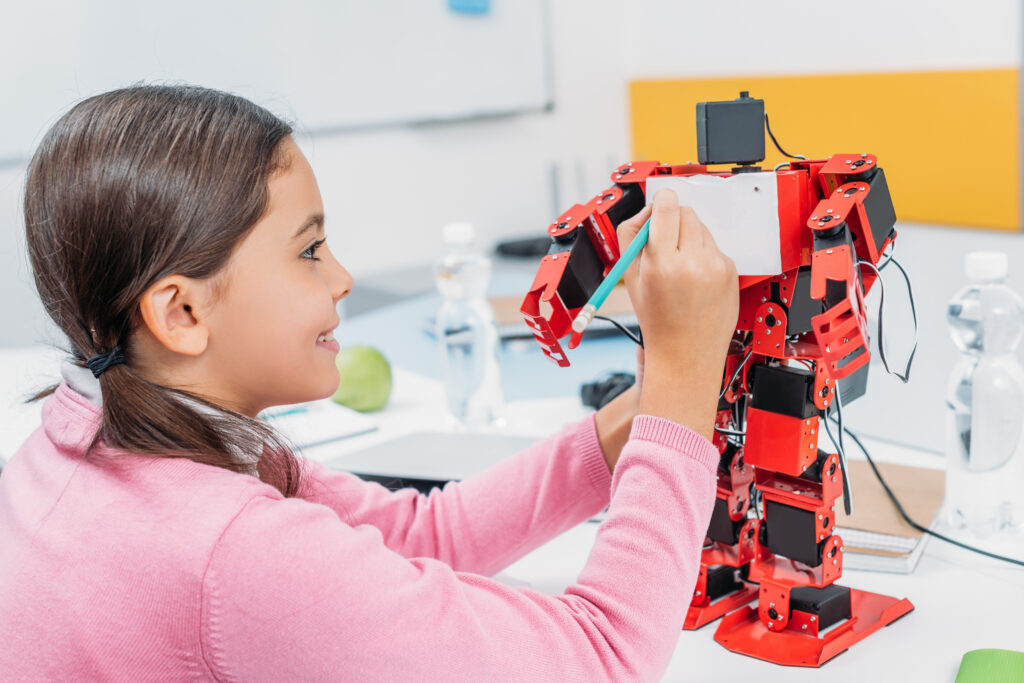
The STEAM approach combines science, technology, engineering, and math with the arts. This method helps get girls interested in STEM fields. It encourages creativity, critical thinking, and teamwork, making STEM subjects more interesting and relatable. By mixing analytical skills with artistic expression, STEAM improves learning and helps challenge gender stereotypes that stop girls from choosing technical careers. Likewise, encourage girls to see themselves as future scientists, engineers, and innovators.
The EU promotes STEAM education by supporting the implementation of the European Manifesto for Gender-Inclusive STE(A)M Education, and by funding projects that boost STEAM. Among these pioneering efforts is STEAMbrace, a project that integrates cultural and creative industries (CCI) as drivers of innovation ecosystems. It combines evidence-based research with creative methodologies to develop sustainable, inclusive, and scalable STEAM education practices, serving as a model for the EU educational landscape.
Through initiatives such as the first European STEAM Congress, which attracted over 150 educators and policymakers, STEAMbrace is actively reshaping how Europe conceptualizes the relationship between artistic creativity and scientific innovation. Furthermore, STEAMbrace established the first coordination network to promote gender-responsive STEAM education at the European level (STEAM Alliance for Europe). It also plans to introduce the “STEAM Week for future women innovators” to showcase the power of integrated STEAM learning in engaging students, particularly girls, in critical thinking, problem-solving, collaboration, and creativity.
Conclusion
The future of science depends on who gets to image it. For too long, girls have been told that STEM is not for them. The EU is working to change that story by investing in gender equality, promoting STEAM education, and supporting initiatives like STEAMbrace. The EU is opening the door for more girls to see themselves as scientists, engineers, and innovators. Inclusion is not just about balance; it is about unlocking the full power of human creativity.