Women in STEM Awards: Celebrating Global Excellence in 2026

When conversations turn to women in Science, Technology, Engineering, and Mathematics, the gender gap and underrepresentation often dominate the narrative. While these challenges remain relevant, Women in STEM awards continue to show a more complete picture—one of progress, excellence, and global impact. In 2026, recognition of women’s achievements across STEM fields is no longer an exception. Prestigious international awards increasingly reflect the reality that women are shaping medicine, artificial intelligence, engineering, and mathematics at the highest level. This article highlights major, globally competitive awards open to all researchers. By focusing on these honours, we underscore the scale and significance of the contributions women in STEM and every discipline it covers. Women in STEM awards in medicine: decoding the human body Some of the most influential medical breakthroughs recognised in recent years belong to women scientists. A landmark moment came with the Nobel Prize in Physiology or Medicine awarded to Mary Brunkow and her team for redefining how autoimmune diseases can be treated. Her work made it possible to selectively deactivate specific immune responses, avoiding the widespread suppression of the immune system that once defined treatment. Recognition continued with the Breakthrough Prize in Life Sciences, where Lotte Bjerre Knudsen and Svetlana Mojsov were honoured for decades of foundational research on the GLP-1 hormone. Their work laid the groundwork for therapies that are now transforming diabetes, obesity, and cardiovascular care worldwide. Germany’s prestigious Leibniz Prize also reflected this momentum. Among the recipients, Maria-Elena Torres-Padilla was recognised for advancing understanding of cell plasticity in early embryo development. Ana Pombo was awarded for pioneering genomic techniques that reveal how DNA’s three-dimensional structure influences gene regulation and disease. Bettina Valeska Lotsch received the prize for developing highly efficient photocatalysts, a key component in next-generation solar energy storage. A true testament of how women in STEM contribute to today’s society. Teaching machines to think: Women leading AI innovation Artificial intelligence continues to define this decade, and women are shaping its most human-centred applications. Cordelia Schmid received the inaugural Archimedes Science Award for her work enabling computers to interpret visual data—technology that now underpins safety systems, image recognition, and autonomous mobility. The Lovelace Medal, awarded by the British Computer Society, went to Mirella Lapata for transforming how machines generate and understand human-like narratives from text and structured data. Regina Barzilay, a Moldovan-born researcher at MIT, was recognised with the IEEE Frances E. Allen Medal. Her AI-driven models for predicting breast and lung cancer risk demonstrate how machine learning can save lives, not merely automate processes. Engineering a sustainable future Among the most visible Women in STEM awards, engineering prizes show how innovation translates into real-world impact. The Queen Elizabeth Prize for Engineering honoured Fei-Fei Li for creating ImageNet, the dataset that accelerated breakthroughs in computer vision and deep learning. At the European level, Marie Perrin received the World Builders Prize at the EPO Young Inventors Awards for her rare-earth recycling technology. Her solution enables the recovery of europium from discarded fluorescent lamps while capturing toxic mercury and reducing mining dependency. Jessica Day and her team at OrganOx secured the MacRobert Award for developing a system that keeps donated livers viable outside the human body, dramatically improving transplant success rates. Meanwhile, roboticist Daniela Rus was awarded the IEEE Edison Medal for her work on collaborative robot networks designed for manufacturing and rescue missions. Women in STEM awards and the power of mathematics Mathematics remains the hidden language behind many scientific advances. Hong Wang received the Ostrowski Prize for her work in harmonic analysis, addressing long-standing challenges such as the Kakeya conjecture. The Blaise Pascal Medal was awarded to Svitlana Mayboroda for mathematical theories explaining wave behaviour in complex materials. The London Mathematical Society also recognised multiple women, including Helen Byrne, Henna Koivusalo, Perla Sousi, and Ewelina Zatorska, for contributions ranging from tumour modelling to probability theory and fluid dynamics. Angkana Rüland, another Leibniz Prize recipient, was recognised for mathematical analysis applied to crystalline structures and advanced medical imaging. Why visibility matters for the next generation Celebrating Women in STEM awards is not only about recognition—it is about visibility. Role models such as Mary Brunkow, Fei-Fei Li, and Daniela Rus make scientific careers tangible for younger generations. Seeing women succeed at the highest level helps dismantle stereotypes and expand aspirations. STEAM education as a path forward Sustained progress requires early support. This is where initiatives like STEAMbrace play a critical role for Women in STEM. By integrating the Arts into STEM education, STEAMbrace promotes creativity, collaboration, and problem-solving—skills that underpin many award-winning careers. Through challenges like menteSTEAM, students move beyond passive learning and engage directly with real-world problems such as pollution and climate change. The initiative offers a powerful incentive: the winning secondary school team will represent Spain at the European STEAMbrace Contest in 2026. Recognition that builds the future Women in STEM awards highlight excellence, but their broader value lies in inspiration. They signal to students, educators, and institutions that innovation thrives through diversity. As education systems continue to evolve, recognising women’s achievements remains essential to building a more inclusive and resilient scientific future. By combining visibility, education, and opportunity, projects like STEAMbrace help ensure that today’s students become tomorrow’s award-winning innovators.
STEAMbrace 2nd annual meeting in Bilbao: Collaboration that shapes the future of STEAM
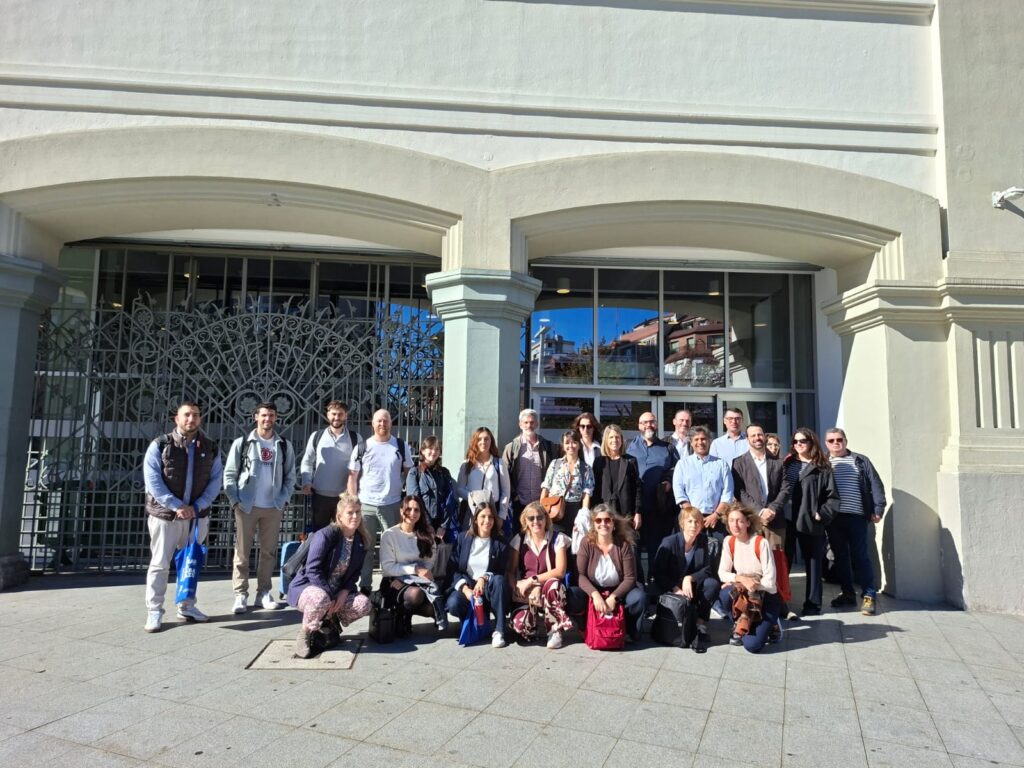
The STEAMbrace 2nd anual meeting in Bilbao brought partners together for a powerful moment of alignment, creativity, and planning. The meeting highlighted how STEAM education blends innovation, culture, and real-world problem-solving, and how collaboration keeps the project moving forward. As a result, partners left with renewed clarity and shared purpose for the year ahead. What the STEAMbrace 2nd annual meeting set out to achieve This meeting was designed to connect workstreams, refine strategies, and prepare for the most active phase of STEAMbrace. It linked teachers, researchers, technologists, and creative practitioners in a single space with one mission: to build a more inclusive, more inspiring STEAM ecosystem for Europe’s young people. Partners reviewed the progress across all work packages and explored the next milestones together. Moreover, they strengthened the collaborative structure that ensures STEAMbrace remains coherent, ambitious, and impactful. With major activities approaching (from pilots to contests to STEAM Week), the STEAMbrace 2nd annual meeting offered perfect timing to synchronise visions, methods, and practical tools. Why STEAM belongs at the centre of these conversations STEAMbrace works at the intersection of science, creativity, technology, and inclusion. That blend was fully visible in Bilbao. STEAM helps turn technical concepts into human-centred learning. Robotics becomes storytelling. AI becomes collaboration. Engineering becomes design practice. In addition, STEAM opens the door to diverse perspectives. This helps reduce gender gaps and ensures more students, especially girls, can see themselves thriving in these fields. Teachers can adapt STEAMbrace activities to their national contexts. Students can prototype ideas, explore labs, and visualise problems creatively. These experiences deepen understanding while building confidence. La Perrera: Where robotics, creativity, and STEAM meet A highlight of the meeting was the visit to La Perrera, a cultural and technological space in Bilbao dedicated to experimentation, robotics, and innovation. The venue served as an ideal backdrop for a project like STEAMbrace, open, collaborative, and future-focused. Partners explored several robotics models, including the globally known robot dog, and learned about the design and engineering behind the creations. Importantly, many of these developments involved brilliant women engineers, reinforcing the project’s goal of increasing the visibility of women in STEAM. La Perrera showed how robotics can inspire students by making technology tangible, playful, and accessible. It also demonstrated how cultural spaces can spark imagination, a key ingredient of STEAM learning. Moving toward the National STEAM Contests and the European final Another major milestone discussed in Bilbao was the upcoming National STEAM Contests. Each partner will organise its own challenge, adapted to local needs and cultures. Later, winners will gather for the European STEAM Contest, a flagship event scheduled for April 2026. These contests encourage creativity, teamwork, and student-led innovation. They also help close gender gaps by making STEAM more attractive, relatable, and visible to girls. The STEAMbrace 2nd annual meeting focused on preparing communication strategies, evaluation criteria, and support materials to ensure the highest participation possible. STEAM Week 2026: A European celebration in progress Partners also advanced preparations for STEAM Week, another major effort planned for April 2026. This event will bring together classrooms, families, stakeholders, and policymakers through activities, workshops, live sessions, and creative challenges. Communication efforts will begin early to ensure that STEAM Week becomes an accessible, engaging, continent-wide initiative. The Bilbao meeting provided clarity on roles, content needs, and media approaches. What students and teachers gain through STEAMbrace Activities aligned with STEAMbrace help young people develop: Clear explanations for complex ideasCreative tools to turn theory into meaningTeamwork skills across mixed groupsConfidence to ask bold, informed questions These skills last because students create, test, and communicate their ideas — not just learn them passively. How STEAMbrace will support the next steps STEAMbrace continues to focus on inclusion, clarity, and reach. We develop resources that help teachers begin quickly. We amplify the work of women role models. We highlight inspiring pilots, national actions, and student projects across Europe. Moreover, we plan youth-friendly content for social media: reels, explainers, and showcases from real classrooms, making STEAM visible in everyday life. Looking ahead: momentum for 2026 and beyond The STEAMbrace 2nd annual meeting marks a new phase for STEAMbrace. With pilots expanding, contests launching, and STEAM Week approaching, the project is entering a period of high activity and high impact. Partners will continue to collaborate, share knowledge, and support teachers and students across Europe as STEAMbrace builds a more inclusive, creative, and connected future for education. STEAMbrace 2nd annual meeting sets the stage for what’s next The STEAMbrace 2nd Annual Meeting in Bilbao showed what happens when creativity, robotics, education, and collaboration meet. It brought partners together, sharpened goals, and set the foundation for the next chapter. Follow STEAMbrace for updates, pilot stories, and youth-ready explainers and join us in shaping the future of STEAM education across Europe.
The rise of STEAM education: Why Arts matter in STEM
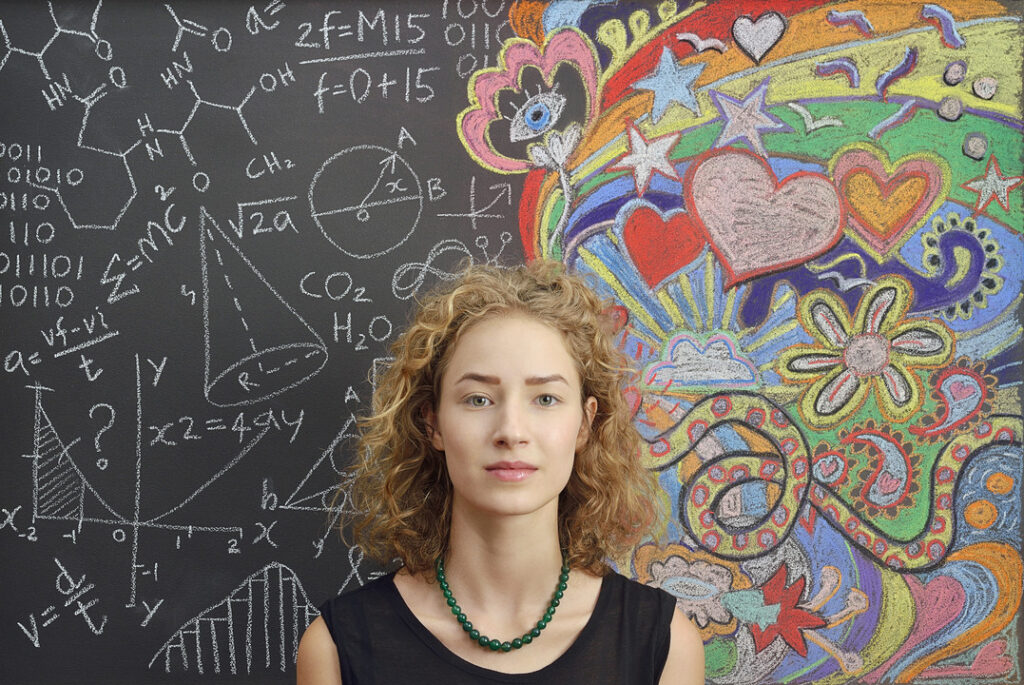
For years, STEM (science, technology, engineering, and mathematics) has been a powerful framework for preparing students to navigate a digital, tech-driven world. But in today’s evolving society, creativity, empathy, and critical thinking are just as vital as coding and calculus. That’s why educators, researchers, and policymakers across Europe are increasingly advocating for STEAM education, a model that integrates the Arts into STEM. By adding the “A” for Arts, STEAM creates space for imagination, diversity of thought, and a more inclusive learning environment. And this shift couldn’t be more timely. What is STEAM education? STEAM education is an interdisciplinary approach that connects artistic and creative thinking with traditional STEM fields. It challenges the outdated notion that science and creativity live in separate worlds. Instead, it recognizes that innovation happens when technical expertise meets design, storytelling, and emotion. Whether it’s using graphic design to communicate climate data, choreographing movements to explain physics concepts, or integrating music into coding exercises, STEAM empowers learners to engage more fully, and more meaningfully, with scientific content. Why the Arts belong in STEM The European Commission’s Horizon Magazine recently highlighted the importance of art inclusion as a way to empower girls in science and close gender gaps in STEM fields. Studies show that when arts are integrated into STEM lessons, girls are more likely to participate, express themselves, and stay engaged. This matters, as many girls report feeling alienated in traditional STEM settings. Moreover, the 2023 STEM Education Report by the European Commission calls for stronger policy efforts and research to support innovative, inclusive, and cross-disciplinary teaching. One clear recommendation: bring the arts into the classroom. STEAM education not only improves student engagement and motivation, but it also helps cultivate the creative problem-solving skills that 21st-century careers demand. How STEAMbrace puts STEAM into action At the heart of this transformation is the Horizon Europe project STEAMbrace, a forward-thinking initiative designed to create inclusive, gender-responsive, and creative learning experiences for students aged 11–18. Through hands-on activities, interdisciplinary challenges, and multilingual resources, STEAMbrace promotes the fusion of scientific knowledge with creative exploration. Here’s how the project brings STEAM to life: Art-infused learning: STEAMbrace pilots encourage students to explore real-world issues using both analytical and creative tools, from designing inclusive infrastructure to training AI through visual storytelling. Gender-sensitive approaches: By integrating the Arts, the project reaches more students (especially more girls) who might otherwise feel disconnected from STEM. Collaborative synergies: STEAMbrace collaborates with projects like STREAM-IT and Road-STEAMer, exchanging strategies to enhance creative pedagogy and boost diversity in education. As one of the project’s key goals, STEAMbrace aims to make STEAM not just a framework, but a mindset, one that welcomes all learners and recognizes multiple intelligences. Results and future outlook In pilot activities across Europe, over 120 students and 9 teachers at II. Primary School Varaždin recently engaged in STEAMbrace workshops that combined science with design, AI, and creative thinking. The feedback has been overwhelmingly positive, highlighting how arts-based activities spark curiosity, increase confidence, and build a sense of belonging in the classroom. Looking ahead, the project is expanding its digital footprint and will soon be launching a TikTok account to reach younger audiences, increasing visibility through creative campaigns, and deepening its collaboration with European partners to influence STEAM policy and practice. Conclusion: STEAM as a pathway to inclusion and innovation Bringing the Arts into STEM isn’t just about adding color to science class. It’s about redefining what it means to learn, to innovate, and to belong. In a world facing complex challenges, our solutions need both logic and imagination. Projects like STEAMbrace demonstrate that STEAM education is more than a trend. It’s a powerful tool for equity, creativity, and change. Let’s keep pushing boundaries, empowering students, and building a future where science and art move forward—together. 👉 Learn more about our work and follow our journey at steambraceproject.eu