STEAM Week mobilises a European ecosystem for inclusive and innovative education
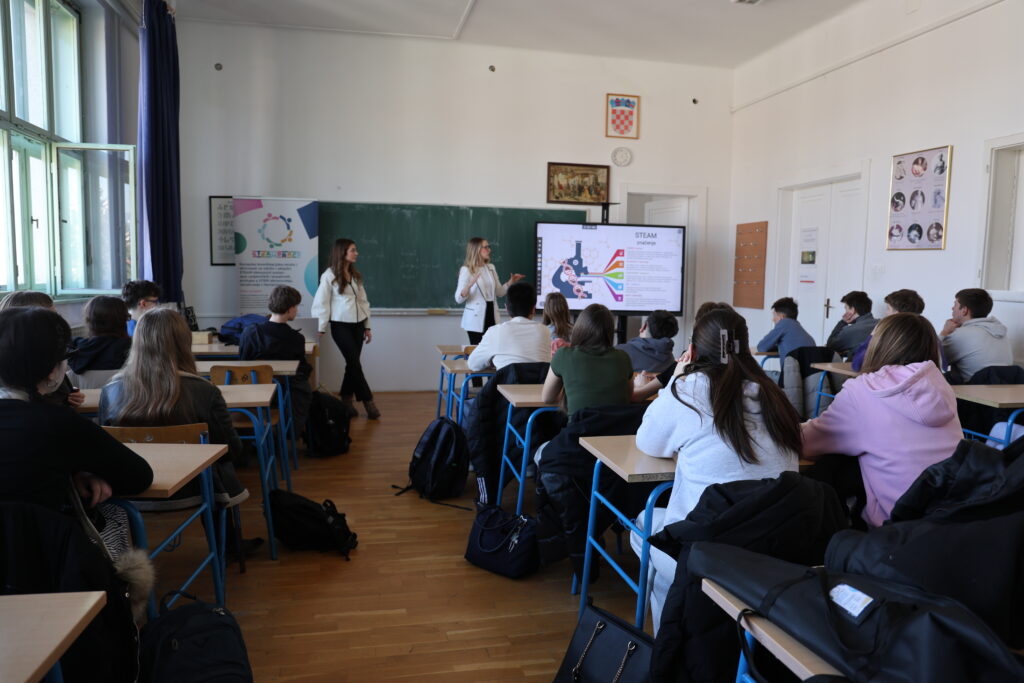
STEAM Week has emerged as a powerful collective milestone for the STEAMbrace project, bringing together schools, universities, research centres, libraries, families, and public institutions across Europe under a shared mission: advancing inclusive, interdisciplinary, and future-oriented STEAM education. Across multiple countries and educational levels, partners of the STEAMbrace consortium implemented a diverse and ambitious programme of activities that engaged thousands of students and educators. From university teacher training to hands-on workshops, from public conferences to national competitions, STEAM Week demonstrated how coordinated action can transform educational practices and generate meaningful societal impact. More than a thematic celebration, STEAM Week functioned as a living laboratory of what STEAM education can look like when implemented collaboratively, inclusively, and with a strong European dimension. From teacher education to school transformation One of the most strategic contributions came from the University of the Basque Country (EHU), where first-year Education students participated in a formative session contextualising the STEAM approach within initial teacher education. Delivered within the Didactics curriculum, the session traced the evolution from STEM to STEAM, analysed its theoretical foundations, and aligned the methodology with national competence frameworks. STEAMbrace was presented as a practical case study of systemic change toward more equitable and inclusive education. By embedding STEAM within teacher training, the initiative extended its impact beyond a single event: future educators are now designing their own STEAM-based learning projects, grounded in real-world problem solving and the Sustainable Development Goals. In Croatia, the University of Zagreb’s Faculty of Economics and Business, in collaboration with the Moneterra Museum, expanded STEAM Week beyond the classroom. Through the interactive workshop “Discover the Secrets of the Euro,” secondary students explored the European banking system, euro banknote production, and advanced anti-counterfeiting technologies. By designing their own banknotes and examining material science innovations, students experienced how science, economics, and technology intersect in everyday life. This experiential model reinforces a key message of STEAMbrace: innovation becomes meaningful when students understand its relevance beyond textbooks. Engaging young minds across regions In Spain, AIJU implemented immersive VR gymkhana activities across Ibi, Valencia, and Extremadura, engaging hundreds of students aged 11 to 18. These hands-on experiences fostered digital skills, creativity, and collaborative problem solving—key competencies for future innovators. In Portugal, MPT organised multi-day educational activities integrating robotics, virtual reality, artificial intelligence, cybersecurity, and sustainability themes. These sessions exemplified interdisciplinary learning, connecting technology with ethical reflection and societal challenges. Romanian partners ATRV brought STEAM into schools and libraries, reaching more than one thousand students across multiple events. Workshops such as “STEAM Education for Future Skills” and “From Education to Green Impact in Schools” demonstrated how educational institutions can act as local innovation hubs, empowering students to apply STEAM methodologies to environmental and community-based challenges. These actions highlight one of the strongest impacts of STEAM Week: its adaptability across contexts. Whether implemented in urban universities, rural libraries, or secondary schools, STEAMbrace provides a flexible framework capable of responding to local needs while maintaining European coherence. Women in Science at the core of the initiative Aligned with the International Day of Women and Girls in Science (11F), gender equality remained a central pillar of STEAM Week. In Madrid, the event lead by Contactica, “Women in STEAM: Inspiring our Future Scientists” gathered researchers from ICTAN-CSIC, CENIM, and the Centro de Investigaciones Biológicas Margarita Salas to share their professional journeys with students. By presenting visible female role models across disciplines—from molecular biology to advanced materials—the initiative reinforced the importance of representation in shaping aspirations. Similarly, in Zaragoza, sessions organised with Edelvives, AMIT Aragón, and the CSIC Delegation engaged 90 secondary students in discussions about scientific vocations, culminating in a round table at the Casa de la Mujer. These dialogues connected education, research institutions, and local government, strengthening the ecosystem supporting girls in science. By embedding gender inclusion into practical activities rather than treating it as a standalone topic, STEAM Week demonstrated how equality can be structurally integrated into STEAM education. Public engagement and European visibility STEAM Week also extended into broader public arenas. Through participation in the Congreso Nacional STEAM at Etopia in Zaragoza, STEAMbrace partners—including Academia de Inventores and Edelvives—contributed workshops, technological gymkhanas, and round tables focused on awakening scientific vocations. The presence of institutional leaders and prominent figures in science further amplified the initiative’s visibility. At national level, C4G launched the MENTES STEAM Competition in Portugal, challenging schools to submit innovative STEAM project proposals. The competition promotes creativity, critical thinking, and digital competence, with the winning secondary team representing Portugal at a European final. This initiative expands STEAM Week from a series of events into an ongoing mobilisation mechanism. Collectively, these actions generated significant visibility and positioned STEAMbrace as an active contributor to Europe’s broader educational innovation landscape. What has STEAM Week achieved? Several key conclusions emerge from this coordinated effort: Scale and Reach: Activities implemented across multiple countries engaged well over two thousand students, teachers, and families, reinforcing the project’s cross-border impact. Educational Transformation: By targeting both students and future teachers, STEAM Week strengthens systemic change rather than isolated intervention. Gender Inclusion: Women in Science was not symbolic but embedded in workshops, panels, and educational design. Experiential Learning: Hands-on activities, real-life contexts, and interdisciplinary approaches proved particularly effective in increasing engagement. European Noise: Through coordinated communication, social media amplification, and institutional collaboration, STEAM Week contributed to increasing European-level awareness of innovative STEAM methodologies. A growing European movement Beyond individual activities, STEAM Week reflects the emergence of a growing European ecosystem committed to rethinking education. The project’s ability to mobilise universities, museums, schools, libraries, research centres, families, and policy actors demonstrates the power of collaboration under the Horizon Europe framework. STEAMbrace is not only implementing activities—it is helping to shape a narrative about what inclusive, innovative, and interdisciplinary education should look like in the 21st century. As the project continues to expand its actions and partnerships, STEAM Week stands as tangible evidence that coordinated European collaboration can translate strategy into impact. The message is clear: when science, technology, engineering, arts, and mathematics converge in meaningful learning
The rise of STEAM education: Why Arts matter in STEM
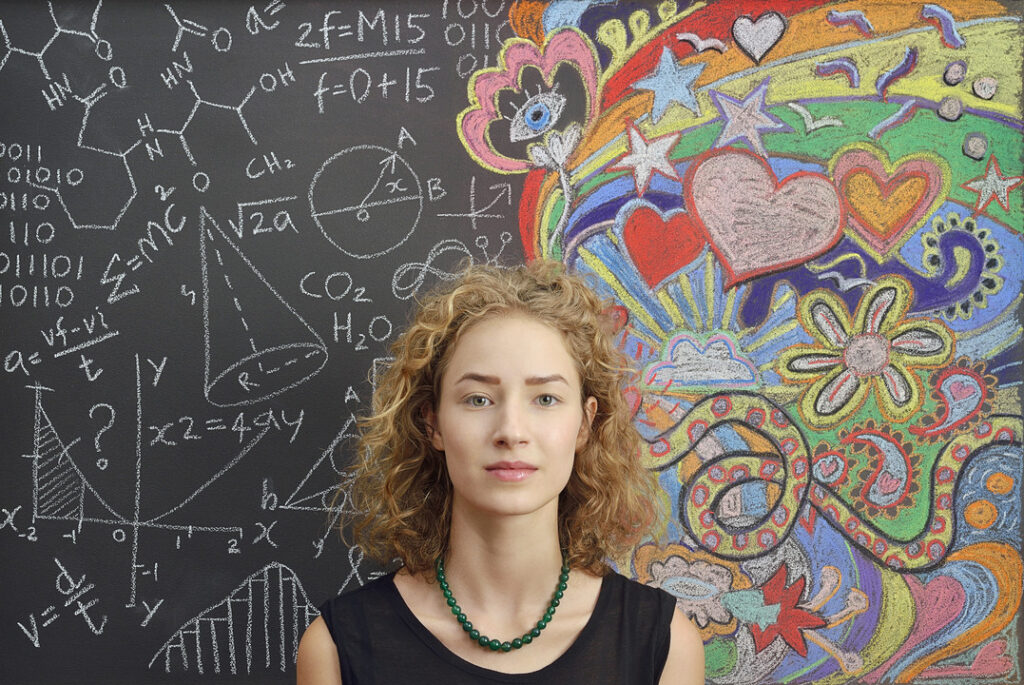
For years, STEM (science, technology, engineering, and mathematics) has been a powerful framework for preparing students to navigate a digital, tech-driven world. But in today’s evolving society, creativity, empathy, and critical thinking are just as vital as coding and calculus. That’s why educators, researchers, and policymakers across Europe are increasingly advocating for STEAM education, a model that integrates the Arts into STEM. By adding the “A” for Arts, STEAM creates space for imagination, diversity of thought, and a more inclusive learning environment. And this shift couldn’t be more timely. What is STEAM education? STEAM education is an interdisciplinary approach that connects artistic and creative thinking with traditional STEM fields. It challenges the outdated notion that science and creativity live in separate worlds. Instead, it recognizes that innovation happens when technical expertise meets design, storytelling, and emotion. Whether it’s using graphic design to communicate climate data, choreographing movements to explain physics concepts, or integrating music into coding exercises, STEAM empowers learners to engage more fully, and more meaningfully, with scientific content. Why the Arts belong in STEM The European Commission’s Horizon Magazine recently highlighted the importance of art inclusion as a way to empower girls in science and close gender gaps in STEM fields. Studies show that when arts are integrated into STEM lessons, girls are more likely to participate, express themselves, and stay engaged. This matters, as many girls report feeling alienated in traditional STEM settings. Moreover, the 2023 STEM Education Report by the European Commission calls for stronger policy efforts and research to support innovative, inclusive, and cross-disciplinary teaching. One clear recommendation: bring the arts into the classroom. STEAM education not only improves student engagement and motivation, but it also helps cultivate the creative problem-solving skills that 21st-century careers demand. How STEAMbrace puts STEAM into action At the heart of this transformation is the Horizon Europe project STEAMbrace, a forward-thinking initiative designed to create inclusive, gender-responsive, and creative learning experiences for students aged 11–18. Through hands-on activities, interdisciplinary challenges, and multilingual resources, STEAMbrace promotes the fusion of scientific knowledge with creative exploration. Here’s how the project brings STEAM to life: Art-infused learning: STEAMbrace pilots encourage students to explore real-world issues using both analytical and creative tools, from designing inclusive infrastructure to training AI through visual storytelling. Gender-sensitive approaches: By integrating the Arts, the project reaches more students (especially more girls) who might otherwise feel disconnected from STEM. Collaborative synergies: STEAMbrace collaborates with projects like STREAM-IT and Road-STEAMer, exchanging strategies to enhance creative pedagogy and boost diversity in education. As one of the project’s key goals, STEAMbrace aims to make STEAM not just a framework, but a mindset, one that welcomes all learners and recognizes multiple intelligences. Results and future outlook In pilot activities across Europe, over 120 students and 9 teachers at II. Primary School Varaždin recently engaged in STEAMbrace workshops that combined science with design, AI, and creative thinking. The feedback has been overwhelmingly positive, highlighting how arts-based activities spark curiosity, increase confidence, and build a sense of belonging in the classroom. Looking ahead, the project is expanding its digital footprint and will soon be launching a TikTok account to reach younger audiences, increasing visibility through creative campaigns, and deepening its collaboration with European partners to influence STEAM policy and practice. Conclusion: STEAM as a pathway to inclusion and innovation Bringing the Arts into STEM isn’t just about adding color to science class. It’s about redefining what it means to learn, to innovate, and to belong. In a world facing complex challenges, our solutions need both logic and imagination. Projects like STEAMbrace demonstrate that STEAM education is more than a trend. It’s a powerful tool for equity, creativity, and change. Let’s keep pushing boundaries, empowering students, and building a future where science and art move forward—together. 👉 Learn more about our work and follow our journey at steambraceproject.eu