STEAMbrace 2nd annual meeting in Bilbao: Collaboration that shapes the future of STEAM
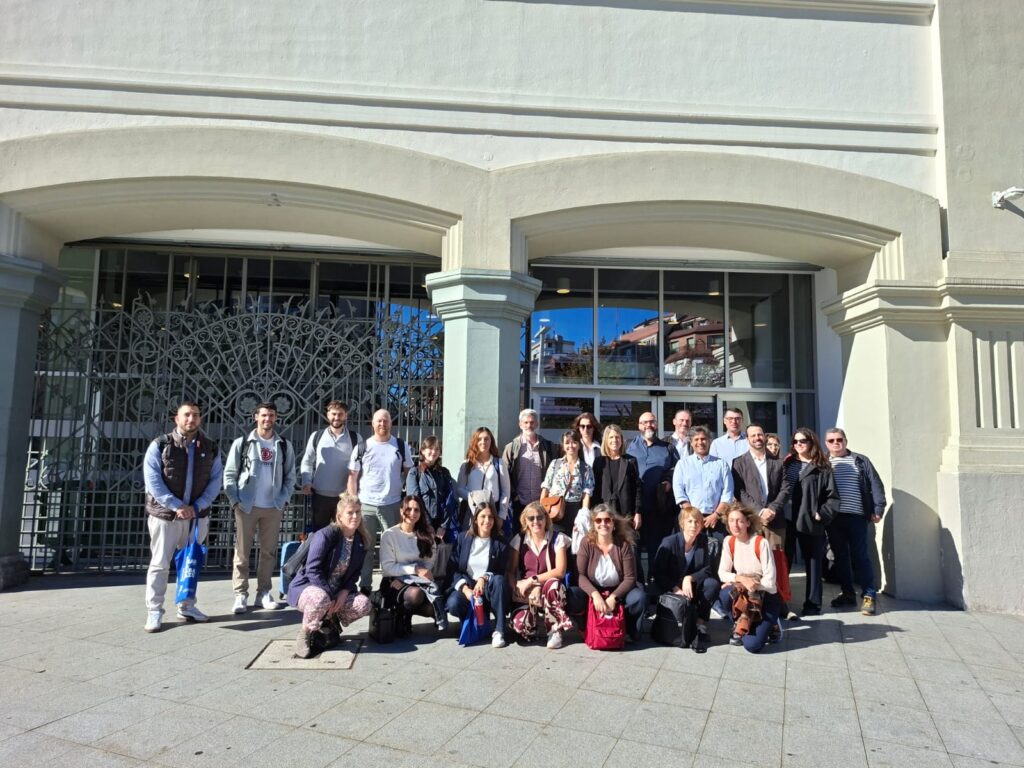
The STEAMbrace 2nd anual meeting in Bilbao brought partners together for a powerful moment of alignment, creativity, and planning. The meeting highlighted how STEAM education blends innovation, culture, and real-world problem-solving, and how collaboration keeps the project moving forward. As a result, partners left with renewed clarity and shared purpose for the year ahead. What the STEAMbrace 2nd annual meeting set out to achieve This meeting was designed to connect workstreams, refine strategies, and prepare for the most active phase of STEAMbrace. It linked teachers, researchers, technologists, and creative practitioners in a single space with one mission: to build a more inclusive, more inspiring STEAM ecosystem for Europe’s young people. Partners reviewed the progress across all work packages and explored the next milestones together. Moreover, they strengthened the collaborative structure that ensures STEAMbrace remains coherent, ambitious, and impactful. With major activities approaching (from pilots to contests to STEAM Week), the STEAMbrace 2nd annual meeting offered perfect timing to synchronise visions, methods, and practical tools. Why STEAM belongs at the centre of these conversations STEAMbrace works at the intersection of science, creativity, technology, and inclusion. That blend was fully visible in Bilbao. STEAM helps turn technical concepts into human-centred learning. Robotics becomes storytelling. AI becomes collaboration. Engineering becomes design practice. In addition, STEAM opens the door to diverse perspectives. This helps reduce gender gaps and ensures more students, especially girls, can see themselves thriving in these fields. Teachers can adapt STEAMbrace activities to their national contexts. Students can prototype ideas, explore labs, and visualise problems creatively. These experiences deepen understanding while building confidence. La Perrera: Where robotics, creativity, and STEAM meet A highlight of the meeting was the visit to La Perrera, a cultural and technological space in Bilbao dedicated to experimentation, robotics, and innovation. The venue served as an ideal backdrop for a project like STEAMbrace, open, collaborative, and future-focused. Partners explored several robotics models, including the globally known robot dog, and learned about the design and engineering behind the creations. Importantly, many of these developments involved brilliant women engineers, reinforcing the project’s goal of increasing the visibility of women in STEAM. La Perrera showed how robotics can inspire students by making technology tangible, playful, and accessible. It also demonstrated how cultural spaces can spark imagination, a key ingredient of STEAM learning. Moving toward the National STEAM Contests and the European final Another major milestone discussed in Bilbao was the upcoming National STEAM Contests. Each partner will organise its own challenge, adapted to local needs and cultures. Later, winners will gather for the European STEAM Contest, a flagship event scheduled for April 2026. These contests encourage creativity, teamwork, and student-led innovation. They also help close gender gaps by making STEAM more attractive, relatable, and visible to girls. The STEAMbrace 2nd annual meeting focused on preparing communication strategies, evaluation criteria, and support materials to ensure the highest participation possible. STEAM Week 2026: A European celebration in progress Partners also advanced preparations for STEAM Week, another major effort planned for April 2026. This event will bring together classrooms, families, stakeholders, and policymakers through activities, workshops, live sessions, and creative challenges. Communication efforts will begin early to ensure that STEAM Week becomes an accessible, engaging, continent-wide initiative. The Bilbao meeting provided clarity on roles, content needs, and media approaches. What students and teachers gain through STEAMbrace Activities aligned with STEAMbrace help young people develop: Clear explanations for complex ideasCreative tools to turn theory into meaningTeamwork skills across mixed groupsConfidence to ask bold, informed questions These skills last because students create, test, and communicate their ideas — not just learn them passively. How STEAMbrace will support the next steps STEAMbrace continues to focus on inclusion, clarity, and reach. We develop resources that help teachers begin quickly. We amplify the work of women role models. We highlight inspiring pilots, national actions, and student projects across Europe. Moreover, we plan youth-friendly content for social media: reels, explainers, and showcases from real classrooms, making STEAM visible in everyday life. Looking ahead: momentum for 2026 and beyond The STEAMbrace 2nd annual meeting marks a new phase for STEAMbrace. With pilots expanding, contests launching, and STEAM Week approaching, the project is entering a period of high activity and high impact. Partners will continue to collaborate, share knowledge, and support teachers and students across Europe as STEAMbrace builds a more inclusive, creative, and connected future for education. STEAMbrace 2nd annual meeting sets the stage for what’s next The STEAMbrace 2nd Annual Meeting in Bilbao showed what happens when creativity, robotics, education, and collaboration meet. It brought partners together, sharpened goals, and set the foundation for the next chapter. Follow STEAMbrace for updates, pilot stories, and youth-ready explainers and join us in shaping the future of STEAM education across Europe.
Building Futures with Gender Equality in STEM Education
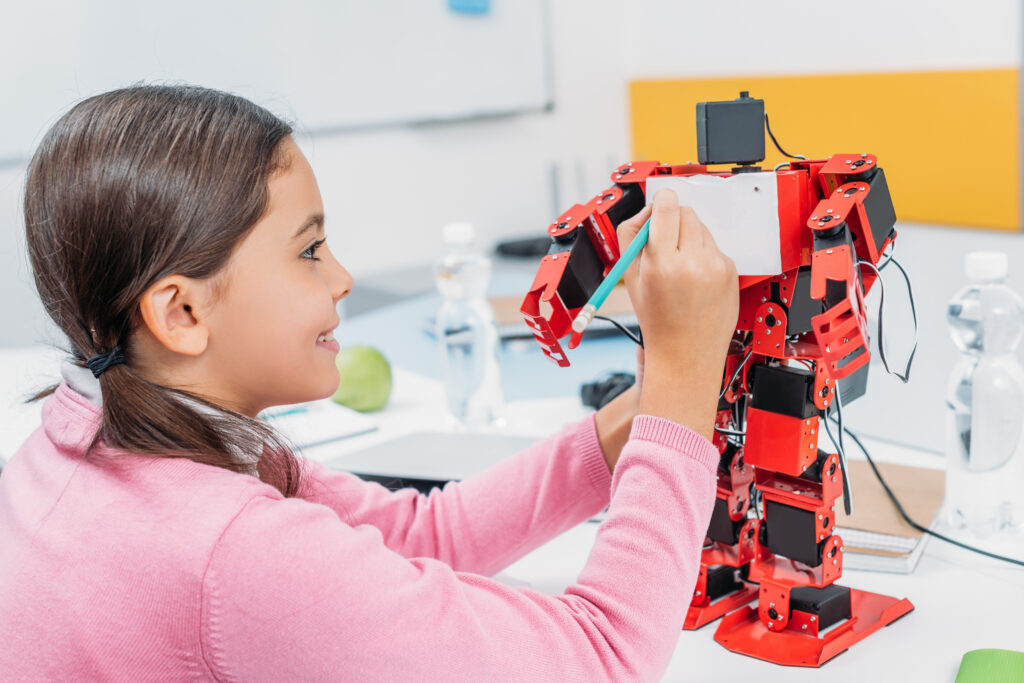
From the moment a child steps into a classroom, unseen forces begin to shape their self-perception and influence their beliefs about who they can become. For many girls, these forces manifest as subtle messages: science is for boys, math is too difficult, or technology is not meant for girls. Even though young girls express an equal interest in science-related careers as boys, they frequently drift away from STEM fields as they grow up. Gender stereotypes do more than limit imagination; gender stereotypes shape futures. Gender Bias is Pushing Girls out of STEM Although there has been progress in gender equality, big differences still exist. More than half (54%) of university students in the EU are women, but only 30% study STEM subjects. The gap is even bigger in vocational education (VET), where only 16% of STEM students are women. This is not because of lack of talent or interest, but because society has long pushed girls away from science and technology. When women do enter STEM jobs, challenges remain. In the EU, 41% of scientists and engineers are women, but they are still few in top and technical positions where important decisions are made. In the digital world, the gap is wider: only 1 in 5 ICT specialists are women, and just 24% of self-employed professionals in technical fields are women. These numbers show more than just data; they show missed opportunities. When half the population is discouraged from fully participating, it affects economic independence, leadership chances, and innovation. Fighting gender bias is not only a matter of fairness, but of social and economic urgency. EU’s Roadmap for Reducing Gender Bias in STEM The European Commission is actively working to address the gender gap in STEM through strategic initiatives, regulations and funding programs designed to increase female participations at educational, research and employment levels. Recognizing that innovation cannot flourish without inclusion, the European Union has elevated gender equity in STEM from a mere goal to a central pillar of its policy agenda. Since 2003, She Figures has provided data and analysis every three years on indicators of gender equality in R&I. This information offers policymakers and stakeholders empirical evidence and insights to support the development of targeted strategies aimed at advancing gender equality in R&I. Gender considerations are now integrated into every Horizon Europe project. Furthermore, all public bodies, higher education institutions, and research organizations participating in an HE project are mandated to have a Gender Equality Plan. Gender gaps must be closed beginning with education. The EU’s STEM Education Strategic Plan sets ambitious targets for 2030, aiming to increase overall STEM enrolment while significantly boosting female participation. By then, at least 25% of STEM students in vocational education and training (VET) should be women, 40% of STEM students at the tertiary level should be female, and one in three students in ICT PhD programmes should be women. To attract more women into the field, the EU have launched various programmes: Girls Go Circular. Educational initiative aimed to equip students, especially women, with digital and entrepreneurial skills through free digital education. To date, over 80,000 students have been trained, with 86% of them being women. ESTEAM fests. Hybrid workshops where females of all ages gather to enhance their digital and business skills. Girls Go STEM will be introduced in October 2025, aiming to draw more women into STEM fields by training 1 million girls by 2028. This initiative will be supported through Erasmus+, the European Universities alliances, the European Alliance for Apprenticeships, digital skills academies, and the EIT. Innovative Paths: Promoting Female Participation in STEM Through Arts The STEAM approach combines science, technology, engineering, and math with the arts. This method helps get girls interested in STEM fields. It encourages creativity, critical thinking, and teamwork, making STEM subjects more interesting and relatable. By mixing analytical skills with artistic expression, STEAM improves learning and helps challenge gender stereotypes that stop girls from choosing technical careers. Likewise, encourage girls to see themselves as future scientists, engineers, and innovators. The EU promotes STEAM education by supporting the implementation of the European Manifesto for Gender-Inclusive STE(A)M Education, and by funding projects that boost STEAM. Among these pioneering efforts is STEAMbrace, a project that integrates cultural and creative industries (CCI) as drivers of innovation ecosystems. It combines evidence-based research with creative methodologies to develop sustainable, inclusive, and scalable STEAM education practices, serving as a model for the EU educational landscape. Through initiatives such as the first European STEAM Congress, which attracted over 150 educators and policymakers, STEAMbrace is actively reshaping how Europe conceptualizes the relationship between artistic creativity and scientific innovation. Furthermore, STEAMbrace established the first coordination network to promote gender-responsive STEAM education at the European level (STEAM Alliance for Europe). It also plans to introduce the “STEAM Week for future women innovators” to showcase the power of integrated STEAM learning in engaging students, particularly girls, in critical thinking, problem-solving, collaboration, and creativity. Conclusion The future of science depends on who gets to image it. For too long, girls have been told that STEM is not for them. The EU is working to change that story by investing in gender equality, promoting STEAM education, and supporting initiatives like STEAMbrace. The EU is opening the door for more girls to see themselves as scientists, engineers, and innovators. Inclusion is not just about balance; it is about unlocking the full power of human creativity.
LLMs in education: from crutches to jumping pole

You see students using ChatGPT to finish tasks fast. Professors and teachers rant about the rate of pupils using large language models (LLMs) to turn in an essay. Maybe even you have asked an artificial intelligence (AI) for help in a task you were supposed to do yourself. LLMs in education are here to stay. Regardless of how we feel about it, they are available everywhere. But right now, that is not a good thing. Having an educational model set up without LLMs only benefits those who can use AIs like ChatGPT as a shortcut to do less work. And yet, we face the chance to use those very AIs to improve education instead. How to turn crutches into jumping poles We should not pretend that the task ahead is easy. When slides were invented, shifting from blackboards and books to presentations took time. In fact, these tools remain in the classroom, and that is well. The same happened with Google and the internet. Information at the student’s fingertips made it so schools and universities had to adapt. And while it is still a work in progress, these technologies have been adopted. The same is happening with AI and LLMs. For example, Estonia is already investing in plans to equip the classroom with these tools. And the European Union (EU) is forming teachers in the use of AI for education in STEM. And yet, technological advancements can increase disparity in the classroom. AI as an opportunity to bridge educational gaps When it comes to STEAM education (Science, Technology, Engineering, the Arts, and Mathematics), there are still gaps and barriers for many students. First, we have a socio-economic barrier. Students with less means are at a clear disadvantage in the current education system. Then, students in rural areas may have to move or commute for studies, resulting in economic difficulties and less support. They also may have fewer resources, especially technological ones. And there is still a gender gap in STEAM. Women are fewer than men in many areas, especially in decision-making roles. With the introduction of AI in the classroom, we can increase these differences if we are not careful. But AI can also let us promote a more equal, balanced, and empowering education system. This is exactly what STEAMbrace stands for and aims to do. Promoting a fairer education system STEAMbrace is pushing to create the STEAM Alliance for Europe. This is a European-wide collaboration. It involves educators, policymakers, cultural and creative industries, civil organizations and research organizations. The aim? To build on previous European initiatives and use creative approaches to make STEAM mainstream and accessible for everyone. The main focus is on the gender gap, reducing socio-economic barriers, and boosting rural education to reduce disparity. AI in the classroom to reduce disparities. LLMs are often trained on public data. If the data itself is skewed, the LLMs show prejudice. This is already happening, for example, they show a gender bias. We need to do a better job if we want to promote gender equality. This means providing students with unbiased LLMs they can trust. The use of AI and LLMs also requires an internet connection, and paying means you get access to a better version of, for example, ChatGPT. This poses an issue for rural students with slower internet access, if any. It also benefits members of higher socioeconomic layers. To reduce these disparities, we must provide students with the right tools and opportunities, both in the classroom and beyond. LLM-conscious teachers and students To achieve this, we must push for LLM-conscious teachers and students. But it takes a village. We need the effort of many other groups. Researchers, to identify possible gaps and the best educational practices. Policymakers and administrators, to give the teachers the needed training and tools. And educators, to provide students with the knowledge to use AI and LLMs responsibly. Critical thinking is also key to interpreting the results of AI use. Conclusion STEAMbrace pushes for the formation of an EU alliance that can tackle current educational issues. These include the gender gap, socio-economical differences and rural disparities. AI can contribute to deepening these issues or to remedy them if used properly. The STEAM Alliance for Europe can be used to make sure that LLMs and AI are implemented in the classroom with the right mindset. By informing the participants involved about the potential issues that may come from using LLMs, we can be ready to use them more safely and reduce disparities.
Sustainable STEAM education: impact on STEAMbrace’s future
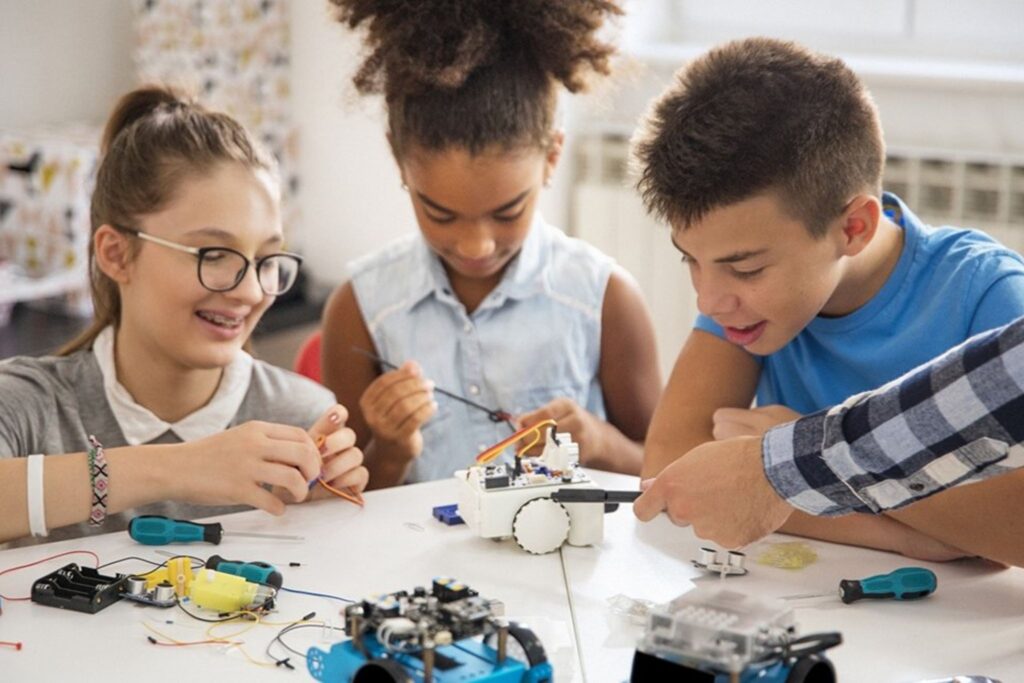
We are on the constant push for change in education. Our focus lies in sustainable STEAM education. We aim to close the gender gap in STEM. We integrate arts with science, technology, engineering, and math. We empower learners to create eco-friendly solutions. Our mission drives us to build bridges among diverse experts. With sustainable STEAM education, we prepare future innovators to tackle environmental challenges. Our new STEAMbrace HQ in Zaragoza reinforces our vision. It serves as a central hub for collaboration and growth. The Power of Sustainable STEAM Education Our approach changes lives. We prepare teachers to use active methods every day. Students engage in hands-on experiments. They build models and test ideas. They learn to solve real problems with clear purpose. This method inspires confidence in young minds. It also sparks curiosity about nature. In our classrooms, learners work on renewable energy projects. They design eco-friendly systems. Moreover, this approach teaches ethical skills. It prepares them for green careers. Our focus on sustainable STEAM education brings real change to education. It makes learning engaging and practical. Shaping Projects through Creative Collaboration At STEAMbrace, we drive innovation in every workshop. We exchange ideas and develop new strategies. We plan training sessions and build digital resource hubs. Our partners include experts from many fields. They bring creative techniques to our table. They use evidence-based methods to shape projects. Our innovative projects exemplify sustainable STEAM education in action. We design methods that work in real life. We ensure every activity is practical and inspiring. Collaboration remains at the heart of our approach. Building a better and more inclusive future We believe in a greener future. Our vision centers on sustainability as a core value. We promote eco-friendly practices in every lesson. We promote sustainable STEAM education practices in every lesson. Students explore green technology and sustainable design. Teachers introduce interactive labs and digital tools. They run experiments that use real data. Learners develop a deep respect for the environment. They learn to balance innovation with nature. Moreover, our methods foster responsibility. We encourage every participant to think globally. Our vision creates lasting community impact. We build strong networks and share best practices. This work opens new career paths. It drives a culture of eco-friendly creativity and collaboration. Furthermore, our work fosters innovation. We support research that improves green practices. We share our findings with partners and communities. We encourage educators to adopt these methods. This shared effort builds a robust network. It ensures that eco-friendly ideas spread quickly. We believe small actions lead to big impacts. Our community grows stronger with every new idea. Conclusion In conclusion, our journey relies on STEAM and sustainability. Our approach transforms learning and inspires innovative solutions. We empower students and teachers to face real-world challenges. Our new headquarters in Zaragoza acts as a beacon for progress. Our project stands as proof that education can change the world. We drive change by combining creative methods with ethical practices. We embrace STEAM and sustainability to build a brighter, inclusive future. Join us as we continue to explore new ideas and methods. Together, we create a greener and more innovative tomorrow. We firmly believe that embracing sustainable STEAM education will shape a better world.
Insights from our 1st STEAMbrace Congress
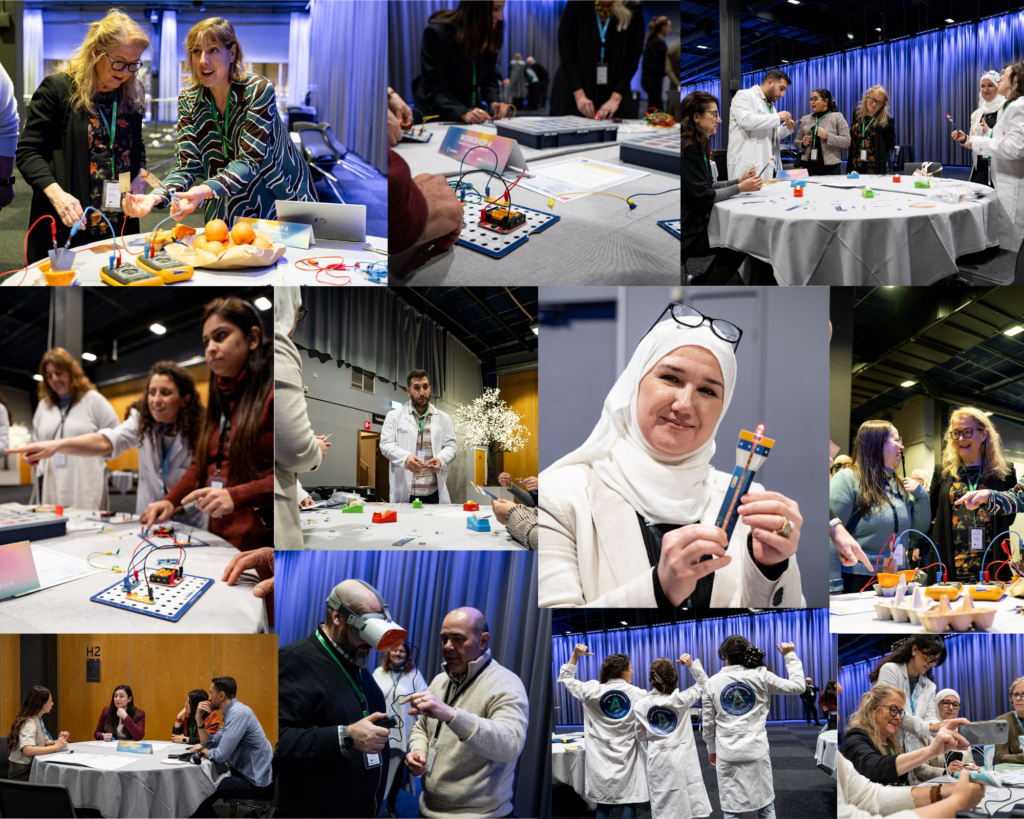
The recent insight from our 1st STEAMbrace Congress in Gothenburg were more than just a meeting of minds—what we got was a dynamic space where creativity, innovation, and collaboration flourished. Over the course of the event, participants had the unique opportunity to engage with a variety of hands-on workshops that showcased the cutting-edge methodologies and educational tools being developed through the STEAMbrace project. This Congress was a key milestone, reflecting the project’s ambition to redefine how science, technology, engineering, arts, and mathematics (STEAM) are taught and experienced in educational environments. A Collaborative Learning Space From the moment attendees stepped into the workshop areas, there was a palpable sense of excitement. Participants from diverse backgrounds—educators, researchers, and project partners—gathered around round tables, where they were invited to explore, experiment, and reflect on the potential of STEAM education. The goal was not only to present innovative learning tools but also to test, refine, and expand upon them through real-time interaction and feedback. This participatory model aligns with STEAMbrace’s core philosophy: to bridge the gap between theory and practice by engaging learners in activities that encourage curiosity, critical thinking, and creative problem-solving. Each workshop offered a hands-on, experimental environment where abstract scientific principles were transformed into tangible and interactive experiences. One of the standout aspects of the Congress was the diversity of workshops, which demonstrated how STEAM education can be both accessible and engaging for students aged 11 to 18. Activities ranged from exploring renewable energy using natural materials to immersive digital experiences that showcased the power of virtual reality. Each session reflected a commitment to fostering inclusivity and interdisciplinary collaboration, key pillars of the STEAMbrace initiative. Testing and Co-Creating Future STEAM Tools A central objective of the Congress was to provide a platform for testing some of the educational tools that STEAMbrace is developing while also showcasing activities already implemented in schools. These workshops were not just demonstrations—they were collaborative experiments where participants could engage deeply with the materials, offer feedback, and discuss ways to improve and scale these methodologies across different educational contexts. For instance, the Citrus Sparks workshop demonstrated how simple, everyday materials could become powerful learning tools. Participants built batteries using orange juice as a natural electrolyte, which not only made abstract chemical concepts more tangible but also highlighted the practical potential of sustainable energy sources. This type of hands-on learning encourages both scientific inquiry and environmental awareness, key aspects of modern STEAM education. Similarly, the VR Creation workshop invited participants to dive into the world of virtual reality, guiding them through the process of designing and experiencing their own immersive environments. This activity showcased how emerging technologies can enhance learning by providing students with experiential and interactive access to complex ideas. It also demonstrated how digital tools could foster creativity while reinforcing technical skills essential for the future. The Magic Lanterns and 3D Pencils workshops provided another layer of exploration, blending art and technology. These sessions emphasized the A in STEAM, illustrating how creative expression can enhance technical learning and provide new avenues for innovation. By encouraging participants to design illuminated models and create 3D structures, these workshops bridged the gap between imagination and engineering, showing how creative design processes can empower young learners to explore scientific concepts from new angles. Addressing Key Challenges: Gender and Inclusion in STEAM Beyond the hands-on technical workshops, the World Café session created a meaningful space for dialogue about gender equity and inclusion in STEAM fields. Facilitated by Aylar Hassanpouraghdam, this discussion invited participants to reflect on how to break down barriers for underrepresented groups, particularly girls and young women. Conversations focused on identifying structural challenges, sharing best practices, and developing actionable strategies to create more inclusive educational spaces. This session aligned with one of STEAMbrace’s most important goals: to bridge the gender gap in science and technology. By fostering these discussions during the Congress, the project aims to inspire collective action and to empower future generations of women to pursue and thrive in STEAM fields. Building a Vision for the Future Throughout the Congress, a recurring theme emerged: this is only the beginning. As Anca Dumitrescu, Chairman of the Board at WiTEC Sweden, expressed during her address, the event marked a first step toward a larger vision for the future of STEAM education. With the collaborative energy witnessed in Gothenburg, there is clear optimism that the impact of STEAMbrace will extend far beyond these workshops and into classrooms across Europe. The workshops were not isolated activities—they were building blocks for a more integrated and innovative educational ecosystem. By co-creating with educators and stakeholders, the STEAMbrace project is laying the foundation for scalable methodologies that can be adopted and adapted in diverse educational contexts. According to Juancho Pons, STEAMbrace Coordinator and Project Manager at Edelvives, the Congress was a tangible demonstration of the project’s guiding principles: “In this consortium, we have embraced the core values of STEAM—collaboration, creativity, critical thinking, and diversity—and these values are what will drive us forward. What we began here in Gothenburg will help shape the future of how STEAM education is delivered across Europe.” Looking Ahead As the Congress concluded, there was a shared sense of momentum and commitment. The insights gathered from these workshops will inform the next phases of the project, ensuring that the tools and methodologies developed reflect real-world needs and educational priorities. Over the next three years, STEAMbrace will continue to develop, test, and refine these approaches, always with the goal of making STEAM education more inclusive, accessible, and impactful. The STEAMbrace Congress in Gothenburg was not just a meeting—it was a living laboratory for innovation, a collaborative space where participants came together to imagine, create, and shape the future. As the project moves forward, the energy and ideas generated during these days will continue to drive the mission to transform STEAM education across Europe. Original article written by Filipa Magalhaes.