STEAM Week mobilises a European ecosystem for inclusive and innovative education
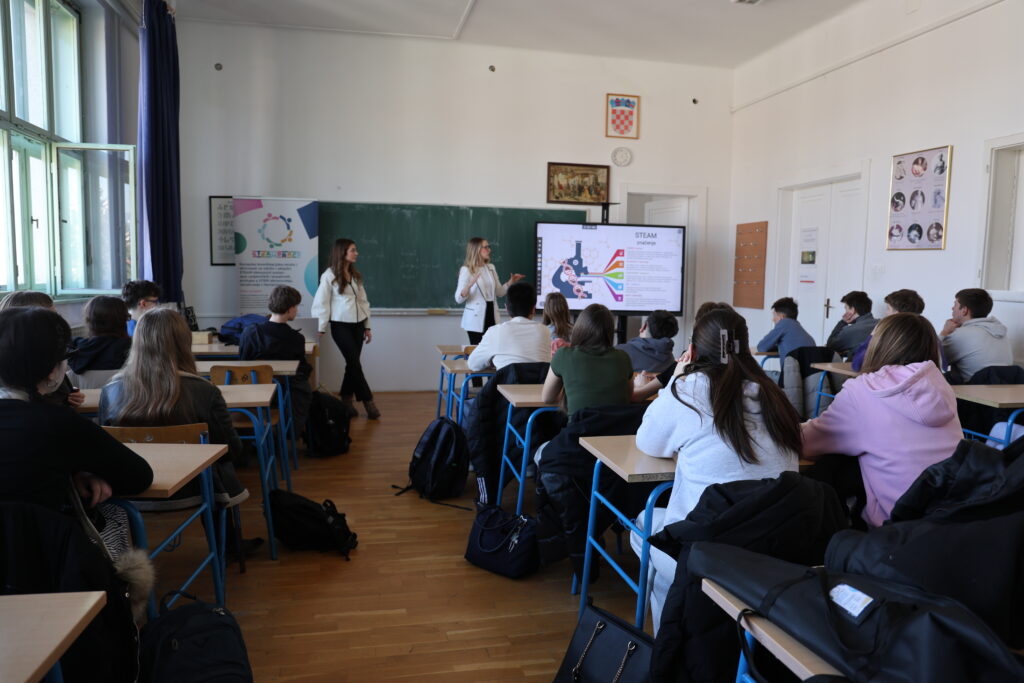
STEAM Week has emerged as a powerful collective milestone for the STEAMbrace project, bringing together schools, universities, research centres, libraries, families, and public institutions across Europe under a shared mission: advancing inclusive, interdisciplinary, and future-oriented STEAM education. Across multiple countries and educational levels, partners of the STEAMbrace consortium implemented a diverse and ambitious programme of activities that engaged thousands of students and educators. From university teacher training to hands-on workshops, from public conferences to national competitions, STEAM Week demonstrated how coordinated action can transform educational practices and generate meaningful societal impact. More than a thematic celebration, STEAM Week functioned as a living laboratory of what STEAM education can look like when implemented collaboratively, inclusively, and with a strong European dimension. From teacher education to school transformation One of the most strategic contributions came from the University of the Basque Country (EHU), where first-year Education students participated in a formative session contextualising the STEAM approach within initial teacher education. Delivered within the Didactics curriculum, the session traced the evolution from STEM to STEAM, analysed its theoretical foundations, and aligned the methodology with national competence frameworks. STEAMbrace was presented as a practical case study of systemic change toward more equitable and inclusive education. By embedding STEAM within teacher training, the initiative extended its impact beyond a single event: future educators are now designing their own STEAM-based learning projects, grounded in real-world problem solving and the Sustainable Development Goals. In Croatia, the University of Zagreb’s Faculty of Economics and Business, in collaboration with the Moneterra Museum, expanded STEAM Week beyond the classroom. Through the interactive workshop “Discover the Secrets of the Euro,” secondary students explored the European banking system, euro banknote production, and advanced anti-counterfeiting technologies. By designing their own banknotes and examining material science innovations, students experienced how science, economics, and technology intersect in everyday life. This experiential model reinforces a key message of STEAMbrace: innovation becomes meaningful when students understand its relevance beyond textbooks. Engaging young minds across regions In Spain, AIJU implemented immersive VR gymkhana activities across Ibi, Valencia, and Extremadura, engaging hundreds of students aged 11 to 18. These hands-on experiences fostered digital skills, creativity, and collaborative problem solving—key competencies for future innovators. In Portugal, MPT organised multi-day educational activities integrating robotics, virtual reality, artificial intelligence, cybersecurity, and sustainability themes. These sessions exemplified interdisciplinary learning, connecting technology with ethical reflection and societal challenges. Romanian partners ATRV brought STEAM into schools and libraries, reaching more than one thousand students across multiple events. Workshops such as “STEAM Education for Future Skills” and “From Education to Green Impact in Schools” demonstrated how educational institutions can act as local innovation hubs, empowering students to apply STEAM methodologies to environmental and community-based challenges. These actions highlight one of the strongest impacts of STEAM Week: its adaptability across contexts. Whether implemented in urban universities, rural libraries, or secondary schools, STEAMbrace provides a flexible framework capable of responding to local needs while maintaining European coherence. Women in Science at the core of the initiative Aligned with the International Day of Women and Girls in Science (11F), gender equality remained a central pillar of STEAM Week. In Madrid, the event lead by Contactica, “Women in STEAM: Inspiring our Future Scientists” gathered researchers from ICTAN-CSIC, CENIM, and the Centro de Investigaciones Biológicas Margarita Salas to share their professional journeys with students. By presenting visible female role models across disciplines—from molecular biology to advanced materials—the initiative reinforced the importance of representation in shaping aspirations. Similarly, in Zaragoza, sessions organised with Edelvives, AMIT Aragón, and the CSIC Delegation engaged 90 secondary students in discussions about scientific vocations, culminating in a round table at the Casa de la Mujer. These dialogues connected education, research institutions, and local government, strengthening the ecosystem supporting girls in science. By embedding gender inclusion into practical activities rather than treating it as a standalone topic, STEAM Week demonstrated how equality can be structurally integrated into STEAM education. Public engagement and European visibility STEAM Week also extended into broader public arenas. Through participation in the Congreso Nacional STEAM at Etopia in Zaragoza, STEAMbrace partners—including Academia de Inventores and Edelvives—contributed workshops, technological gymkhanas, and round tables focused on awakening scientific vocations. The presence of institutional leaders and prominent figures in science further amplified the initiative’s visibility. At national level, C4G launched the MENTES STEAM Competition in Portugal, challenging schools to submit innovative STEAM project proposals. The competition promotes creativity, critical thinking, and digital competence, with the winning secondary team representing Portugal at a European final. This initiative expands STEAM Week from a series of events into an ongoing mobilisation mechanism. Collectively, these actions generated significant visibility and positioned STEAMbrace as an active contributor to Europe’s broader educational innovation landscape. What has STEAM Week achieved? Several key conclusions emerge from this coordinated effort: Scale and Reach: Activities implemented across multiple countries engaged well over two thousand students, teachers, and families, reinforcing the project’s cross-border impact. Educational Transformation: By targeting both students and future teachers, STEAM Week strengthens systemic change rather than isolated intervention. Gender Inclusion: Women in Science was not symbolic but embedded in workshops, panels, and educational design. Experiential Learning: Hands-on activities, real-life contexts, and interdisciplinary approaches proved particularly effective in increasing engagement. European Noise: Through coordinated communication, social media amplification, and institutional collaboration, STEAM Week contributed to increasing European-level awareness of innovative STEAM methodologies. A growing European movement Beyond individual activities, STEAM Week reflects the emergence of a growing European ecosystem committed to rethinking education. The project’s ability to mobilise universities, museums, schools, libraries, research centres, families, and policy actors demonstrates the power of collaboration under the Horizon Europe framework. STEAMbrace is not only implementing activities—it is helping to shape a narrative about what inclusive, innovative, and interdisciplinary education should look like in the 21st century. As the project continues to expand its actions and partnerships, STEAM Week stands as tangible evidence that coordinated European collaboration can translate strategy into impact. The message is clear: when science, technology, engineering, arts, and mathematics converge in meaningful learning
STEAM Week connects partners across Europe to inspire the next generation in science and innovation
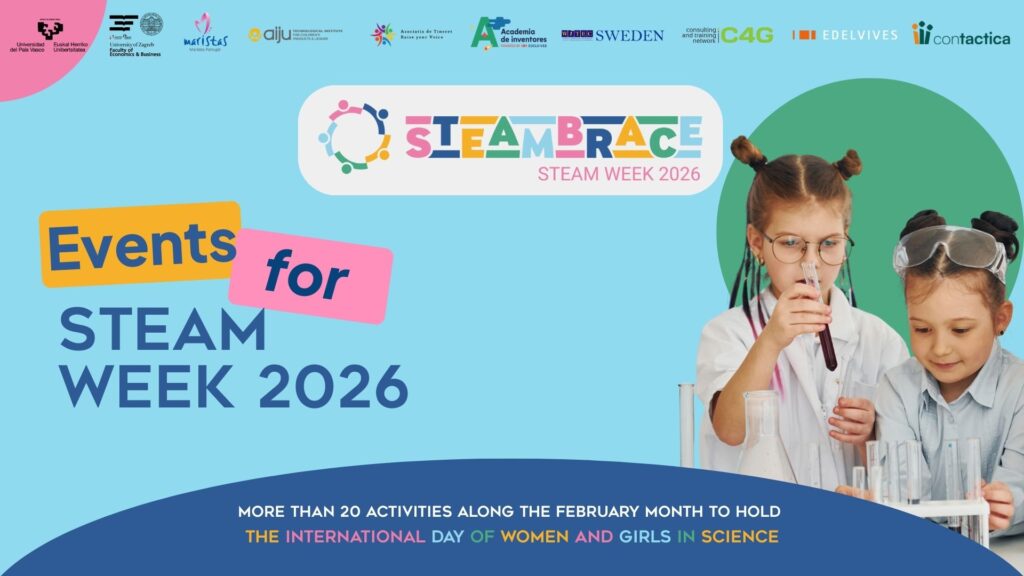
STEAM Week is bringing together partners from across Europe throughout February to celebrate the International Day of Women and Girls in Science with a diverse programme of educational, scientific, and community-focused activities. With more than 20 events organised in multiple countries, the initiative highlights the shared commitment of the STEAMbrace consortium to promote inclusive STEAM education, empower young people, especially girls, and foster future skills for a rapidly changing world. A Europe-wide programme of hands-on learning and inspiration Across universities, schools, museums, libraries, and innovation centres, STEAM Week activities are designed to engage students through interactive and experiential learning. Formative sessions, such as the contextualisation of the STEAM approach for education students at the University of the Basque Country (EHU), explore how interdisciplinary teaching can shape future classrooms and learning environments. The Faculty of Economics and Business of the University of Zagreb, will have workshops, guest lectures, and faculty open-day initiatives introduce hundreds of students to topics ranging from the economics of mathematics to the role of women in STEAM careers, reinforcing both academic curiosity and gender equality. Meanwhile, our partners in Portugal, Colegio Maristas Compostela, are hosting multi-day programmes featuring robotics, virtual reality, artificial intelligence, cybersecurity, and youth engagement activities, demonstrating the breadth of STEAM disciplines and their relevance to everyday life. Engaging young learners through creativity, technology, and experimentation Several STEAM Week initiatives focus specifically on active participation and experimentation. One of our spanish partners, AIJU, has prepared interactive learning experiences such as VR gymkhanas, engineering challenges, creative poster design, and sprint-style innovation labs are engaging secondary-school students across Spanish regions including València, Ibi, and Extremadura, reaching hundreds of young participants aged 11 to 18. In Romania, Asociatia de Tineret Raise Your Voice, will have workshops in libraries and schools connect science education with leadership, sustainability, and green impact in local communities, showing how STEAM learning can extend beyond classrooms into civic life. These activities collectively demonstrate how STEAM Week supports not only knowledge acquisition but also creativity, collaboration, and social responsibility. Celebrating Women and Girls in Science at the heart of STEAM Week A central milestone of STEAM Week is the celebration of the 11 February International Day of Women and Girls in Science, marked by events across several European cities. Highlights include educational circuits and technology-focused activities organised by the Academia de Inventores, as well as round-table discussions and technology gymkhanas hosted at Zaragoza’s ETOPIA Centre for Art and Technology, all aimed at awakening scientific vocations among young audiences. The week also features the event organized by Contactica, “Women in the STEAM World: Inspiring our Future Scientists” in Madrid, where researchers from ICTAN, CENIM, and CIB share their professional journeys with participating schools, offering visible role models and reinforcing gender equality in scientific careers. Opening honest conversations on STEAM vocations in Zaragoza As part of STEAM Week, partners are also fostering critical dialogue around STEAM vocations through the event “Dialogues: STEAM Vocations – what no one tells you,” organised in Zaragoza. Taking place on 10 February at the Casa de la Mujer, the round-table discussion brings together voices from the scientific, technological, and business sectors to reflect on the real challenges, invisible barriers, and social perceptions that shape participation in STEAM pathways. Moderated by Beatriz Giner Parache, the conversation features contributions from Esther Borao Moros, Manuela Delgado Cruz, Rosa Monge Prieto, and José Manuel López Sebastián, offering diverse professional perspectives on how to build more inclusive, realistic, and accessible STEAM vocations. The event is opened by María Jesús Lázaro Elorri and Ana Gaspar Cabrero, and dynamically supported by the VALPAT STEAM Channel, reinforcing collaboration between educational, institutional, and societal stakeholders. Organised with the involvement of Grupo Edelvives, AMIT Aragón, CSIC Aragón, STEAMbrace, the Spanish Ministry of Science, Innovation and Universities, and the City Council of Zaragoza, this initiative highlights how STEAM Week extends beyond educational activities to include reflection, dialogue, and systemic change in the promotion of STEAM careers. Strengthening inclusive STEAM education across Europe Through this coordinated European effort, STEAM Week illustrates the power of collaboration between educational institutions, research centres, and community organisations. By combining hands-on experimentation, inspirational role models, and interdisciplinary learning, the STEAMbrace partners are helping shape more inclusive pathways into science, technology, engineering, arts, and mathematics, ensuring that future generations are equipped with the skills and confidence needed to address societal challenges. As activities continue throughout February, STEAM Week stands as a shared European commitment to education, equality, and innovation—bringing science closer to young people and empowering the scientists, engineers, and creators of tomorrow.
Women in STEM Awards: Celebrating Global Excellence in 2026

When conversations turn to women in Science, Technology, Engineering, and Mathematics, the gender gap and underrepresentation often dominate the narrative. While these challenges remain relevant, Women in STEM awards continue to show a more complete picture—one of progress, excellence, and global impact. In 2026, recognition of women’s achievements across STEM fields is no longer an exception. Prestigious international awards increasingly reflect the reality that women are shaping medicine, artificial intelligence, engineering, and mathematics at the highest level. This article highlights major, globally competitive awards open to all researchers. By focusing on these honours, we underscore the scale and significance of the contributions women in STEM and every discipline it covers. Women in STEM awards in medicine: decoding the human body Some of the most influential medical breakthroughs recognised in recent years belong to women scientists. A landmark moment came with the Nobel Prize in Physiology or Medicine awarded to Mary Brunkow and her team for redefining how autoimmune diseases can be treated. Her work made it possible to selectively deactivate specific immune responses, avoiding the widespread suppression of the immune system that once defined treatment. Recognition continued with the Breakthrough Prize in Life Sciences, where Lotte Bjerre Knudsen and Svetlana Mojsov were honoured for decades of foundational research on the GLP-1 hormone. Their work laid the groundwork for therapies that are now transforming diabetes, obesity, and cardiovascular care worldwide. Germany’s prestigious Leibniz Prize also reflected this momentum. Among the recipients, Maria-Elena Torres-Padilla was recognised for advancing understanding of cell plasticity in early embryo development. Ana Pombo was awarded for pioneering genomic techniques that reveal how DNA’s three-dimensional structure influences gene regulation and disease. Bettina Valeska Lotsch received the prize for developing highly efficient photocatalysts, a key component in next-generation solar energy storage. A true testament of how women in STEM contribute to today’s society. Teaching machines to think: Women leading AI innovation Artificial intelligence continues to define this decade, and women are shaping its most human-centred applications. Cordelia Schmid received the inaugural Archimedes Science Award for her work enabling computers to interpret visual data—technology that now underpins safety systems, image recognition, and autonomous mobility. The Lovelace Medal, awarded by the British Computer Society, went to Mirella Lapata for transforming how machines generate and understand human-like narratives from text and structured data. Regina Barzilay, a Moldovan-born researcher at MIT, was recognised with the IEEE Frances E. Allen Medal. Her AI-driven models for predicting breast and lung cancer risk demonstrate how machine learning can save lives, not merely automate processes. Engineering a sustainable future Among the most visible Women in STEM awards, engineering prizes show how innovation translates into real-world impact. The Queen Elizabeth Prize for Engineering honoured Fei-Fei Li for creating ImageNet, the dataset that accelerated breakthroughs in computer vision and deep learning. At the European level, Marie Perrin received the World Builders Prize at the EPO Young Inventors Awards for her rare-earth recycling technology. Her solution enables the recovery of europium from discarded fluorescent lamps while capturing toxic mercury and reducing mining dependency. Jessica Day and her team at OrganOx secured the MacRobert Award for developing a system that keeps donated livers viable outside the human body, dramatically improving transplant success rates. Meanwhile, roboticist Daniela Rus was awarded the IEEE Edison Medal for her work on collaborative robot networks designed for manufacturing and rescue missions. Women in STEM awards and the power of mathematics Mathematics remains the hidden language behind many scientific advances. Hong Wang received the Ostrowski Prize for her work in harmonic analysis, addressing long-standing challenges such as the Kakeya conjecture. The Blaise Pascal Medal was awarded to Svitlana Mayboroda for mathematical theories explaining wave behaviour in complex materials. The London Mathematical Society also recognised multiple women, including Helen Byrne, Henna Koivusalo, Perla Sousi, and Ewelina Zatorska, for contributions ranging from tumour modelling to probability theory and fluid dynamics. Angkana Rüland, another Leibniz Prize recipient, was recognised for mathematical analysis applied to crystalline structures and advanced medical imaging. Why visibility matters for the next generation Celebrating Women in STEM awards is not only about recognition—it is about visibility. Role models such as Mary Brunkow, Fei-Fei Li, and Daniela Rus make scientific careers tangible for younger generations. Seeing women succeed at the highest level helps dismantle stereotypes and expand aspirations. STEAM education as a path forward Sustained progress requires early support. This is where initiatives like STEAMbrace play a critical role for Women in STEM. By integrating the Arts into STEM education, STEAMbrace promotes creativity, collaboration, and problem-solving—skills that underpin many award-winning careers. Through challenges like menteSTEAM, students move beyond passive learning and engage directly with real-world problems such as pollution and climate change. The initiative offers a powerful incentive: the winning secondary school team will represent Spain at the European STEAMbrace Contest in 2026. Recognition that builds the future Women in STEM awards highlight excellence, but their broader value lies in inspiration. They signal to students, educators, and institutions that innovation thrives through diversity. As education systems continue to evolve, recognising women’s achievements remains essential to building a more inclusive and resilient scientific future. By combining visibility, education, and opportunity, projects like STEAMbrace help ensure that today’s students become tomorrow’s award-winning innovators.
STEAMbrace 2nd annual meeting in Bilbao: Collaboration that shapes the future of STEAM
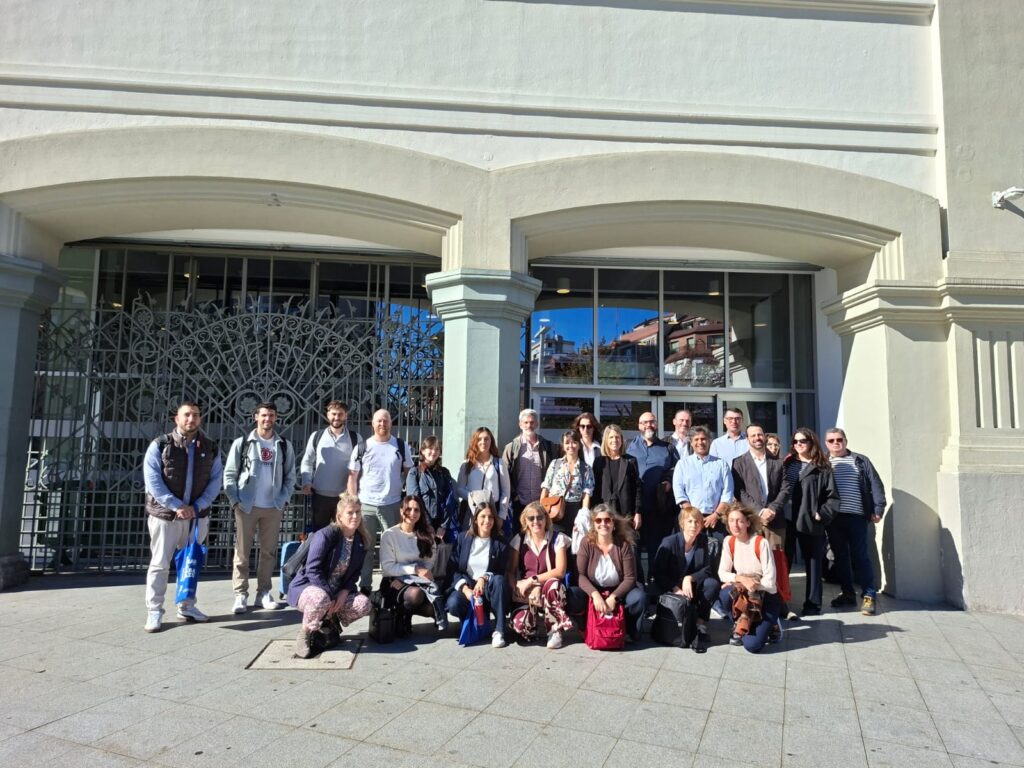
The STEAMbrace 2nd anual meeting in Bilbao brought partners together for a powerful moment of alignment, creativity, and planning. The meeting highlighted how STEAM education blends innovation, culture, and real-world problem-solving, and how collaboration keeps the project moving forward. As a result, partners left with renewed clarity and shared purpose for the year ahead. What the STEAMbrace 2nd annual meeting set out to achieve This meeting was designed to connect workstreams, refine strategies, and prepare for the most active phase of STEAMbrace. It linked teachers, researchers, technologists, and creative practitioners in a single space with one mission: to build a more inclusive, more inspiring STEAM ecosystem for Europe’s young people. Partners reviewed the progress across all work packages and explored the next milestones together. Moreover, they strengthened the collaborative structure that ensures STEAMbrace remains coherent, ambitious, and impactful. With major activities approaching (from pilots to contests to STEAM Week), the STEAMbrace 2nd annual meeting offered perfect timing to synchronise visions, methods, and practical tools. Why STEAM belongs at the centre of these conversations STEAMbrace works at the intersection of science, creativity, technology, and inclusion. That blend was fully visible in Bilbao. STEAM helps turn technical concepts into human-centred learning. Robotics becomes storytelling. AI becomes collaboration. Engineering becomes design practice. In addition, STEAM opens the door to diverse perspectives. This helps reduce gender gaps and ensures more students, especially girls, can see themselves thriving in these fields. Teachers can adapt STEAMbrace activities to their national contexts. Students can prototype ideas, explore labs, and visualise problems creatively. These experiences deepen understanding while building confidence. La Perrera: Where robotics, creativity, and STEAM meet A highlight of the meeting was the visit to La Perrera, a cultural and technological space in Bilbao dedicated to experimentation, robotics, and innovation. The venue served as an ideal backdrop for a project like STEAMbrace, open, collaborative, and future-focused. Partners explored several robotics models, including the globally known robot dog, and learned about the design and engineering behind the creations. Importantly, many of these developments involved brilliant women engineers, reinforcing the project’s goal of increasing the visibility of women in STEAM. La Perrera showed how robotics can inspire students by making technology tangible, playful, and accessible. It also demonstrated how cultural spaces can spark imagination, a key ingredient of STEAM learning. Moving toward the National STEAM Contests and the European final Another major milestone discussed in Bilbao was the upcoming National STEAM Contests. Each partner will organise its own challenge, adapted to local needs and cultures. Later, winners will gather for the European STEAM Contest, a flagship event scheduled for April 2026. These contests encourage creativity, teamwork, and student-led innovation. They also help close gender gaps by making STEAM more attractive, relatable, and visible to girls. The STEAMbrace 2nd annual meeting focused on preparing communication strategies, evaluation criteria, and support materials to ensure the highest participation possible. STEAM Week 2026: A European celebration in progress Partners also advanced preparations for STEAM Week, another major effort planned for April 2026. This event will bring together classrooms, families, stakeholders, and policymakers through activities, workshops, live sessions, and creative challenges. Communication efforts will begin early to ensure that STEAM Week becomes an accessible, engaging, continent-wide initiative. The Bilbao meeting provided clarity on roles, content needs, and media approaches. What students and teachers gain through STEAMbrace Activities aligned with STEAMbrace help young people develop: Clear explanations for complex ideasCreative tools to turn theory into meaningTeamwork skills across mixed groupsConfidence to ask bold, informed questions These skills last because students create, test, and communicate their ideas — not just learn them passively. How STEAMbrace will support the next steps STEAMbrace continues to focus on inclusion, clarity, and reach. We develop resources that help teachers begin quickly. We amplify the work of women role models. We highlight inspiring pilots, national actions, and student projects across Europe. Moreover, we plan youth-friendly content for social media: reels, explainers, and showcases from real classrooms, making STEAM visible in everyday life. Looking ahead: momentum for 2026 and beyond The STEAMbrace 2nd annual meeting marks a new phase for STEAMbrace. With pilots expanding, contests launching, and STEAM Week approaching, the project is entering a period of high activity and high impact. Partners will continue to collaborate, share knowledge, and support teachers and students across Europe as STEAMbrace builds a more inclusive, creative, and connected future for education. STEAMbrace 2nd annual meeting sets the stage for what’s next The STEAMbrace 2nd Annual Meeting in Bilbao showed what happens when creativity, robotics, education, and collaboration meet. It brought partners together, sharpened goals, and set the foundation for the next chapter. Follow STEAMbrace for updates, pilot stories, and youth-ready explainers and join us in shaping the future of STEAM education across Europe.
International Year of Quantum Science and Technology: Why STEAM Matters

Quantum ideas shape our daily lives. The International year of Quantum Science and Technology shines a bright light on that truth. It also shows how STEAM education connects science, art, and society. As a result, students see why quantum thinking matters now. What the International year of Quantum Science and Technology celebrates This global initiative honours a century of quantum breakthroughs and their impact. It links classrooms, labs, and cultural spaces with a shared goal. Educators can bring quantum stories to life with clear, hands-on learning. Moreover, students meet the people behind the ideas, not only the formulas. Quantum science drives core tools we use every day. Think lasers, GPS, and modern chips. It also powers the next wave of innovation. That includes quantum computing, secure links, and ultra-precise sensors. Therefore, the International year of Quantum Science and Technology offers perfect timing for fresh learning journeys. Why STEAM belongs at the centre STEAM turns complex physics into human stories and practical tasks. Art helps students model invisible worlds and communicate insight. Design helps them test ideas with prototypes and visuals. In addition, STEAM welcomes more voices into the room. That supports equity and helps reduce long-standing gaps. Teachers can link quantum topics to creative briefs. Students can build data visuals, design outreach posters, or code small demos. They can also sketch uncertainty, compose soundscapes, or stage short explainer videos. These activities build confidence and deepen understanding. Real projects that connect schools and science Across Europe, partners plan public events and school activities. Museums host talks that link quantum ideas with daily life. Universities open labs to show tools, safety, and method. Meanwhile, local alliances help schools access speakers and resources. The International Year of Quantum Science and Technology turns that network into a shared stage. In Spain, Zaragoza has taken a leading role with the initiative “Aragón en estado cuántico”, hosted at the Centro de Historias de Zaragoza. Coordinated by the CSIC, the Universidad de Zaragoza, and the INMA – Instituto de Nanociencia y Materiales de Aragón, this programme blends science, creativity, and outreach. Under the guidance of Pepa Martínez, it brings quantum research to life through exhibitions, talks, and interactive activities. The initiative shows how cultural spaces can connect science with society, inspiring students and families while highlighting the work of brilliant women in quantum fields. What students gain through STEAM-aligned quantum learning: Clear language for complex ideas Visual tools that turn theory into meaning Collaboration skills for mixed teams Confidence to ask bold, informed questions These gains stick because students create, not just absorb. The work lives in their hands, eyes, and voices. In addition, teams learn how to respect different paths to the same truth. Women in quantum: visibility that changes futures Role models matter. When students see women leading quantum initiatives, goals feel closer. Profiles, interviews, and live sessions help a lot. They show careers, study paths, and real lab practice. They also break myths about who belongs in physics. This year’s platform offers a strong stage for that visibility. Projects can promote diverse speakers and mixed panels. Schools can invite early-career researchers to class. Short videos can show a day in the lab, from prep to prototype. As a result, more girls and underrepresented students raise their hands. How STEAMbrace plans to support STEAMbrace focuses on inclusion, clarity, and reach. We share resources that help teachers start fast. We connect partners who plan open events. We highlight women leaders and student work. We also promote creative lesson ideas that fit real classrooms. In addition, we plan youth-friendly explainers for social media. Reels and shorts can unpack one idea at a time. For example, “How does a laser help a surgeon?” or “Why quantum helps GPS stay sharp.” These quick pieces support class lessons and family learning at home. Classroom ideas you can try this term Start with short, active tasks. Keep language simple. Let students build and explain. Draw a “quantum map” that links tech to daily life. Design a poster: “Quantum in one minute.” Record a 30-second explainer with props. Build a data sketch that shows uncertainty. These tasks fit mixed groups and limited time. They also scale. You can expand them into projects with community links. Looking ahead: momentum beyond 2025 The International year of Quantum Science and Technology runs through 2025. Yet the learning should continue well beyond. Schools can keep the links they build this year. Partners can share open content and teacher guides. Students can publish reflections and demos. As a result, the network grows stronger and more useful. STEAMbrace will keep amplifying good practice and clear voices. We invite schools, families, and partners to share their stories. Together, we can turn quantum from abstract fear into shared curiosity. A year to invite everyone in Quantum ideas can feel out of reach. STEAM makes them human, visual, and practical. This year gives us a common calendar and cause. Let’s use it to welcome more learners, more teachers, and more paths into science. Follow STEAMbrace for resources, events, and youth-ready explainers. Let’s build understanding together.
International Collaboration in STEAM Education: Connecting Classrooms Worldwide

International collaboration is transforming STEAM education by bringing students, teachers, and institutions together across borders, and at STEAMbrace, we want to share the knowledge with you! When young people connect beyond their own countries, they gain new ways of thinking, learn how to work with others, and tackle global problems with creative teamwork. In a world where science, technology, engineering, arts and mathematics are key to progress, collaborations that span continents are becoming an essential part of learning. What Is International Collaboration in STEAM Education? In simple terms, international collaboration in STEAM education means students working with peers from other countries on shared scientific, artistic, or technological projects. Instead of learning in isolation, they use digital tools to co-create solutions to real-world challenges. This style of learning helps develop a mindset of global citizenship and encourages respect for different ideas and cultures. Digital platforms such as eTwinning, Global Lab, and Zoom are making these partnerships easier than ever. Through them, students from Europe can connect with peers in Asia, Africa, or the Americas to exchange ideas, ask questions, and design projects; even if they never meet in person. As a result, STEAM education becomes not just a learning approach, but a bridge between cultures. Why Does International Collaboration Matter? Global projects in STEAM education help students build crucial 21st-century skills while building empathy and curiosity about the world. Whether taking part in a hackathon on climate change or creating a shared digital artwork, learners enrich their understanding of both science and humanity. Key benefits of this approach include: Cross-cultural communication: Learning to express ideas and listen respectfully to diverse perspectives. Real-world problem solving: Tackling issues such as sustainability, healthcare, or accessibility alongside peers abroad. Digital literacy: Gaining confidence in using online tools to research, create, and present ideas. These experiences help young people see that creative, inclusive solutions rarely come from a single perspective. Instead, they emerge through shared effort, which is an essential mindset in today’s globalised workforce. Real Examples of International Collaboration in STEAM Successful global collaborations already exist. For instance, international hackathons bring teenagers together to design eco-friendly technologies or propose digital solutions to societal problems. Research exchanges and virtual competitions also give students the chance to learn from cutting-edge innovations taking place worldwide. Platforms like eTwinning provide tools and forums to help teachers launch collaborative STEAM projects between schools in different countries. A class in Spain might partner with one in Poland to design a prototype for a sustainable city. Or pupils in Croatia could work with learners in Portugal to create a robotics challenge, sharing data, videos and drawings online, then voting together on the best designs. Participation in international science fairs, artistic tech exhibitions, or coding competitions helps students access new ideas, feel inspired and, importantly, see themselves reflected in the global STEAM community. Many return home not only with improved skills, but with long-term connections that support future study or professional ambitions. Building Equity and Global Mindsets International collaboration in STEAM education is not only about academic growth: it also plays a role in promoting inclusion and equity. By connecting students from different socio-economic backgrounds, regions and cultures, it offers access to wider resources and perspectives. This creates a fairer, more balanced learning environment, especially for students who may not otherwise have opportunities to engage globally. Moreover, mixed-gender and diverse group work helps break stereotypes and generate more inclusive creative thinking. These collaborations can encourage girls and underrepresented learners to see STEAM fields as welcoming and exciting, boosting participation and confidence. Looking Ahead: A More Connected Future As global challenges become increasingly complex, the need for creative, connected problem-solvers will only grow. International collaboration in STEAM education prepares young people not just to understand their world, but to improve it. By working across cultures with shared goals, students learn that curiosity has no borders and innovation is strongest when built together.
The rise of Gamification in STEAM Education
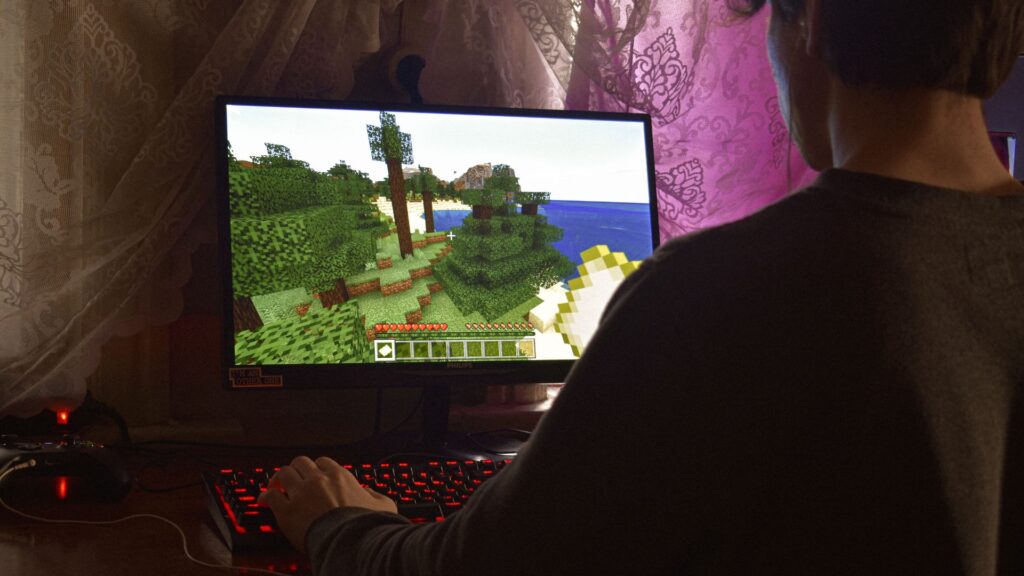
Gamification in STEAM education uses game design elements in educational settings to increase student engagement and motivation, making learning more interactive and fun. This approach is proving to be highly effective in STEAM education, where complex concepts can be made more accessible through games. By incorporating elements such as points, badges, leaderboards, and challenges, educators can create a dynamic and immersive learning environment that captures students’ interest and encourages active participation. Educational games and platforms like Kahoot!, Minecraft: Education Edition, and Classcraft are being used to teach STEAM concepts effectively. These tools provide interactive and immersive learning experiences that capture students’ interest and make learning enjoyable. For example, Minecraft: Education Edition allows students to explore and create virtual worlds, applying concepts from subjects like mathematics, science, and engineering in a hands-on and engaging way. Why Gamification in STEAM Education Is So Effective Gamified lessons, such as using escape room challenges to teach physics or math, show significant improvements in student motivation and learning outcomes. By turning learning into a game, educators can create a dynamic and engaging environment that encourages students to participate and learn actively. These lessons often involve solving puzzles, completing tasks, and collaborating with peers, making the learning process more interactive and enjoyable. Gamification also enhances classroom dynamics by promoting friendly competition and collaboration. Students often become more invested in their progress, as game mechanics reward effort and persistence. This can be especially valuable for students who struggle with traditional learning approaches, as gamified elements offer alternative pathways to success. For educators, it provides a way to make feedback more immediate and meaningful, a key aspect of effective teaching. How Gamification in STEAM Education Supports the STEAMbrace Mission STEAMbrace is actively exploring gamified learning strategies as part of its mission to make STEAM education more inclusive, engaging, and innovative. By integrating gamification into interdisciplinary learning activities, the project supports the development of core skills like creativity, critical thinking, and teamwork. These efforts reflect the growing recognition that engaging educational formats are key to reaching young learners aged 11–18, particularly those who may feel excluded or intimidated by traditional STEAM pathways. Research indicates that gamification can lead to higher engagement and better retention of knowledge. Students who participate in gamified learning experiences are more likely to be motivated, attentive, and enthusiastic about their studies. This increased engagement translates to improved learning outcomes, as students are more likely to retain and apply the knowledge they have gained. As a result, more educators are incorporating gamified learning experiences into their STEAM curricula, making education both fun and effective. For instance, teachers might use digital badges to reward students for completing tasks or mastering skills, creating a sense of achievement and encouraging continued effort. Leaderboards can foster healthy competition, motivating students to strive for excellence and improve their performance. The Future of Gamification in STEAM Education Furthermore, gamification can help develop essential skills such as problem-solving, critical thinking, and collaboration. Games often require players to think strategically, analyze situations, and work together to achieve common goals. These skills are crucial for success in STEAM fields and beyond, making gamification a valuable tool for holistic education. Additionally, gamification can cater to different learning styles and abilities, providing a personalized learning experience for each student. Adaptive learning technologies can tailor game-based activities to individual students’ needs, ensuring that each learner is challenged appropriately and supported in their learning journey. In conclusion, gamification in STEAM education offers a powerful and effective way to enhance student engagement, motivation, and learning outcomes. By incorporating game design elements into their teaching strategies, educators can create an interactive and enjoyable learning environment that fosters essential skills and prepares students for future success.
The rise of STEAM education: Why Arts matter in STEM
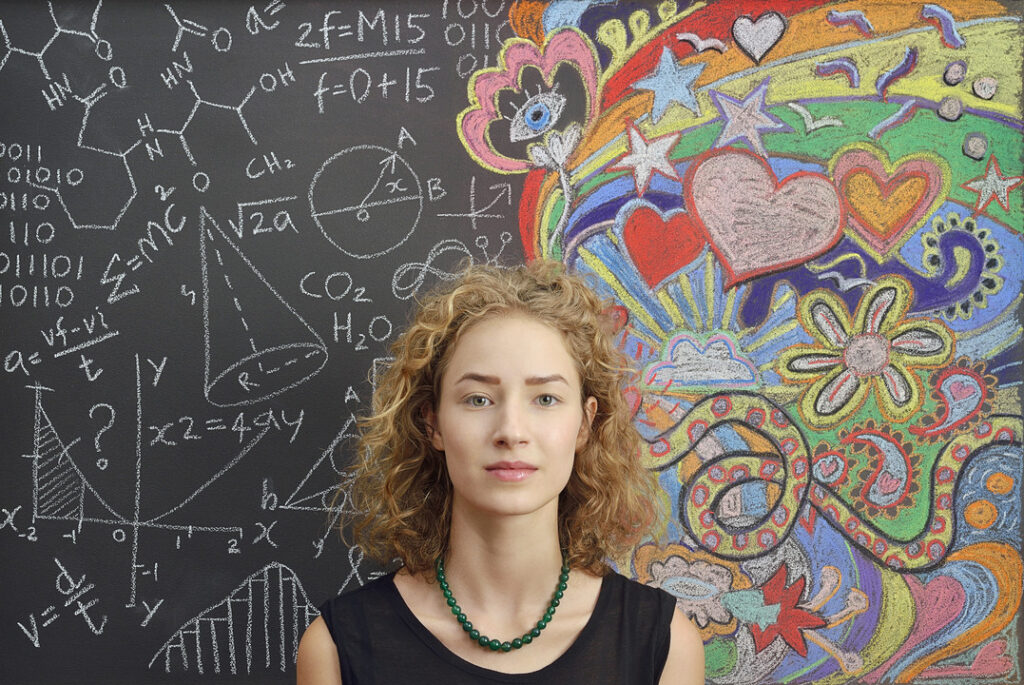
For years, STEM (science, technology, engineering, and mathematics) has been a powerful framework for preparing students to navigate a digital, tech-driven world. But in today’s evolving society, creativity, empathy, and critical thinking are just as vital as coding and calculus. That’s why educators, researchers, and policymakers across Europe are increasingly advocating for STEAM education, a model that integrates the Arts into STEM. By adding the “A” for Arts, STEAM creates space for imagination, diversity of thought, and a more inclusive learning environment. And this shift couldn’t be more timely. What is STEAM education? STEAM education is an interdisciplinary approach that connects artistic and creative thinking with traditional STEM fields. It challenges the outdated notion that science and creativity live in separate worlds. Instead, it recognizes that innovation happens when technical expertise meets design, storytelling, and emotion. Whether it’s using graphic design to communicate climate data, choreographing movements to explain physics concepts, or integrating music into coding exercises, STEAM empowers learners to engage more fully, and more meaningfully, with scientific content. Why the Arts belong in STEM The European Commission’s Horizon Magazine recently highlighted the importance of art inclusion as a way to empower girls in science and close gender gaps in STEM fields. Studies show that when arts are integrated into STEM lessons, girls are more likely to participate, express themselves, and stay engaged. This matters, as many girls report feeling alienated in traditional STEM settings. Moreover, the 2023 STEM Education Report by the European Commission calls for stronger policy efforts and research to support innovative, inclusive, and cross-disciplinary teaching. One clear recommendation: bring the arts into the classroom. STEAM education not only improves student engagement and motivation, but it also helps cultivate the creative problem-solving skills that 21st-century careers demand. How STEAMbrace puts STEAM into action At the heart of this transformation is the Horizon Europe project STEAMbrace, a forward-thinking initiative designed to create inclusive, gender-responsive, and creative learning experiences for students aged 11–18. Through hands-on activities, interdisciplinary challenges, and multilingual resources, STEAMbrace promotes the fusion of scientific knowledge with creative exploration. Here’s how the project brings STEAM to life: Art-infused learning: STEAMbrace pilots encourage students to explore real-world issues using both analytical and creative tools, from designing inclusive infrastructure to training AI through visual storytelling. Gender-sensitive approaches: By integrating the Arts, the project reaches more students (especially more girls) who might otherwise feel disconnected from STEM. Collaborative synergies: STEAMbrace collaborates with projects like STREAM-IT and Road-STEAMer, exchanging strategies to enhance creative pedagogy and boost diversity in education. As one of the project’s key goals, STEAMbrace aims to make STEAM not just a framework, but a mindset, one that welcomes all learners and recognizes multiple intelligences. Results and future outlook In pilot activities across Europe, over 120 students and 9 teachers at II. Primary School Varaždin recently engaged in STEAMbrace workshops that combined science with design, AI, and creative thinking. The feedback has been overwhelmingly positive, highlighting how arts-based activities spark curiosity, increase confidence, and build a sense of belonging in the classroom. Looking ahead, the project is expanding its digital footprint and will soon be launching a TikTok account to reach younger audiences, increasing visibility through creative campaigns, and deepening its collaboration with European partners to influence STEAM policy and practice. Conclusion: STEAM as a pathway to inclusion and innovation Bringing the Arts into STEM isn’t just about adding color to science class. It’s about redefining what it means to learn, to innovate, and to belong. In a world facing complex challenges, our solutions need both logic and imagination. Projects like STEAMbrace demonstrate that STEAM education is more than a trend. It’s a powerful tool for equity, creativity, and change. Let’s keep pushing boundaries, empowering students, and building a future where science and art move forward—together. 👉 Learn more about our work and follow our journey at steambraceproject.eu
Insights from our 1st STEAMbrace Congress
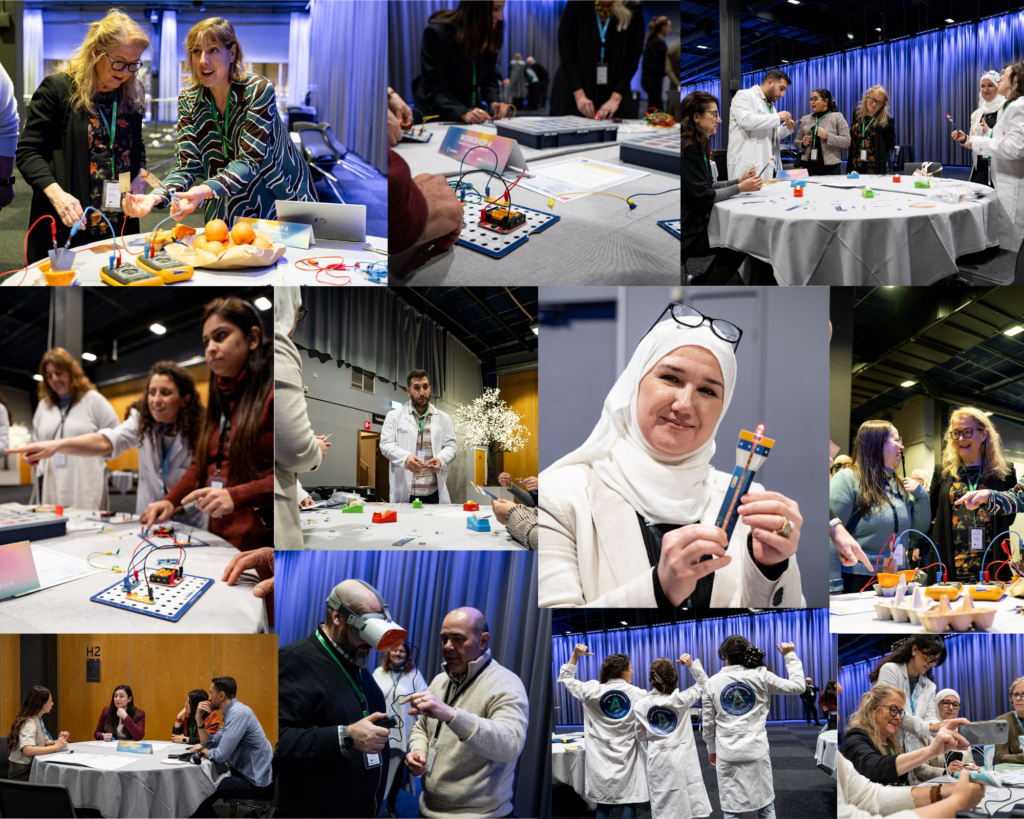
The recent insight from our 1st STEAMbrace Congress in Gothenburg were more than just a meeting of minds—what we got was a dynamic space where creativity, innovation, and collaboration flourished. Over the course of the event, participants had the unique opportunity to engage with a variety of hands-on workshops that showcased the cutting-edge methodologies and educational tools being developed through the STEAMbrace project. This Congress was a key milestone, reflecting the project’s ambition to redefine how science, technology, engineering, arts, and mathematics (STEAM) are taught and experienced in educational environments. A Collaborative Learning Space From the moment attendees stepped into the workshop areas, there was a palpable sense of excitement. Participants from diverse backgrounds—educators, researchers, and project partners—gathered around round tables, where they were invited to explore, experiment, and reflect on the potential of STEAM education. The goal was not only to present innovative learning tools but also to test, refine, and expand upon them through real-time interaction and feedback. This participatory model aligns with STEAMbrace’s core philosophy: to bridge the gap between theory and practice by engaging learners in activities that encourage curiosity, critical thinking, and creative problem-solving. Each workshop offered a hands-on, experimental environment where abstract scientific principles were transformed into tangible and interactive experiences. One of the standout aspects of the Congress was the diversity of workshops, which demonstrated how STEAM education can be both accessible and engaging for students aged 11 to 18. Activities ranged from exploring renewable energy using natural materials to immersive digital experiences that showcased the power of virtual reality. Each session reflected a commitment to fostering inclusivity and interdisciplinary collaboration, key pillars of the STEAMbrace initiative. Testing and Co-Creating Future STEAM Tools A central objective of the Congress was to provide a platform for testing some of the educational tools that STEAMbrace is developing while also showcasing activities already implemented in schools. These workshops were not just demonstrations—they were collaborative experiments where participants could engage deeply with the materials, offer feedback, and discuss ways to improve and scale these methodologies across different educational contexts. For instance, the Citrus Sparks workshop demonstrated how simple, everyday materials could become powerful learning tools. Participants built batteries using orange juice as a natural electrolyte, which not only made abstract chemical concepts more tangible but also highlighted the practical potential of sustainable energy sources. This type of hands-on learning encourages both scientific inquiry and environmental awareness, key aspects of modern STEAM education. Similarly, the VR Creation workshop invited participants to dive into the world of virtual reality, guiding them through the process of designing and experiencing their own immersive environments. This activity showcased how emerging technologies can enhance learning by providing students with experiential and interactive access to complex ideas. It also demonstrated how digital tools could foster creativity while reinforcing technical skills essential for the future. The Magic Lanterns and 3D Pencils workshops provided another layer of exploration, blending art and technology. These sessions emphasized the A in STEAM, illustrating how creative expression can enhance technical learning and provide new avenues for innovation. By encouraging participants to design illuminated models and create 3D structures, these workshops bridged the gap between imagination and engineering, showing how creative design processes can empower young learners to explore scientific concepts from new angles. Addressing Key Challenges: Gender and Inclusion in STEAM Beyond the hands-on technical workshops, the World Café session created a meaningful space for dialogue about gender equity and inclusion in STEAM fields. Facilitated by Aylar Hassanpouraghdam, this discussion invited participants to reflect on how to break down barriers for underrepresented groups, particularly girls and young women. Conversations focused on identifying structural challenges, sharing best practices, and developing actionable strategies to create more inclusive educational spaces. This session aligned with one of STEAMbrace’s most important goals: to bridge the gender gap in science and technology. By fostering these discussions during the Congress, the project aims to inspire collective action and to empower future generations of women to pursue and thrive in STEAM fields. Building a Vision for the Future Throughout the Congress, a recurring theme emerged: this is only the beginning. As Anca Dumitrescu, Chairman of the Board at WiTEC Sweden, expressed during her address, the event marked a first step toward a larger vision for the future of STEAM education. With the collaborative energy witnessed in Gothenburg, there is clear optimism that the impact of STEAMbrace will extend far beyond these workshops and into classrooms across Europe. The workshops were not isolated activities—they were building blocks for a more integrated and innovative educational ecosystem. By co-creating with educators and stakeholders, the STEAMbrace project is laying the foundation for scalable methodologies that can be adopted and adapted in diverse educational contexts. According to Juancho Pons, STEAMbrace Coordinator and Project Manager at Edelvives, the Congress was a tangible demonstration of the project’s guiding principles: “In this consortium, we have embraced the core values of STEAM—collaboration, creativity, critical thinking, and diversity—and these values are what will drive us forward. What we began here in Gothenburg will help shape the future of how STEAM education is delivered across Europe.” Looking Ahead As the Congress concluded, there was a shared sense of momentum and commitment. The insights gathered from these workshops will inform the next phases of the project, ensuring that the tools and methodologies developed reflect real-world needs and educational priorities. Over the next three years, STEAMbrace will continue to develop, test, and refine these approaches, always with the goal of making STEAM education more inclusive, accessible, and impactful. The STEAMbrace Congress in Gothenburg was not just a meeting—it was a living laboratory for innovation, a collaborative space where participants came together to imagine, create, and shape the future. As the project moves forward, the energy and ideas generated during these days will continue to drive the mission to transform STEAM education across Europe. Original article written by Filipa Magalhaes.