


International Year of Quantum Science and Technology: Why STEAM Matters

Quantum ideas shape our daily lives. The International year of Quantum Science and Technology shines a bright light on that truth. It also shows how STEAM education connects science, art, and society. As a result, students see why quantum thinking matters now. What the International year of Quantum Science and Technology celebrates This global initiative honours a century of quantum breakthroughs and their impact. It links classrooms, labs, and cultural spaces with a shared goal. Educators can bring quantum stories to life with clear, hands-on learning. Moreover, students meet the people behind the ideas, not only the formulas. Quantum science drives core tools we use every day. Think lasers, GPS, and modern chips. It also powers the next wave of innovation. That includes quantum computing, secure links, and ultra-precise sensors. Therefore, the International year of Quantum Science and Technology offers perfect timing for fresh learning journeys. Why STEAM belongs at the centre STEAM turns complex physics into human stories and practical tasks. Art helps students model invisible worlds and communicate insight. Design helps them test ideas with prototypes and visuals. In addition, STEAM welcomes more voices into the room. That supports equity and helps reduce long-standing gaps. Teachers can link quantum topics to creative briefs. Students can build data visuals, design outreach posters, or code small demos. They can also sketch uncertainty, compose soundscapes, or stage short explainer videos. These activities build confidence and deepen understanding. Real projects that connect schools and science Across Europe, partners plan public events and school activities. Museums host talks that link quantum ideas with daily life. Universities open labs to show tools, safety, and method. Meanwhile, local alliances help schools access speakers and resources. The International Year of Quantum Science and Technology turns that network into a shared stage. In Spain, Zaragoza has taken a leading role with the initiative “Aragón en estado cuántico”, hosted at the Centro de Historias de Zaragoza. Coordinated by the CSIC, the Universidad de Zaragoza, and the INMA – Instituto de Nanociencia y Materiales de Aragón, this programme blends science, creativity, and outreach. Under the guidance of Pepa Martínez, it brings quantum research to life through exhibitions, talks, and interactive activities. The initiative shows how cultural spaces can connect science with society, inspiring students and families while highlighting the work of brilliant women in quantum fields. What students gain through STEAM-aligned quantum learning: Clear language for complex ideas Visual tools that turn theory into meaning Collaboration skills for mixed teams Confidence to ask bold, informed questions These gains stick because students create, not just absorb. The work lives in their hands, eyes, and voices. In addition, teams learn how to respect different paths to the same truth. Women in quantum: visibility that changes futures Role models matter. When students see women leading quantum initiatives, goals feel closer. Profiles, interviews, and live sessions help a lot. They show careers, study paths, and real lab practice. They also break myths about who belongs in physics. This year’s platform offers a strong stage for that visibility. Projects can promote diverse speakers and mixed panels. Schools can invite early-career researchers to class. Short videos can show a day in the lab, from prep to prototype. As a result, more girls and underrepresented students raise their hands. How STEAMbrace plans to support STEAMbrace focuses on inclusion, clarity, and reach. We share resources that help teachers start fast. We connect partners who plan open events. We highlight women leaders and student work. We also promote creative lesson ideas that fit real classrooms. In addition, we plan youth-friendly explainers for social media. Reels and shorts can unpack one idea at a time. For example, “How does a laser help a surgeon?” or “Why quantum helps GPS stay sharp.” These quick pieces support class lessons and family learning at home. Classroom ideas you can try this term Start with short, active tasks. Keep language simple. Let students build and explain. Draw a “quantum map” that links tech to daily life. Design a poster: “Quantum in one minute.” Record a 30-second explainer with props. Build a data sketch that shows uncertainty. These tasks fit mixed groups and limited time. They also scale. You can expand them into projects with community links. Looking ahead: momentum beyond 2025 The International year of Quantum Science and Technology runs through 2025. Yet the learning should continue well beyond. Schools can keep the links they build this year. Partners can share open content and teacher guides. Students can publish reflections and demos. As a result, the network grows stronger and more useful. STEAMbrace will keep amplifying good practice and clear voices. We invite schools, families, and partners to share their stories. Together, we can turn quantum from abstract fear into shared curiosity. A year to invite everyone in Quantum ideas can feel out of reach. STEAM makes them human, visual, and practical. This year gives us a common calendar and cause. Let’s use it to welcome more learners, more teachers, and more paths into science. Follow STEAMbrace for resources, events, and youth-ready explainers. Let’s build understanding together.
The rise of Gamification in STEAM Education
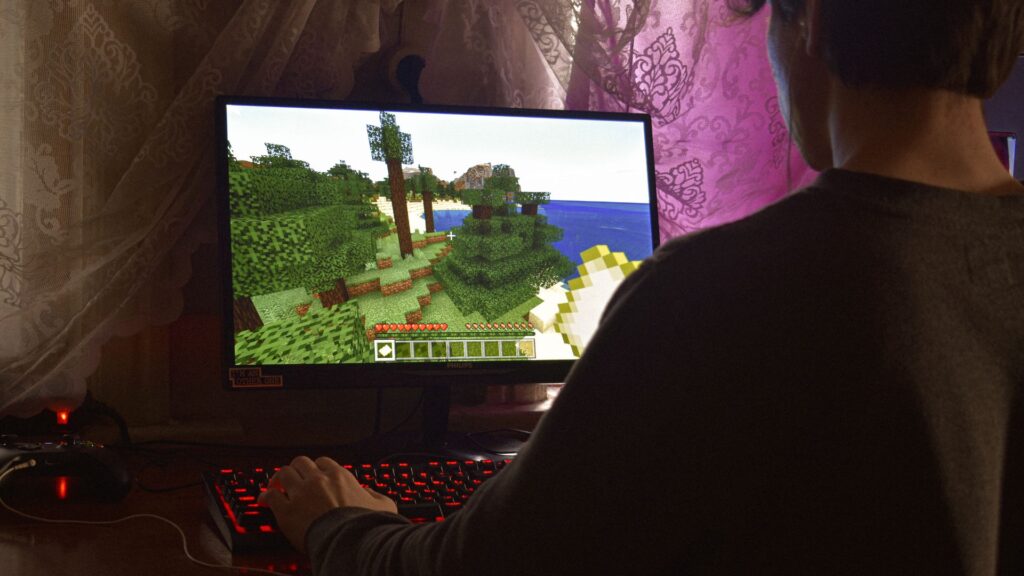
Gamification in STEAM education uses game design elements in educational settings to increase student engagement and motivation, making learning more interactive and fun. This approach is proving to be highly effective in STEAM education, where complex concepts can be made more accessible through games. By incorporating elements such as points, badges, leaderboards, and challenges, educators can create a dynamic and immersive learning environment that captures students’ interest and encourages active participation. Educational games and platforms like Kahoot!, Minecraft: Education Edition, and Classcraft are being used to teach STEAM concepts effectively. These tools provide interactive and immersive learning experiences that capture students’ interest and make learning enjoyable. For example, Minecraft: Education Edition allows students to explore and create virtual worlds, applying concepts from subjects like mathematics, science, and engineering in a hands-on and engaging way. Why Gamification in STEAM Education Is So Effective Gamified lessons, such as using escape room challenges to teach physics or math, show significant improvements in student motivation and learning outcomes. By turning learning into a game, educators can create a dynamic and engaging environment that encourages students to participate and learn actively. These lessons often involve solving puzzles, completing tasks, and collaborating with peers, making the learning process more interactive and enjoyable. Gamification also enhances classroom dynamics by promoting friendly competition and collaboration. Students often become more invested in their progress, as game mechanics reward effort and persistence. This can be especially valuable for students who struggle with traditional learning approaches, as gamified elements offer alternative pathways to success. For educators, it provides a way to make feedback more immediate and meaningful, a key aspect of effective teaching. How Gamification in STEAM Education Supports the STEAMbrace Mission STEAMbrace is actively exploring gamified learning strategies as part of its mission to make STEAM education more inclusive, engaging, and innovative. By integrating gamification into interdisciplinary learning activities, the project supports the development of core skills like creativity, critical thinking, and teamwork. These efforts reflect the growing recognition that engaging educational formats are key to reaching young learners aged 11–18, particularly those who may feel excluded or intimidated by traditional STEAM pathways. Research indicates that gamification can lead to higher engagement and better retention of knowledge. Students who participate in gamified learning experiences are more likely to be motivated, attentive, and enthusiastic about their studies. This increased engagement translates to improved learning outcomes, as students are more likely to retain and apply the knowledge they have gained. As a result, more educators are incorporating gamified learning experiences into their STEAM curricula, making education both fun and effective. For instance, teachers might use digital badges to reward students for completing tasks or mastering skills, creating a sense of achievement and encouraging continued effort. Leaderboards can foster healthy competition, motivating students to strive for excellence and improve their performance. The Future of Gamification in STEAM Education Furthermore, gamification can help develop essential skills such as problem-solving, critical thinking, and collaboration. Games often require players to think strategically, analyze situations, and work together to achieve common goals. These skills are crucial for success in STEAM fields and beyond, making gamification a valuable tool for holistic education. Additionally, gamification can cater to different learning styles and abilities, providing a personalized learning experience for each student. Adaptive learning technologies can tailor game-based activities to individual students’ needs, ensuring that each learner is challenged appropriately and supported in their learning journey. In conclusion, gamification in STEAM education offers a powerful and effective way to enhance student engagement, motivation, and learning outcomes. By incorporating game design elements into their teaching strategies, educators can create an interactive and enjoyable learning environment that fosters essential skills and prepares students for future success.
The rise of STEAM education: Why Arts matter in STEM

For years, STEM (science, technology, engineering, and mathematics) has been a powerful framework for preparing students to navigate a digital, tech-driven world. But in today’s evolving society, creativity, empathy, and critical thinking are just as vital as coding and calculus. That’s why educators, researchers, and policymakers across Europe are increasingly advocating for STEAM education, a model that integrates the Arts into STEM. By adding the “A” for Arts, STEAM creates space for imagination, diversity of thought, and a more inclusive learning environment. And this shift couldn’t be more timely. What is STEAM education? STEAM education is an interdisciplinary approach that connects artistic and creative thinking with traditional STEM fields. It challenges the outdated notion that science and creativity live in separate worlds. Instead, it recognizes that innovation happens when technical expertise meets design, storytelling, and emotion. Whether it’s using graphic design to communicate climate data, choreographing movements to explain physics concepts, or integrating music into coding exercises, STEAM empowers learners to engage more fully, and more meaningfully, with scientific content. Why the Arts belong in STEM The European Commission’s Horizon Magazine recently highlighted the importance of art inclusion as a way to empower girls in science and close gender gaps in STEM fields. Studies show that when arts are integrated into STEM lessons, girls are more likely to participate, express themselves, and stay engaged. This matters, as many girls report feeling alienated in traditional STEM settings. Moreover, the 2023 STEM Education Report by the European Commission calls for stronger policy efforts and research to support innovative, inclusive, and cross-disciplinary teaching. One clear recommendation: bring the arts into the classroom. STEAM education not only improves student engagement and motivation, but it also helps cultivate the creative problem-solving skills that 21st-century careers demand. How STEAMbrace puts STEAM into action At the heart of this transformation is the Horizon Europe project STEAMbrace, a forward-thinking initiative designed to create inclusive, gender-responsive, and creative learning experiences for students aged 11–18. Through hands-on activities, interdisciplinary challenges, and multilingual resources, STEAMbrace promotes the fusion of scientific knowledge with creative exploration. Here’s how the project brings STEAM to life: Art-infused learning: STEAMbrace pilots encourage students to explore real-world issues using both analytical and creative tools, from designing inclusive infrastructure to training AI through visual storytelling. Gender-sensitive approaches: By integrating the Arts, the project reaches more students (especially more girls) who might otherwise feel disconnected from STEM. Collaborative synergies: STEAMbrace collaborates with projects like STREAM-IT and Road-STEAMer, exchanging strategies to enhance creative pedagogy and boost diversity in education. As one of the project’s key goals, STEAMbrace aims to make STEAM not just a framework, but a mindset, one that welcomes all learners and recognizes multiple intelligences. Results and future outlook In pilot activities across Europe, over 120 students and 9 teachers at II. Primary School Varaždin recently engaged in STEAMbrace workshops that combined science with design, AI, and creative thinking. The feedback has been overwhelmingly positive, highlighting how arts-based activities spark curiosity, increase confidence, and build a sense of belonging in the classroom. Looking ahead, the project is expanding its digital footprint and will soon be launching a TikTok account to reach younger audiences, increasing visibility through creative campaigns, and deepening its collaboration with European partners to influence STEAM policy and practice. Conclusion: STEAM as a pathway to inclusion and innovation Bringing the Arts into STEM isn’t just about adding color to science class. It’s about redefining what it means to learn, to innovate, and to belong. In a world facing complex challenges, our solutions need both logic and imagination. Projects like STEAMbrace demonstrate that STEAM education is more than a trend. It’s a powerful tool for equity, creativity, and change. Let’s keep pushing boundaries, empowering students, and building a future where science and art move forward—together. 👉 Learn more about our work and follow our journey at steambraceproject.eu
LLMs in education: from crutches to jumping pole

You see students using ChatGPT to finish tasks fast. Professors and teachers rant about the rate of pupils using large language models (LLMs) to turn in an essay. Maybe even you have asked an artificial intelligence (AI) for help in a task you were supposed to do yourself. LLMs in education are here to stay. Regardless of how we feel about it, they are available everywhere. But right now, that is not a good thing. Having an educational model set up without LLMs only benefits those who can use AIs like ChatGPT as a shortcut to do less work. And yet, we face the chance to use those very AIs to improve education instead. How to turn crutches into jumping poles We should not pretend that the task ahead is easy. When slides were invented, shifting from blackboards and books to presentations took time. In fact, these tools remain in the classroom, and that is well. The same happened with Google and the internet. Information at the student’s fingertips made it so schools and universities had to adapt. And while it is still a work in progress, these technologies have been adopted. The same is happening with AI and LLMs. For example, Estonia is already investing in plans to equip the classroom with these tools. And the European Union (EU) is forming teachers in the use of AI for education in STEM. And yet, technological advancements can increase disparity in the classroom. AI as an opportunity to bridge educational gaps When it comes to STEAM education (Science, Technology, Engineering, the Arts, and Mathematics), there are still gaps and barriers for many students. First, we have a socio-economic barrier. Students with less means are at a clear disadvantage in the current education system. Then, students in rural areas may have to move or commute for studies, resulting in economic difficulties and less support. They also may have fewer resources, especially technological ones. And there is still a gender gap in STEAM. Women are fewer than men in many areas, especially in decision-making roles. With the introduction of AI in the classroom, we can increase these differences if we are not careful. But AI can also let us promote a more equal, balanced, and empowering education system. This is exactly what STEAMbrace stands for and aims to do. Promoting a fairer education system STEAMbrace is pushing to create the STEAM Alliance for Europe. This is a European-wide collaboration. It involves educators, policymakers, cultural and creative industries, civil organizations and research organizations. The aim? To build on previous European initiatives and use creative approaches to make STEAM mainstream and accessible for everyone. The main focus is on the gender gap, reducing socio-economic barriers, and boosting rural education to reduce disparity. AI in the classroom to reduce disparities. LLMs are often trained on public data. If the data itself is skewed, the LLMs show prejudice. This is already happening, for example, they show a gender bias. We need to do a better job if we want to promote gender equality. This means providing students with unbiased LLMs they can trust. The use of AI and LLMs also requires an internet connection, and paying means you get access to a better version of, for example, ChatGPT. This poses an issue for rural students with slower internet access, if any. It also benefits members of higher socioeconomic layers. To reduce these disparities, we must provide students with the right tools and opportunities, both in the classroom and beyond. LLM-conscious teachers and students To achieve this, we must push for LLM-conscious teachers and students. But it takes a village. We need the effort of many other groups. Researchers, to identify possible gaps and the best educational practices. Policymakers and administrators, to give the teachers the needed training and tools. And educators, to provide students with the knowledge to use AI and LLMs responsibly. Critical thinking is also key to interpreting the results of AI use. Conclusion STEAMbrace pushes for the formation of an EU alliance that can tackle current educational issues. These include the gender gap, socio-economical differences and rural disparities. AI can contribute to deepening these issues or to remedy them if used properly. The STEAM Alliance for Europe can be used to make sure that LLMs and AI are implemented in the classroom with the right mindset. By informing the participants involved about the potential issues that may come from using LLMs, we can be ready to use them more safely and reduce disparities.
Sustainable STEAM education: impact on STEAMbrace’s future
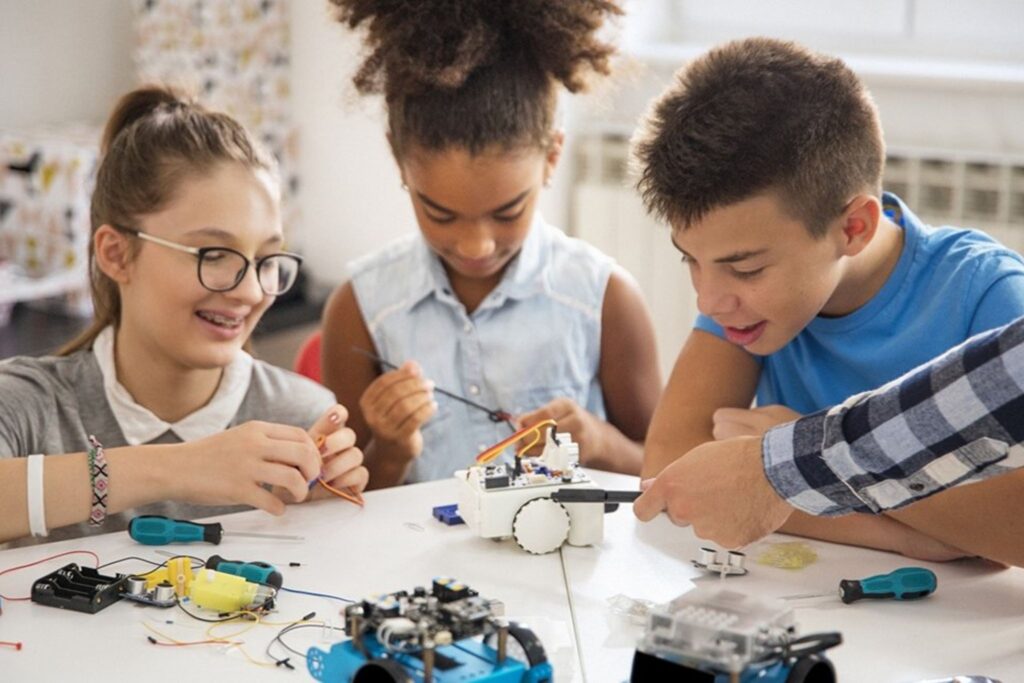
We are on the constant push for change in education. Our focus lies in sustainable STEAM education. We aim to close the gender gap in STEM. We integrate arts with science, technology, engineering, and math. We empower learners to create eco-friendly solutions. Our mission drives us to build bridges among diverse experts. With sustainable STEAM education, we prepare future innovators to tackle environmental challenges. Our new STEAMbrace HQ in Zaragoza reinforces our vision. It serves as a central hub for collaboration and growth. The Power of Sustainable STEAM Education Our approach changes lives. We prepare teachers to use active methods every day. Students engage in hands-on experiments. They build models and test ideas. They learn to solve real problems with clear purpose. This method inspires confidence in young minds. It also sparks curiosity about nature. In our classrooms, learners work on renewable energy projects. They design eco-friendly systems. Moreover, this approach teaches ethical skills. It prepares them for green careers. Our focus on sustainable STEAM education brings real change to education. It makes learning engaging and practical. Shaping Projects through Creative Collaboration At STEAMbrace, we drive innovation in every workshop. We exchange ideas and develop new strategies. We plan training sessions and build digital resource hubs. Our partners include experts from many fields. They bring creative techniques to our table. They use evidence-based methods to shape projects. Our innovative projects exemplify sustainable STEAM education in action. We design methods that work in real life. We ensure every activity is practical and inspiring. Collaboration remains at the heart of our approach. Building a better and more inclusive future We believe in a greener future. Our vision centers on sustainability as a core value. We promote eco-friendly practices in every lesson. We promote sustainable STEAM education practices in every lesson. Students explore green technology and sustainable design. Teachers introduce interactive labs and digital tools. They run experiments that use real data. Learners develop a deep respect for the environment. They learn to balance innovation with nature. Moreover, our methods foster responsibility. We encourage every participant to think globally. Our vision creates lasting community impact. We build strong networks and share best practices. This work opens new career paths. It drives a culture of eco-friendly creativity and collaboration. Furthermore, our work fosters innovation. We support research that improves green practices. We share our findings with partners and communities. We encourage educators to adopt these methods. This shared effort builds a robust network. It ensures that eco-friendly ideas spread quickly. We believe small actions lead to big impacts. Our community grows stronger with every new idea. Conclusion In conclusion, our journey relies on STEAM and sustainability. Our approach transforms learning and inspires innovative solutions. We empower students and teachers to face real-world challenges. Our new headquarters in Zaragoza acts as a beacon for progress. Our project stands as proof that education can change the world. We drive change by combining creative methods with ethical practices. We embrace STEAM and sustainability to build a brighter, inclusive future. Join us as we continue to explore new ideas and methods. Together, we create a greener and more innovative tomorrow. We firmly believe that embracing sustainable STEAM education will shape a better world.
Insights from our 1st STEAMbrace Congress
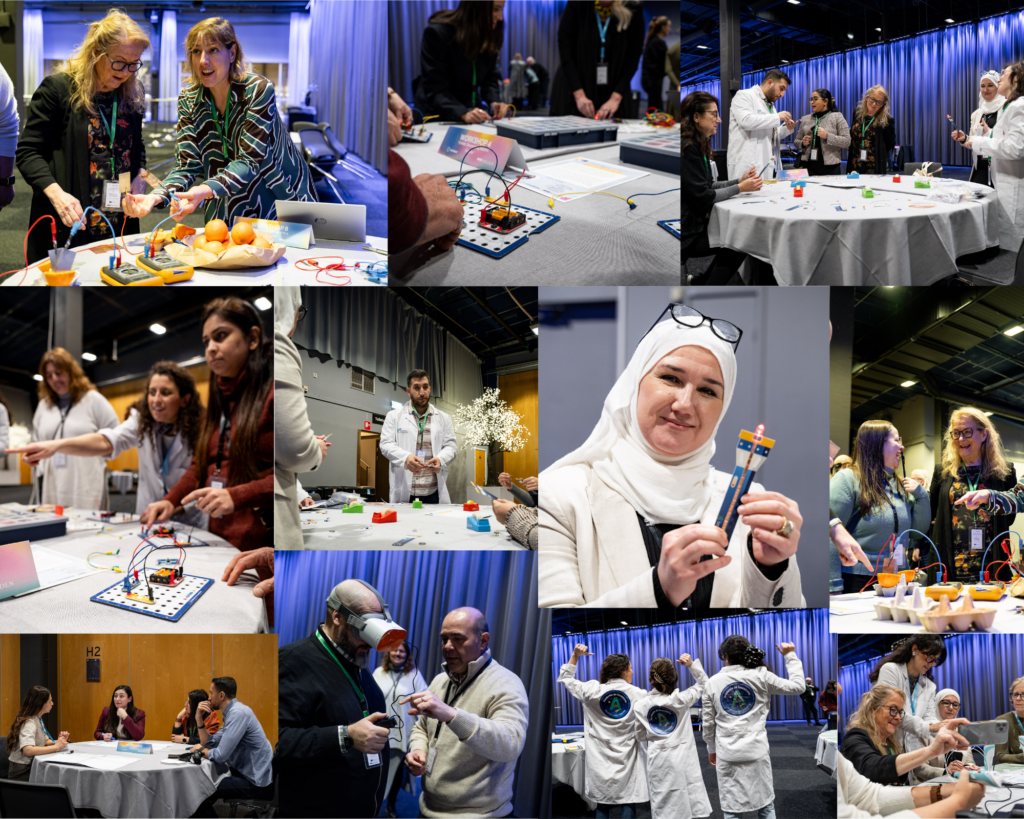
The recent insight from our 1st STEAMbrace Congress in Gothenburg were more than just a meeting of minds—what we got was a dynamic space where creativity, innovation, and collaboration flourished. Over the course of the event, participants had the unique opportunity to engage with a variety of hands-on workshops that showcased the cutting-edge methodologies and educational tools being developed through the STEAMbrace project. This Congress was a key milestone, reflecting the project’s ambition to redefine how science, technology, engineering, arts, and mathematics (STEAM) are taught and experienced in educational environments. A Collaborative Learning Space From the moment attendees stepped into the workshop areas, there was a palpable sense of excitement. Participants from diverse backgrounds—educators, researchers, and project partners—gathered around round tables, where they were invited to explore, experiment, and reflect on the potential of STEAM education. The goal was not only to present innovative learning tools but also to test, refine, and expand upon them through real-time interaction and feedback. This participatory model aligns with STEAMbrace’s core philosophy: to bridge the gap between theory and practice by engaging learners in activities that encourage curiosity, critical thinking, and creative problem-solving. Each workshop offered a hands-on, experimental environment where abstract scientific principles were transformed into tangible and interactive experiences. One of the standout aspects of the Congress was the diversity of workshops, which demonstrated how STEAM education can be both accessible and engaging for students aged 11 to 18. Activities ranged from exploring renewable energy using natural materials to immersive digital experiences that showcased the power of virtual reality. Each session reflected a commitment to fostering inclusivity and interdisciplinary collaboration, key pillars of the STEAMbrace initiative. Testing and Co-Creating Future STEAM Tools A central objective of the Congress was to provide a platform for testing some of the educational tools that STEAMbrace is developing while also showcasing activities already implemented in schools. These workshops were not just demonstrations—they were collaborative experiments where participants could engage deeply with the materials, offer feedback, and discuss ways to improve and scale these methodologies across different educational contexts. For instance, the Citrus Sparks workshop demonstrated how simple, everyday materials could become powerful learning tools. Participants built batteries using orange juice as a natural electrolyte, which not only made abstract chemical concepts more tangible but also highlighted the practical potential of sustainable energy sources. This type of hands-on learning encourages both scientific inquiry and environmental awareness, key aspects of modern STEAM education. Similarly, the VR Creation workshop invited participants to dive into the world of virtual reality, guiding them through the process of designing and experiencing their own immersive environments. This activity showcased how emerging technologies can enhance learning by providing students with experiential and interactive access to complex ideas. It also demonstrated how digital tools could foster creativity while reinforcing technical skills essential for the future. The Magic Lanterns and 3D Pencils workshops provided another layer of exploration, blending art and technology. These sessions emphasized the A in STEAM, illustrating how creative expression can enhance technical learning and provide new avenues for innovation. By encouraging participants to design illuminated models and create 3D structures, these workshops bridged the gap between imagination and engineering, showing how creative design processes can empower young learners to explore scientific concepts from new angles. Addressing Key Challenges: Gender and Inclusion in STEAM Beyond the hands-on technical workshops, the World Café session created a meaningful space for dialogue about gender equity and inclusion in STEAM fields. Facilitated by Aylar Hassanpouraghdam, this discussion invited participants to reflect on how to break down barriers for underrepresented groups, particularly girls and young women. Conversations focused on identifying structural challenges, sharing best practices, and developing actionable strategies to create more inclusive educational spaces. This session aligned with one of STEAMbrace’s most important goals: to bridge the gender gap in science and technology. By fostering these discussions during the Congress, the project aims to inspire collective action and to empower future generations of women to pursue and thrive in STEAM fields. Building a Vision for the Future Throughout the Congress, a recurring theme emerged: this is only the beginning. As Anca Dumitrescu, Chairman of the Board at WiTEC Sweden, expressed during her address, the event marked a first step toward a larger vision for the future of STEAM education. With the collaborative energy witnessed in Gothenburg, there is clear optimism that the impact of STEAMbrace will extend far beyond these workshops and into classrooms across Europe. The workshops were not isolated activities—they were building blocks for a more integrated and innovative educational ecosystem. By co-creating with educators and stakeholders, the STEAMbrace project is laying the foundation for scalable methodologies that can be adopted and adapted in diverse educational contexts. According to Juancho Pons, STEAMbrace Coordinator and Project Manager at Edelvives, the Congress was a tangible demonstration of the project’s guiding principles: “In this consortium, we have embraced the core values of STEAM—collaboration, creativity, critical thinking, and diversity—and these values are what will drive us forward. What we began here in Gothenburg will help shape the future of how STEAM education is delivered across Europe.” Looking Ahead As the Congress concluded, there was a shared sense of momentum and commitment. The insights gathered from these workshops will inform the next phases of the project, ensuring that the tools and methodologies developed reflect real-world needs and educational priorities. Over the next three years, STEAMbrace will continue to develop, test, and refine these approaches, always with the goal of making STEAM education more inclusive, accessible, and impactful. The STEAMbrace Congress in Gothenburg was not just a meeting—it was a living laboratory for innovation, a collaborative space where participants came together to imagine, create, and shape the future. As the project moves forward, the energy and ideas generated during these days will continue to drive the mission to transform STEAM education across Europe. Original article written by Filipa Magalhaes.