

Arts in STEAM: More than Creativity, Inclusion and Learning
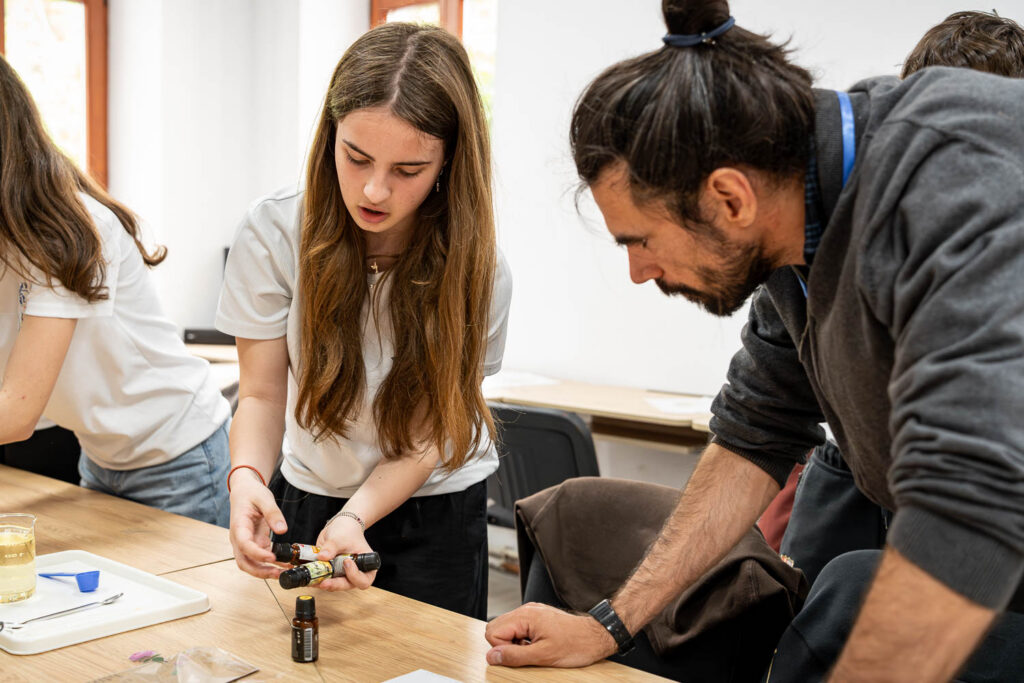
The role of Arts in STEAM is often misunderstood as a creative complement to science, technology, engineering and mathematics. However, within STEAMbrace, the “A” represents much more than decoration: it brings expression, storytelling, design, culture and communication into the learning process. From artistic performances at STEAM Congress 2026 to story-based learning and classroom activities, the project shows how the Arts can help students connect knowledge with creativity, identity and real-world challenges. Why Arts in STEAM matter for education Across Europe, education systems are being asked to prepare young people for increasingly complex social, technological and environmental challenges. Technical knowledge remains essential, but it is no longer enough on its own. Students also need creativity, communication, collaboration, critical thinking and the ability to approach problems from different perspectives. This is where Arts in STEAM become especially relevant. The European Commission recognises STEAM as an approach that adds the Arts to STEM, helping students connect scientific and technical learning with creativity, innovation and more holistic problem-solving. For STEAMbrace, this perspective is central. The project works with young learners, teachers, schools and European partners to make STEAM education more inclusive, engaging and connected to the way students actually experience the world. By integrating the Arts, STEAM education can become more accessible to students who may not immediately identify with traditional science or technology pathways. The “A” also helps bring human meaning into technical learning. A scientific concept can be explored through a model, a story, a performance, a visual representation, a design challenge or a collaborative activity. These approaches do not reduce academic value; they expand the ways in which students can understand, express and apply knowledge. Arts in STEAM beyond decoration One of the main risks when discussing Arts in STEAM is treating the Arts as a superficial layer added at the end of a STEM activity. In this limited view, art becomes something used to make science “look nicer” rather than something that shapes how students think, communicate and solve problems. A stronger approach understands the Arts as part of the learning process itself. The Arts can support design thinking, storytelling, visualisation, communication, cultural awareness and creative problem-solving. They can help students ask better questions, imagine alternatives and explain complex ideas in ways that are understandable and meaningful to others. This broader understanding is also reflected in the work of the Joint Research Centre, which highlights how integrated STEM, STEAM and STE(A)M approaches focus on disciplinary integration and help develop adaptability, creativity and problem-solving skills. In practice, this means that the “A” can appear in many different forms. It may involve storytelling to explain a scientific process, design to prototype a solution, music or performance to express cultural knowledge, visual thinking to represent data, or creative communication to present a project. What matters is not whether the final product looks artistic, but whether the Arts help students understand, connect and participate more deeply. For this reason, Arts in STEAM should not be seen as an optional extra. They are part of a more complete way of learning, where students are encouraged to combine evidence with imagination, technical knowledge with empathy, and individual creativity with collaborative thinking. What the “A” looks like in STEAMbrace activities STEAMbrace has explored the value of the Arts through several project activities and communication moments. During STEAM Congress 2026 in Râmnicu Vâlcea, the artistic performance delivered by students from Liceul de Arte brought Romanian musical tradition and local culture into a European event dedicated to education, innovation and collaboration. This moment showed that the Arts can connect learning with identity, emotion and cultural dialogue. The Congress also included the session “STEAMtastic – The Magic of Science in Story-Based Learning”, which focused on how storytelling can be integrated into STEAM lessons. Story-based learning can help students connect abstract concepts with meaningful experiences, making scientific ideas easier to understand and remember. Other STEAMbrace activities have also shown how creativity can support classroom learning. Practical lessons, student-led activities, contests and workshops encourage young people to build, test, present and explain their ideas. In these contexts, the Arts support more than expression: they help students structure their thinking, communicate solutions and engage with real-world problems. This practical dimension is especially important for teachers. The European School Education Platform highlights the need for multidisciplinary learning activities and the acquisition of 21st-century skills through STEAM education. In the classroom, Arts in STEAM can therefore become a bridge between subjects, between students and teachers, and between knowledge and application. A STEAM activity does not need to separate science from creativity. Instead, it can invite students to use creativity as a way to investigate, design, communicate and reflect. Arts in STEAM, inclusion and student engagement The connection between Arts in STEAM and inclusion is particularly important for STEAMbrace. The project aims to help reduce gender gaps in STEM by making STEAM education more inclusive, creative and accessible for young people, especially girls who may not always see themselves represented in scientific or technological fields. The European Commission has highlighted the importance of increasing the number of women studying, working and doing business in digital and STEM fields, while improving female inclusion in the digital economy. Arts-based and creative approaches can contribute to this objective by opening more entry points into STEAM learning. When students are invited to use storytelling, design, visual thinking, communication or cultural references, they may find new ways to connect with subjects that can otherwise feel distant or overly technical. This does not mean lowering expectations or simplifying science. It means recognising that students learn in different ways and that participation grows when learning environments value multiple forms of intelligence, creativity and expression. A student who is unsure about coding may become interested through digital storytelling. Another may connect with engineering through design. Another may understand sustainability through a creative challenge linked to everyday life. In this sense, Arts in STEAM can help challenge stereotypes about who belongs in science and technology. They show that STEAM fields are not only for
LLMs in education: from crutches to jumping pole

You see students using ChatGPT to finish tasks fast. Professors and teachers rant about the rate of pupils using large language models (LLMs) to turn in an essay. Maybe even you have asked an artificial intelligence (AI) for help in a task you were supposed to do yourself. LLMs in education are here to stay. Regardless of how we feel about it, they are available everywhere. But right now, that is not a good thing. Having an educational model set up without LLMs only benefits those who can use AIs like ChatGPT as a shortcut to do less work. And yet, we face the chance to use those very AIs to improve education instead. How to turn crutches into jumping poles We should not pretend that the task ahead is easy. When slides were invented, shifting from blackboards and books to presentations took time. In fact, these tools remain in the classroom, and that is well. The same happened with Google and the internet. Information at the student’s fingertips made it so schools and universities had to adapt. And while it is still a work in progress, these technologies have been adopted. The same is happening with AI and LLMs. For example, Estonia is already investing in plans to equip the classroom with these tools. And the European Union (EU) is forming teachers in the use of AI for education in STEM. And yet, technological advancements can increase disparity in the classroom. AI as an opportunity to bridge educational gaps When it comes to STEAM education (Science, Technology, Engineering, the Arts, and Mathematics), there are still gaps and barriers for many students. First, we have a socio-economic barrier. Students with less means are at a clear disadvantage in the current education system. Then, students in rural areas may have to move or commute for studies, resulting in economic difficulties and less support. They also may have fewer resources, especially technological ones. And there is still a gender gap in STEAM. Women are fewer than men in many areas, especially in decision-making roles. With the introduction of AI in the classroom, we can increase these differences if we are not careful. But AI can also let us promote a more equal, balanced, and empowering education system. This is exactly what STEAMbrace stands for and aims to do. Promoting a fairer education system STEAMbrace is pushing to create the STEAM Alliance for Europe. This is a European-wide collaboration. It involves educators, policymakers, cultural and creative industries, civil organizations and research organizations. The aim? To build on previous European initiatives and use creative approaches to make STEAM mainstream and accessible for everyone. The main focus is on the gender gap, reducing socio-economic barriers, and boosting rural education to reduce disparity. AI in the classroom to reduce disparities. LLMs are often trained on public data. If the data itself is skewed, the LLMs show prejudice. This is already happening, for example, they show a gender bias. We need to do a better job if we want to promote gender equality. This means providing students with unbiased LLMs they can trust. The use of AI and LLMs also requires an internet connection, and paying means you get access to a better version of, for example, ChatGPT. This poses an issue for rural students with slower internet access, if any. It also benefits members of higher socioeconomic layers. To reduce these disparities, we must provide students with the right tools and opportunities, both in the classroom and beyond. LLM-conscious teachers and students To achieve this, we must push for LLM-conscious teachers and students. But it takes a village. We need the effort of many other groups. Researchers, to identify possible gaps and the best educational practices. Policymakers and administrators, to give the teachers the needed training and tools. And educators, to provide students with the knowledge to use AI and LLMs responsibly. Critical thinking is also key to interpreting the results of AI use. Conclusion STEAMbrace pushes for the formation of an EU alliance that can tackle current educational issues. These include the gender gap, socio-economical differences and rural disparities. AI can contribute to deepening these issues or to remedy them if used properly. The STEAM Alliance for Europe can be used to make sure that LLMs and AI are implemented in the classroom with the right mindset. By informing the participants involved about the potential issues that may come from using LLMs, we can be ready to use them more safely and reduce disparities.
Insights from our 1st STEAMbrace Congress
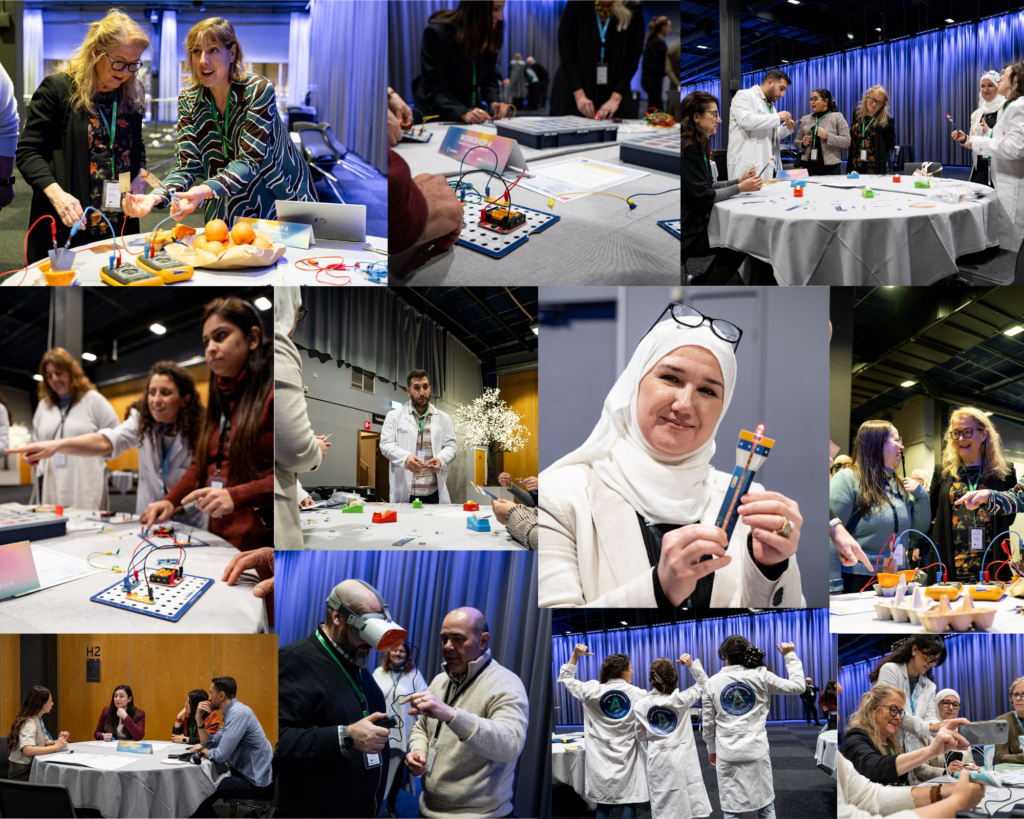
The recent insight from our 1st STEAMbrace Congress in Gothenburg were more than just a meeting of minds—what we got was a dynamic space where creativity, innovation, and collaboration flourished. Over the course of the event, participants had the unique opportunity to engage with a variety of hands-on workshops that showcased the cutting-edge methodologies and educational tools being developed through the STEAMbrace project. This Congress was a key milestone, reflecting the project’s ambition to redefine how science, technology, engineering, arts, and mathematics (STEAM) are taught and experienced in educational environments. A Collaborative Learning Space From the moment attendees stepped into the workshop areas, there was a palpable sense of excitement. Participants from diverse backgrounds—educators, researchers, and project partners—gathered around round tables, where they were invited to explore, experiment, and reflect on the potential of STEAM education. The goal was not only to present innovative learning tools but also to test, refine, and expand upon them through real-time interaction and feedback. This participatory model aligns with STEAMbrace’s core philosophy: to bridge the gap between theory and practice by engaging learners in activities that encourage curiosity, critical thinking, and creative problem-solving. Each workshop offered a hands-on, experimental environment where abstract scientific principles were transformed into tangible and interactive experiences. One of the standout aspects of the Congress was the diversity of workshops, which demonstrated how STEAM education can be both accessible and engaging for students aged 11 to 18. Activities ranged from exploring renewable energy using natural materials to immersive digital experiences that showcased the power of virtual reality. Each session reflected a commitment to fostering inclusivity and interdisciplinary collaboration, key pillars of the STEAMbrace initiative. Testing and Co-Creating Future STEAM Tools A central objective of the Congress was to provide a platform for testing some of the educational tools that STEAMbrace is developing while also showcasing activities already implemented in schools. These workshops were not just demonstrations—they were collaborative experiments where participants could engage deeply with the materials, offer feedback, and discuss ways to improve and scale these methodologies across different educational contexts. For instance, the Citrus Sparks workshop demonstrated how simple, everyday materials could become powerful learning tools. Participants built batteries using orange juice as a natural electrolyte, which not only made abstract chemical concepts more tangible but also highlighted the practical potential of sustainable energy sources. This type of hands-on learning encourages both scientific inquiry and environmental awareness, key aspects of modern STEAM education. Similarly, the VR Creation workshop invited participants to dive into the world of virtual reality, guiding them through the process of designing and experiencing their own immersive environments. This activity showcased how emerging technologies can enhance learning by providing students with experiential and interactive access to complex ideas. It also demonstrated how digital tools could foster creativity while reinforcing technical skills essential for the future. The Magic Lanterns and 3D Pencils workshops provided another layer of exploration, blending art and technology. These sessions emphasized the A in STEAM, illustrating how creative expression can enhance technical learning and provide new avenues for innovation. By encouraging participants to design illuminated models and create 3D structures, these workshops bridged the gap between imagination and engineering, showing how creative design processes can empower young learners to explore scientific concepts from new angles. Addressing Key Challenges: Gender and Inclusion in STEAM Beyond the hands-on technical workshops, the World Café session created a meaningful space for dialogue about gender equity and inclusion in STEAM fields. Facilitated by Aylar Hassanpouraghdam, this discussion invited participants to reflect on how to break down barriers for underrepresented groups, particularly girls and young women. Conversations focused on identifying structural challenges, sharing best practices, and developing actionable strategies to create more inclusive educational spaces. This session aligned with one of STEAMbrace’s most important goals: to bridge the gender gap in science and technology. By fostering these discussions during the Congress, the project aims to inspire collective action and to empower future generations of women to pursue and thrive in STEAM fields. Building a Vision for the Future Throughout the Congress, a recurring theme emerged: this is only the beginning. As Anca Dumitrescu, Chairman of the Board at WiTEC Sweden, expressed during her address, the event marked a first step toward a larger vision for the future of STEAM education. With the collaborative energy witnessed in Gothenburg, there is clear optimism that the impact of STEAMbrace will extend far beyond these workshops and into classrooms across Europe. The workshops were not isolated activities—they were building blocks for a more integrated and innovative educational ecosystem. By co-creating with educators and stakeholders, the STEAMbrace project is laying the foundation for scalable methodologies that can be adopted and adapted in diverse educational contexts. According to Juancho Pons, STEAMbrace Coordinator and Project Manager at Edelvives, the Congress was a tangible demonstration of the project’s guiding principles: “In this consortium, we have embraced the core values of STEAM—collaboration, creativity, critical thinking, and diversity—and these values are what will drive us forward. What we began here in Gothenburg will help shape the future of how STEAM education is delivered across Europe.” Looking Ahead As the Congress concluded, there was a shared sense of momentum and commitment. The insights gathered from these workshops will inform the next phases of the project, ensuring that the tools and methodologies developed reflect real-world needs and educational priorities. Over the next three years, STEAMbrace will continue to develop, test, and refine these approaches, always with the goal of making STEAM education more inclusive, accessible, and impactful. The STEAMbrace Congress in Gothenburg was not just a meeting—it was a living laboratory for innovation, a collaborative space where participants came together to imagine, create, and shape the future. As the project moves forward, the energy and ideas generated during these days will continue to drive the mission to transform STEAM education across Europe. Original article written by Filipa Magalhaes.