

The rise of STEAM education: Why Arts matter in STEM
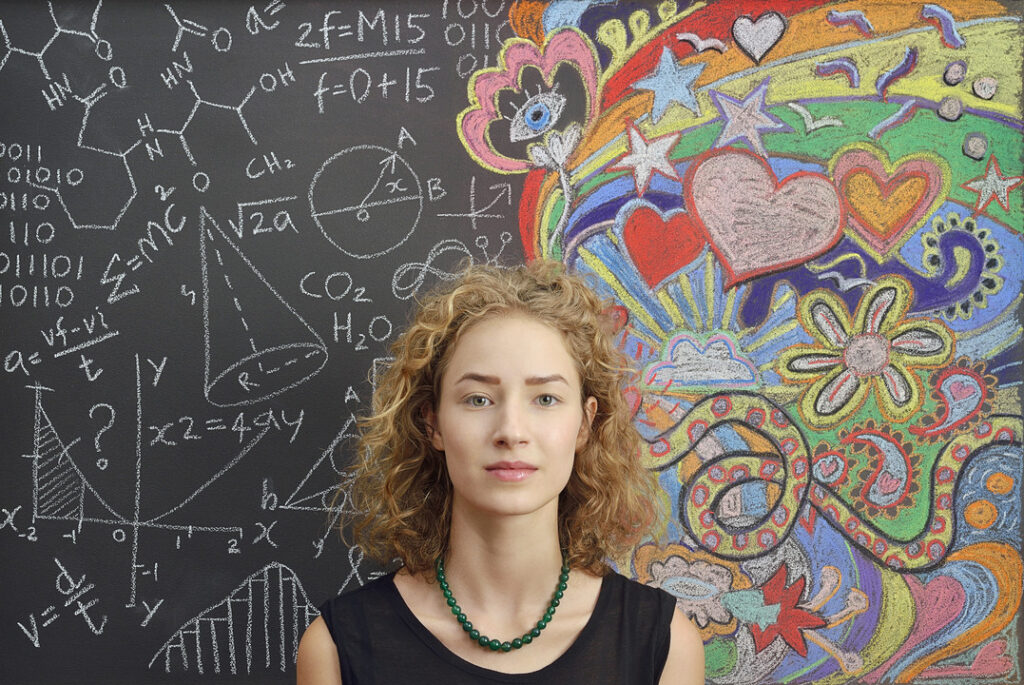
For years, STEM (science, technology, engineering, and mathematics) has been a powerful framework for preparing students to navigate a digital, tech-driven world. But in today’s evolving society, creativity, empathy, and critical thinking are just as vital as coding and calculus. That’s why educators, researchers, and policymakers across Europe are increasingly advocating for STEAM education, a model that integrates the Arts into STEM. By adding the “A” for Arts, STEAM creates space for imagination, diversity of thought, and a more inclusive learning environment. And this shift couldn’t be more timely. What is STEAM education? STEAM education is an interdisciplinary approach that connects artistic and creative thinking with traditional STEM fields. It challenges the outdated notion that science and creativity live in separate worlds. Instead, it recognizes that innovation happens when technical expertise meets design, storytelling, and emotion. Whether it’s using graphic design to communicate climate data, choreographing movements to explain physics concepts, or integrating music into coding exercises, STEAM empowers learners to engage more fully, and more meaningfully, with scientific content. Why the Arts belong in STEM The European Commission’s Horizon Magazine recently highlighted the importance of art inclusion as a way to empower girls in science and close gender gaps in STEM fields. Studies show that when arts are integrated into STEM lessons, girls are more likely to participate, express themselves, and stay engaged. This matters, as many girls report feeling alienated in traditional STEM settings. Moreover, the 2023 STEM Education Report by the European Commission calls for stronger policy efforts and research to support innovative, inclusive, and cross-disciplinary teaching. One clear recommendation: bring the arts into the classroom. STEAM education not only improves student engagement and motivation, but it also helps cultivate the creative problem-solving skills that 21st-century careers demand. How STEAMbrace puts STEAM into action At the heart of this transformation is the Horizon Europe project STEAMbrace, a forward-thinking initiative designed to create inclusive, gender-responsive, and creative learning experiences for students aged 11–18. Through hands-on activities, interdisciplinary challenges, and multilingual resources, STEAMbrace promotes the fusion of scientific knowledge with creative exploration. Here’s how the project brings STEAM to life: Art-infused learning: STEAMbrace pilots encourage students to explore real-world issues using both analytical and creative tools, from designing inclusive infrastructure to training AI through visual storytelling. Gender-sensitive approaches: By integrating the Arts, the project reaches more students (especially more girls) who might otherwise feel disconnected from STEM. Collaborative synergies: STEAMbrace collaborates with projects like STREAM-IT and Road-STEAMer, exchanging strategies to enhance creative pedagogy and boost diversity in education. As one of the project’s key goals, STEAMbrace aims to make STEAM not just a framework, but a mindset, one that welcomes all learners and recognizes multiple intelligences. Results and future outlook In pilot activities across Europe, over 120 students and 9 teachers at II. Primary School Varaždin recently engaged in STEAMbrace workshops that combined science with design, AI, and creative thinking. The feedback has been overwhelmingly positive, highlighting how arts-based activities spark curiosity, increase confidence, and build a sense of belonging in the classroom. Looking ahead, the project is expanding its digital footprint and will soon be launching a TikTok account to reach younger audiences, increasing visibility through creative campaigns, and deepening its collaboration with European partners to influence STEAM policy and practice. Conclusion: STEAM as a pathway to inclusion and innovation Bringing the Arts into STEM isn’t just about adding color to science class. It’s about redefining what it means to learn, to innovate, and to belong. In a world facing complex challenges, our solutions need both logic and imagination. Projects like STEAMbrace demonstrate that STEAM education is more than a trend. It’s a powerful tool for equity, creativity, and change. Let’s keep pushing boundaries, empowering students, and building a future where science and art move forward—together. 👉 Learn more about our work and follow our journey at steambraceproject.eu
Unexplored territory: The future STEAM Careers are here
Half a century ago, people did not expect the internet to revolutionise the world, or sustainability to be at the forefront of Europe. Technological advancement accelerates daily, and the fusion of Science, Technology, Engineering, Arts, and Mathematics (STEAM) creates career pathways that would have seemed like science fiction just a decade ago. At STEAMbrace, we want to highlight some of these emerging opportunities or future STEAM careers, that blend analytical thinking with creative problem-solving. Beyond the Traditional Boundaries The beauty of tomorrow’s future STEAM careers lies in their resistance to traditional categorisation. We are witnessing the birth of professional roles that exist at fascinating intersections – where data meets design, where biology meets computation, where sustainability meets innovation. These are not just modifications of existing jobs; they are entirely new territories waiting to be explored by the curious and the bold. Emerging Frontiers Worth Watching Ethical Technology Architects As AI systems become increasingly integrated into critical decision-making processes, we need professionals who can design technology with ethical considerations at its core. These specialists combine deep technical knowledge with philosophical understanding, ethical guidelines, and creative problem-solving to ensure technology serves humanity’s best interests. Bioinspired Design Engineers Nature has spent billions of years perfecting solutions to the same complex problems we struggle with today. Tomorrow’s engineers are studying butterfly wings to improve solar panels, gecko feet to create new adhesives, and prairie ecosystems to design sustainable cities. This fascinating field requires equal parts biological knowledge, engineering expertise, and artistic vision. Immersive Experience Choreographers As virtual and augmented reality mature, we need professionals who understand both the technical capabilities of these platforms and the nuances of human perception and emotion. These creators orchestrate multisensory experiences that might help medical students practice surgery, allow families to connect across continents, or reimagine how we experience art and entertainment. Climate Restoration Specialists Beyond sustainability, the urgent work of actively restoring our climate will create numerous STEAM careers. Some examples might be designing carbon-capturing architecture, developing regenerative agricultural systems, or creating compelling data visualizations that inspire action. These roles will combine scientific rigour with creative approaches to solve our planet’s greatest challenge. The Skills That Transcend Disciplines What makes professionals of future STEAM careers uniquely valuable is not just their specialised knowledge, it is their ability to transfer skills across domains. The most successful future professionals will cultivate: Adaptive expertise: The ability to apply knowledge in novel situations. Systems thinking: Understanding how complex elements interact. Collaborative creativity: Combining diverse perspectives to generate innovative solutions. Ethical reasoning: Considering the broader implications of technical decisions. Continuous learning: Embracing the perpetual evolution of knowledge. Preparing for an Undefined Future The most exciting aspect of future STEAM careers is that many have not been invented yet, and they likely will surpass our current expectations. Today’s students might pioneer roles as quantum computing artists, bioethical consultants, or digital archaeology specialists. This uncertainty should not be a cause for anxiety but for excitement. By developing a solid foundation in STEAM disciplines while nurturing curiosity and creative thinking, today’s learners position themselves to not just fill tomorrow’s jobs but to create them. The STEAMbrace Advantage At STEAMbrace, we are committed to preparing the next generation for this dynamic future. Our programs emphasise interdisciplinary thinking, creative problem-solving, and the technical foundations that enable innovation across boundaries. The future belongs to those who can bridge disciplines, see connections where others see divisions, approach technical challenges with artistic sensibility, and tackle creative problems with analytical rigour. Other projects are already a part of this movement. Projects like STREAM-IT, STEAM Learning Ecologies, Road-STEAMer, and others, are already functioning along the way to help teenage women be in winning situations and evolve in a world mainly dominated by the gender gap that exists in this line of work. Are you ready to embrace the STEAM-powered future? The unexplored territory awaits.
LLMs in education: from crutches to jumping pole

You see students using ChatGPT to finish tasks fast. Professors and teachers rant about the rate of pupils using large language models (LLMs) to turn in an essay. Maybe even you have asked an artificial intelligence (AI) for help in a task you were supposed to do yourself. LLMs in education are here to stay. Regardless of how we feel about it, they are available everywhere. But right now, that is not a good thing. Having an educational model set up without LLMs only benefits those who can use AIs like ChatGPT as a shortcut to do less work. And yet, we face the chance to use those very AIs to improve education instead. How to turn crutches into jumping poles We should not pretend that the task ahead is easy. When slides were invented, shifting from blackboards and books to presentations took time. In fact, these tools remain in the classroom, and that is well. The same happened with Google and the internet. Information at the student’s fingertips made it so schools and universities had to adapt. And while it is still a work in progress, these technologies have been adopted. The same is happening with AI and LLMs. For example, Estonia is already investing in plans to equip the classroom with these tools. And the European Union (EU) is forming teachers in the use of AI for education in STEM. And yet, technological advancements can increase disparity in the classroom. AI as an opportunity to bridge educational gaps When it comes to STEAM education (Science, Technology, Engineering, the Arts, and Mathematics), there are still gaps and barriers for many students. First, we have a socio-economic barrier. Students with less means are at a clear disadvantage in the current education system. Then, students in rural areas may have to move or commute for studies, resulting in economic difficulties and less support. They also may have fewer resources, especially technological ones. And there is still a gender gap in STEAM. Women are fewer than men in many areas, especially in decision-making roles. With the introduction of AI in the classroom, we can increase these differences if we are not careful. But AI can also let us promote a more equal, balanced, and empowering education system. This is exactly what STEAMbrace stands for and aims to do. Promoting a fairer education system STEAMbrace is pushing to create the STEAM Alliance for Europe. This is a European-wide collaboration. It involves educators, policymakers, cultural and creative industries, civil organizations and research organizations. The aim? To build on previous European initiatives and use creative approaches to make STEAM mainstream and accessible for everyone. The main focus is on the gender gap, reducing socio-economic barriers, and boosting rural education to reduce disparity. AI in the classroom to reduce disparities. LLMs are often trained on public data. If the data itself is skewed, the LLMs show prejudice. This is already happening, for example, they show a gender bias. We need to do a better job if we want to promote gender equality. This means providing students with unbiased LLMs they can trust. The use of AI and LLMs also requires an internet connection, and paying means you get access to a better version of, for example, ChatGPT. This poses an issue for rural students with slower internet access, if any. It also benefits members of higher socioeconomic layers. To reduce these disparities, we must provide students with the right tools and opportunities, both in the classroom and beyond. LLM-conscious teachers and students To achieve this, we must push for LLM-conscious teachers and students. But it takes a village. We need the effort of many other groups. Researchers, to identify possible gaps and the best educational practices. Policymakers and administrators, to give the teachers the needed training and tools. And educators, to provide students with the knowledge to use AI and LLMs responsibly. Critical thinking is also key to interpreting the results of AI use. Conclusion STEAMbrace pushes for the formation of an EU alliance that can tackle current educational issues. These include the gender gap, socio-economical differences and rural disparities. AI can contribute to deepening these issues or to remedy them if used properly. The STEAM Alliance for Europe can be used to make sure that LLMs and AI are implemented in the classroom with the right mindset. By informing the participants involved about the potential issues that may come from using LLMs, we can be ready to use them more safely and reduce disparities.
Creative STEAM Techniques to Bridge the Gender Gap in Education
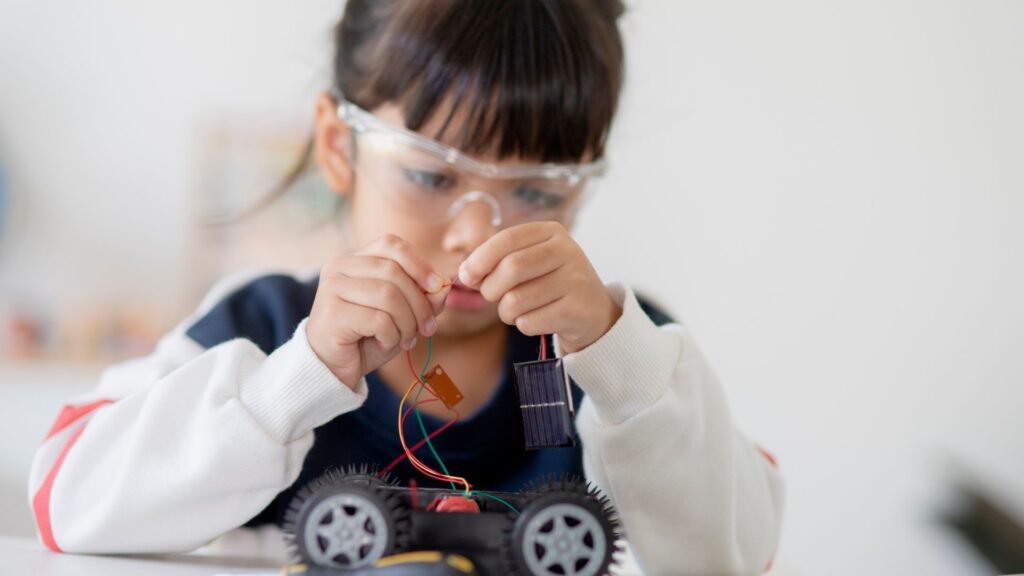
Integrating arts into STEM transforms it into STEAM. This approach combines creativity with analytical skills. Creative STEAM techniques empower diverse learners. They help break gender stereotypes. STEAMbrace supports this vision by promoting innovative methods that foster inclusion and inspire future innovators. As a project, STEAMbrace aims to support partners in implementing these methods effectively. Design Thinking: a catalyst for inclusive innovation Design Thinking is a powerful problem-solving method. It prioritizes empathy, ideation, prototyping, and testing. This technique pushes students to see challenges from many angles. Young learners gain confidence when they create solutions. They build skills that matter. Design Thinking breaks stereotypes by nurturing teamwork and communication. It creates safe, collaborative spaces. It encourages girls to share ideas freely. Moreover, it sparks curiosity as students see ideas evolve. It strengthens decision-making and boosts self-efficacy. STEAMbrace plans to support partners in implementing Design Thinking workshops that guide creative challenges. Educators and mentors will lead interactive sessions. Students will work together to design solutions that bridge gender lines. This process aims to build a welcoming environment for young women in STEAM. Project-Based Learning with an arts focus: making learning tangible Project-Based Learning (PBL) integrates multiple disciplines. It engages students in real-world projects. When teachers add an arts focus, projects become expressive and innovative. Students tackle challenges using both creativity and technical skills. PBL makes abstract theories easier to understand and more relevant. It shows young women that art and science blend well. STEAMbrace supports this model by encouraging educators to add artistic elements to lessons. For instance, students might create visual data stories or design prototypes that solve community issues. This structure empowers every student. It invites learners to see STEM as creative and dynamic. Makerspaces and hands-on creative labs: fostering practical innovation Makerspaces offer hands-on environments for experimenting with digital tools and materials. In these labs, students build, tinker, and innovate. They develop technical skills while nurturing their artistic sides. Such spaces also promote team projects and open collaboration. Hands-on projects reduce intimidation and make technology accessible—especially for young women. STEAMbrace aims to support partners in establishing makerspace events. Educators will hold creative labs that mix art with technical challenges. Workshops will let students design interactive models, robotics projects, and artistic digital installations. This approach emphasizes that technology and art work together. Educators anticipate increased engagement from students who once felt left out of pure STEM curricula. The long-term impact of creative STEAM techniques Integrating creative techniques in STEAM has lasting benefits. It prepares students for emerging careers that need both technical expertise and creative problem-solving. Careers in digital media, UX design, product development, and sustainable engineering thrive on this blend. When learners take on creative challenges, they develop versatile skills. They also cultivate an innovative mindset that drives groundbreaking ideas. The fusion of art and science addresses complex societal challenges. Moreover, creative STEAM methods create an environment where every student can excel. This inclusion is crucial for young women to find a place in technical fields. STEAMbrace supports these approaches by encouraging interdisciplinary strategies. The project aims to build bridges among educators, students, and industry experts. By promoting Design Thinking, PBL with an arts focus, and makerspaces, STEAMbrace seeks to contribute to a stronger, more inclusive educational landscape. Conclusion Employing creative STEAM techniques in education is vital for bridging the gender gap and nurturing future talent. Methods like Design Thinking, Project-Based Learning with an arts focus, and Makerspaces empower students to overcome stereotypes and build innovative solutions. STEAMbrace exemplifies this vision by supporting the integration of these approaches into educational practices. As educators adopt these methods, they prepare a diverse generation to tackle real-world challenges and build a brighter, more inclusive future.
Sustainable STEAM education: impact on STEAMbrace’s future
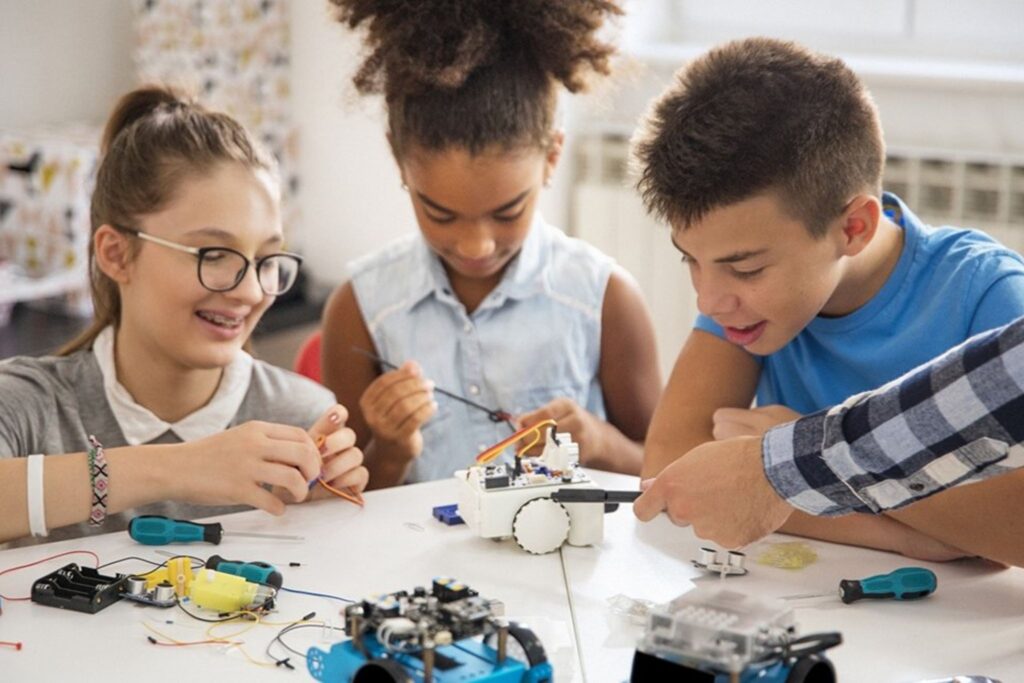
We are on the constant push for change in education. Our focus lies in sustainable STEAM education. We aim to close the gender gap in STEM. We integrate arts with science, technology, engineering, and math. We empower learners to create eco-friendly solutions. Our mission drives us to build bridges among diverse experts. With sustainable STEAM education, we prepare future innovators to tackle environmental challenges. Our new STEAMbrace HQ in Zaragoza reinforces our vision. It serves as a central hub for collaboration and growth. The Power of Sustainable STEAM Education Our approach changes lives. We prepare teachers to use active methods every day. Students engage in hands-on experiments. They build models and test ideas. They learn to solve real problems with clear purpose. This method inspires confidence in young minds. It also sparks curiosity about nature. In our classrooms, learners work on renewable energy projects. They design eco-friendly systems. Moreover, this approach teaches ethical skills. It prepares them for green careers. Our focus on sustainable STEAM education brings real change to education. It makes learning engaging and practical. Shaping Projects through Creative Collaboration At STEAMbrace, we drive innovation in every workshop. We exchange ideas and develop new strategies. We plan training sessions and build digital resource hubs. Our partners include experts from many fields. They bring creative techniques to our table. They use evidence-based methods to shape projects. Our innovative projects exemplify sustainable STEAM education in action. We design methods that work in real life. We ensure every activity is practical and inspiring. Collaboration remains at the heart of our approach. Building a better and more inclusive future We believe in a greener future. Our vision centers on sustainability as a core value. We promote eco-friendly practices in every lesson. We promote sustainable STEAM education practices in every lesson. Students explore green technology and sustainable design. Teachers introduce interactive labs and digital tools. They run experiments that use real data. Learners develop a deep respect for the environment. They learn to balance innovation with nature. Moreover, our methods foster responsibility. We encourage every participant to think globally. Our vision creates lasting community impact. We build strong networks and share best practices. This work opens new career paths. It drives a culture of eco-friendly creativity and collaboration. Furthermore, our work fosters innovation. We support research that improves green practices. We share our findings with partners and communities. We encourage educators to adopt these methods. This shared effort builds a robust network. It ensures that eco-friendly ideas spread quickly. We believe small actions lead to big impacts. Our community grows stronger with every new idea. Conclusion In conclusion, our journey relies on STEAM and sustainability. Our approach transforms learning and inspires innovative solutions. We empower students and teachers to face real-world challenges. Our new headquarters in Zaragoza acts as a beacon for progress. Our project stands as proof that education can change the world. We drive change by combining creative methods with ethical practices. We embrace STEAM and sustainability to build a brighter, inclusive future. Join us as we continue to explore new ideas and methods. Together, we create a greener and more innovative tomorrow. We firmly believe that embracing sustainable STEAM education will shape a better world.
VR/AR in STEAM Education: The STEAMbrace Connection

Immersive technologies are rapidly reshaping modern education. In this article, we explore how VR/AR in STEAM is transforming learning experiences, increasing engagement, and fostering inclusivity—especially in areas where the gender gap remains a challenge. By examining key aspects of VR/AR applications and understanding the support provided by the STEAMbrace project, readers will gain insights into how these innovative tools are making complex STEM concepts more accessible. VR/AR in STEAM: A Catalyst for Innovation Immersive technologies such as virtual reality (VR) and augmented reality (AR) are revolutionizing the way students interact with educational content. VR/AR in STEAM empowers learners to experience abstract scientific and mathematical concepts in a tangible, interactive manner. For instance, virtual labs and AR-driven simulations enable students to experiment with theoretical constructs in safe and controlled environments. Furthermore, these immersive experiences spark curiosity and promote creative problem-solving—an essential skill for thriving in today’s technology-driven world. This shift towards experiential learning not only enhances academic performance but also prepares students for real-world challenges. Empowering Diverse Learners Through Immersive Experiences One of the key benefits of integrating immersive technologies in education is their ability to engage a wide range of learners. VR/AR in STEAM turns traditional, passive learning into an active experience. By immersing students in dynamic, simulated environments, these tools cater to various learning styles—visual, auditory, and kinesthetic. As a result, learners from different backgrounds and with diverse abilities can grasp challenging concepts more effectively. The interactive nature of VR and AR also increases student motivation and participation, which is critical for nurturing interest in STEM fields. Ultimately, the use of these technologies contributes to a more inclusive educational landscape where every student has the opportunity to excel. STEAMbrace’s Support for VR/AR Initiatives in STEAM Education While STEAMbrace is not the sole actor implementing VR and AR, it plays a significant role in supporting the integration of VR/AR in STEAM education. The STEAMbrace project advocates for innovative teaching methodologies by providing a robust support network for institutions and educators looking to incorporate immersive technologies into their curricula. By organizing events like STEAM week and creating a digital hub for sharing best practices, STEAMbrace helps disseminate successful case studies and resources that can inspire educators to adopt VR/AR tools. In addition, its commitment to bridging the gender gap in STEM fields underscores the importance of creating learning environments that are both innovative and inclusive.
Zaragoza to Host STEAMbrace Project Headquarters, Empowering STEAM Education Across Europe
Zaragoza has been selected as the central hub for the European STEAMbrace project headquarters, an initiative led by Edelvives that aims to transform education through science, technology, engineering, arts, and mathematics. The alliance, supported by the European Commission, will allocate €2.9 million to enhance learning for students aged 11 to 18. The STEAMbrace project headquarters will serve as much more than just a home for the project. It will be a place to gather with students and teachers, share information, pass knowledge through STEAM lessons, and become the first stone of many to come for the long journey ahead. Inspiring words from Pepa Martínez Pérez During the event, physicist Pepa Martínez Pérez, a CSIC Researcher at the Institute of Nanoscience and Materials of Aragón (INMA-CSIC, University of Zaragoza), shared her research experience: “You don’t suddenly start researching light-matter interaction and its potential applications in quantum technologies. To get where I am, I completed a PhD at the University of Zaragoza in 2006 and spent several years researching outside Spain, until in 2017 I secured my position at ARAID. I have also been a CSIC researcher for six years and, since 2021, part of the European Research Council.” Public-private collaboration to drive innovation Carlos Gimeno, Councillor for Economy, Digital Transformation, and Transparency of Zaragoza City Council, emphasized: “The projects we spoke about not long ago are now a reality. This office is already open, and when someone in Europe wants to find a reference for working with the STEAM methodology, they will come to the office we are now launching. This is our commitment to young people: to provide them with the best tools to face their personal and professional futures.” Tomasa Hernández, Councillor for Education, Culture, and Sports of the Government of Aragón, highlighted the importance of public-private collaboration for “boosting educational innovation and technology education.” STEAMbrace: leading the way in STEAM education in Europe Alejandro Cebrián, Managing Director of Edelvives Spain, emphasized the significance of the agreement with Zaragoza City Council: “The agreement between the municipality and our publishing group is a great example of public-private collaboration to strengthen education. At Edelvives, we have been making STEAM education a reality in classrooms for over a decade, and now, through the STEAMbrace project headquarters, we will lead STEAM education in Europe from Zaragoza, from Etopia. STEAM skills permeate everything and are not just related to technological or scientific employability. They are about acquiring the competencies every student needs to adapt to the constantly changing world, doing whatever you want in any sector, field, or entrepreneurship. It’s impossible to generate critical thinking and make good decisions if we don’t understand the foundations of the future.” “In English, ’embrace’ means both to embrace and to enthusiastically accept a challenge. Following this definition, in this consortium, we have adopted some of the core pillars of STEAM education (collaboration, creativity, respect, critical thinking, problem-solving, and diversity), making them our guiding principles,” said Juancho Pons, STEAMbrace coordinator and R&D+i project manager at Edelvives, at the inauguration. STEAMbrace project headquarters at Etopia: a hub of innovation STEAMbrace is a European initiative led by Edelvives, designed to promote STEAM education in the EU through a shared digital framework. The project unites partners from five countries to address the gender gap in science and technology, promoting women’s integration into mixed-gender teams. Key actions include studying the state of STEAM education across various countries, piloting projects in schools, and launching the first “STEAM Week for Future Women Innovators.” Additionally, STEAMbrace will provide training for teachers and students, as well as organize European congresses and competitions. The European Commission selected STEAMbrace from over 20 proposals, granting funding to support its implementation in three phases, ultimately aiming to establish it as a leading educational reference across Europe. The STEAMbrace alliance includes nine partners from six European countries: the Academy of Inventors, AIJU (Toy Industry Research Association), WiTEC (European Association for Women in Science, Engineering & Technology), C4G–C4G (Consulting and Training Network), the Portuguese Marist Brothers Congregation, Contáctica, Raise Your Voice Youth Association, the University of Zagreb, and the University of the Basque Country. The STEAMbrace project headquarters will be located in Etopia, a state-of-the-art innovation center in Zaragoza, Spain. Spanning over 16,000 m², Etopia fosters entrepreneurship, develops talent, and inspires innovation. The center hosts congresses, workshops, and events focused on digitalization, entrepreneurship, and technology. With sustainable facilities and flexible spaces, Etopia will be the heart of STEAMbrace operations. Through this, Edelvives strengthens its international leadership in educational innovation, further advancing STEAM education.
Insights from our 1st STEAMbrace Congress
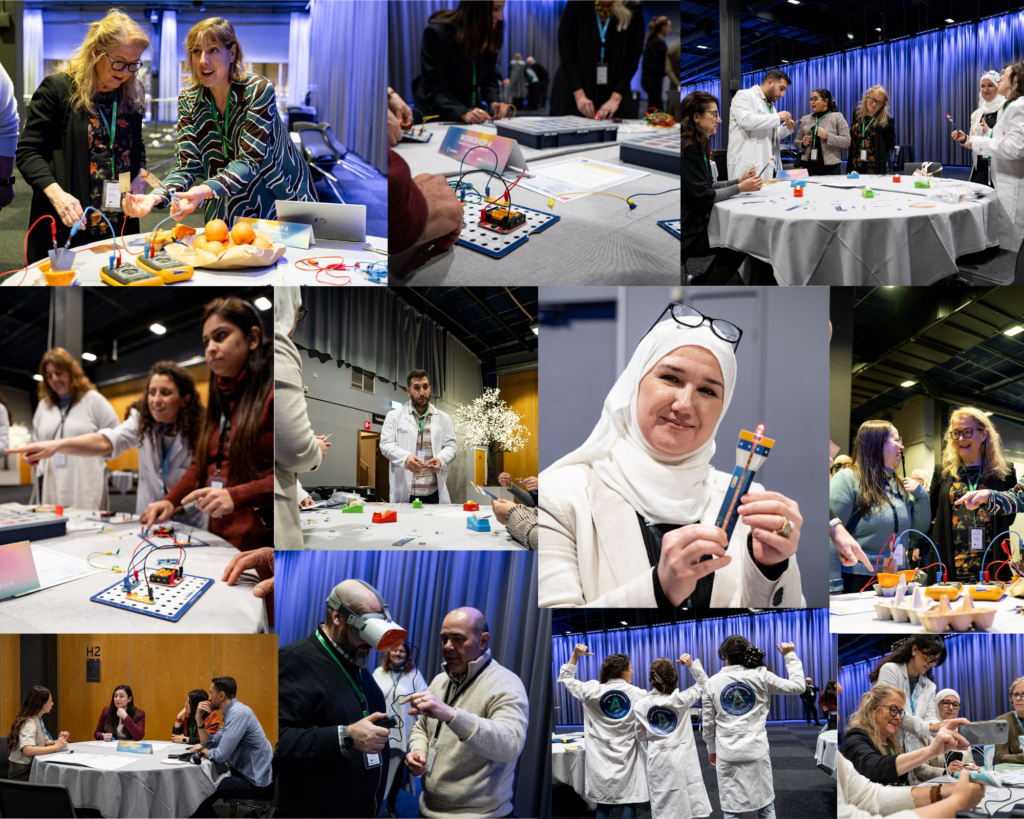
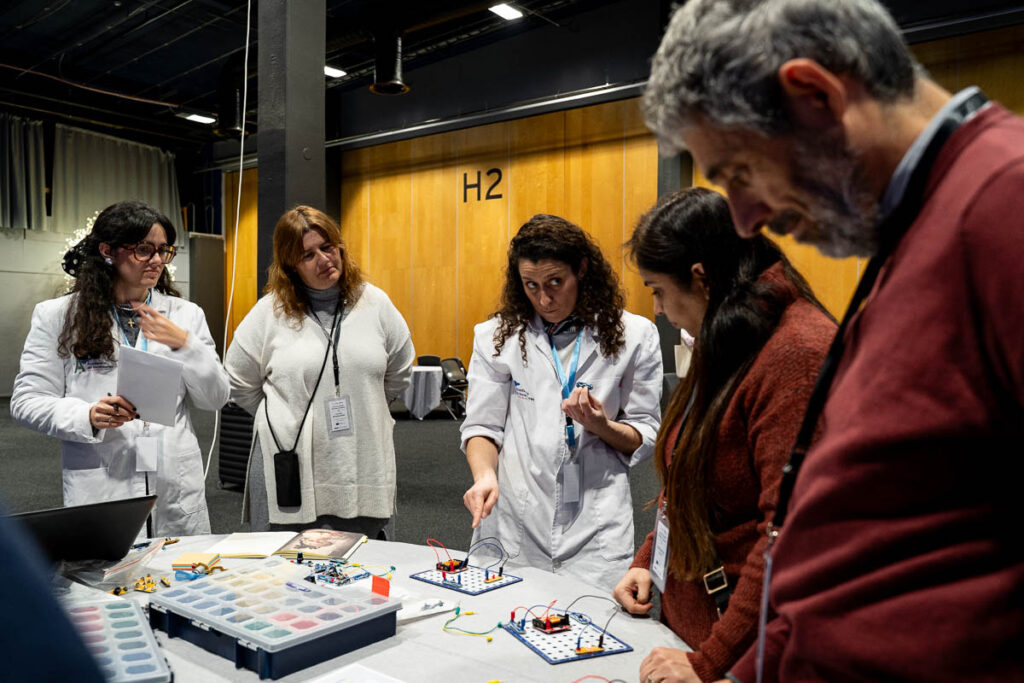
The recent insight from our 1st STEAMbrace Congress in Gothenburg were more than just a meeting of minds—what we got was a dynamic space where creativity, innovation, and collaboration flourished. Over the course of the event, participants had the unique opportunity to engage with a variety of hands-on workshops that showcased the cutting-edge methodologies and educational tools being developed through the STEAMbrace project. This Congress was a key milestone, reflecting the project’s ambition to redefine how science, technology, engineering, arts, and mathematics (STEAM) are taught and experienced in educational environments. A Collaborative Learning Space From the moment attendees stepped into the workshop areas, there was a palpable sense of excitement. Participants from diverse backgrounds—educators, researchers, and project partners—gathered around round tables, where they were invited to explore, experiment, and reflect on the potential of STEAM education. The goal was not only to present innovative learning tools but also to test, refine, and expand upon them through real-time interaction and feedback. This participatory model aligns with STEAMbrace’s core philosophy: to bridge the gap between theory and practice by engaging learners in activities that encourage curiosity, critical thinking, and creative problem-solving. Each workshop offered a hands-on, experimental environment where abstract scientific principles were transformed into tangible and interactive experiences. One of the standout aspects of the Congress was the diversity of workshops, which demonstrated how STEAM education can be both accessible and engaging for students aged 11 to 18. Activities ranged from exploring renewable energy using natural materials to immersive digital experiences that showcased the power of virtual reality. Each session reflected a commitment to fostering inclusivity and interdisciplinary collaboration, key pillars of the STEAMbrace initiative. Testing and Co-Creating Future STEAM Tools A central objective of the Congress was to provide a platform for testing some of the educational tools that STEAMbrace is developing while also showcasing activities already implemented in schools. These workshops were not just demonstrations—they were collaborative experiments where participants could engage deeply with the materials, offer feedback, and discuss ways to improve and scale these methodologies across different educational contexts. For instance, the Citrus Sparks workshop demonstrated how simple, everyday materials could become powerful learning tools. Participants built batteries using orange juice as a natural electrolyte, which not only made abstract chemical concepts more tangible but also highlighted the practical potential of sustainable energy sources. This type of hands-on learning encourages both scientific inquiry and environmental awareness, key aspects of modern STEAM education. Similarly, the VR Creation workshop invited participants to dive into the world of virtual reality, guiding them through the process of designing and experiencing their own immersive environments. This activity showcased how emerging technologies can enhance learning by providing students with experiential and interactive access to complex ideas. It also demonstrated how digital tools could foster creativity while reinforcing technical skills essential for the future. The Magic Lanterns and 3D Pencils workshops provided another layer of exploration, blending art and technology. These sessions emphasized the A in STEAM, illustrating how creative expression can enhance technical learning and provide new avenues for innovation. By encouraging participants to design illuminated models and create 3D structures, these workshops bridged the gap between imagination and engineering, showing how creative design processes can empower young learners to explore scientific concepts from new angles. Addressing Key Challenges: Gender and Inclusion in STEAM Beyond the hands-on technical workshops, the World Café session created a meaningful space for dialogue about gender equity and inclusion in STEAM fields. Facilitated by Aylar Hassanpouraghdam, this discussion invited participants to reflect on how to break down barriers for underrepresented groups, particularly girls and young women. Conversations focused on identifying structural challenges, sharing best practices, and developing actionable strategies to create more inclusive educational spaces. This session aligned with one of STEAMbrace’s most important goals: to bridge the gender gap in science and technology. By fostering these discussions during the Congress, the project aims to inspire collective action and to empower future generations of women to pursue and thrive in STEAM fields. Building a Vision for the Future Throughout the Congress, a recurring theme emerged: this is only the beginning. As Anca Dumitrescu, Chairman of the Board at WiTEC Sweden, expressed during her address, the event marked a first step toward a larger vision for the future of STEAM education. With the collaborative energy witnessed in Gothenburg, there is clear optimism that the impact of STEAMbrace will extend far beyond these workshops and into classrooms across Europe. The workshops were not isolated activities—they were building blocks for a more integrated and innovative educational ecosystem. By co-creating with educators and stakeholders, the STEAMbrace project is laying the foundation for scalable methodologies that can be adopted and adapted in diverse educational contexts. According to Juancho Pons, STEAMbrace Coordinator and Project Manager at Edelvives, the Congress was a tangible demonstration of the project’s guiding principles: “In this consortium, we have embraced the core values of STEAM—collaboration, creativity, critical thinking, and diversity—and these values are what will drive us forward. What we began here in Gothenburg will help shape the future of how STEAM education is delivered across Europe.” Looking Ahead As the Congress concluded, there was a shared sense of momentum and commitment. The insights gathered from these workshops will inform the next phases of the project, ensuring that the tools and methodologies developed reflect real-world needs and educational priorities. Over the next three years, STEAMbrace will continue to develop, test, and refine these approaches, always with the goal of making STEAM education more inclusive, accessible, and impactful. The STEAMbrace Congress in Gothenburg was not just a meeting—it was a living laboratory for innovation, a collaborative space where participants came together to imagine, create, and shape the future. As the project moves forward, the energy and ideas generated during these days will continue to drive the mission to transform STEAM education across Europe. Original article written by Filipa Magalhaes.
The STEAM Journey at the II Scientific Championship of Aragón
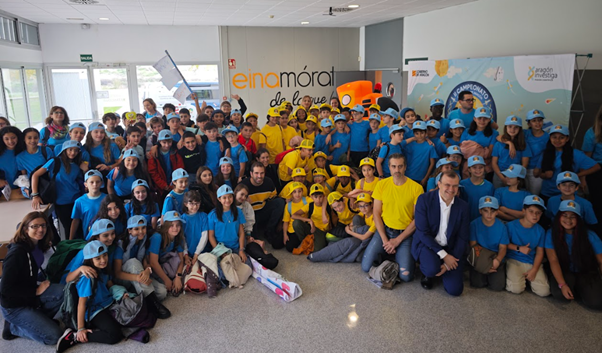
The II Scientific Championship of Aragón is an educational initiative organized by Academia de Inventores, in collaboration with the Government of Aragón, specifically the General Directorate of Science and Research and the General Directorate of Educational Policy. The event aimed to promote Science, Technology, Engineering, Arts, and Mathematics (STEAM) among 5th and 6th-grade students from selected schools across the Aragón region. It provided an exciting platform to test students’ scientific knowledge through interactive activities, thematic questions, and surprise challenges, fostering curiosity and teamwork. Held from November 4 to November 15, 2024, during Science Week, the competition welcomed students from Zaragoza, Huesca, and Teruel. The tournament was divided into five thematic blocks, each focused on a different STEAM category: Natural Sciences Technology Engineering Art and Design Mathematics and Calculations Each participating school sent 25 students, divided into teams of 5 for each block. As a result, each round featured a different team defending their knowledge while others cheered them on from the audience, creating an exciting and supportive atmosphere. Unlike traditional quiz formats, the competition included dynamic and creative challenges. Questions were posed in unexpected ways and related to major scientific advancements, as well as historical figures from Aragón. The challenges tested students’ curiosity, mental agility, and ability to work as a team. The championship was not just a competition—it was an opportunity for students to discover the excitement of science, bond with their classmates, and gain hands-on experience with real-world knowledge. The event was designed to be fun and engaging for all participants. It was an opportunity to learn, bond with classmates, and experience science in a completely new way. The rounds were held in exciting venues like Dinópolis, the Planetarium, CITA, ITA, University Campus of Teruel, University Campus of Huesca, Higher Council for Scientific Research in Aragón (CSIC Aragón), CIBA and School of Engineering and Architecture (EINA) with the semifinals and final taking place in Zaragoza, ensuring a memorable experience for everyone involved. For schools that were unable to participate in person, a virtual game was also made available, allowing students to enjoy similar challenges, explore scientific concepts, and participate in a friendly competition from their classrooms. The game covered diverse STEAM topics, offered accessible content for all students, and provided a great way for even more students to get involved in the fun and learning. The II Scientific Championship of Aragón was a huge success, sparking excitement for science and fostering creativity and collaboration among the region’s students.
Partners meet in Zagreb for the First Annual Meeting of STEAMBRACE
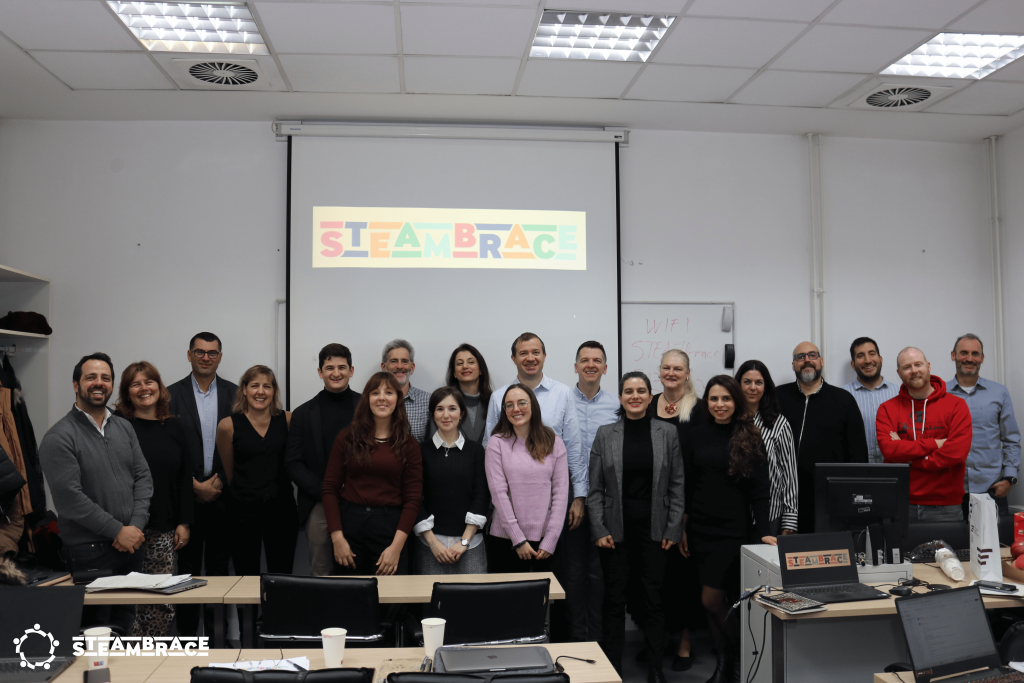
Recently, the STEAMBRACE team traveled to Zagreb, Croatia, to participate in the Firts Annual Meeting, which marks almost the first year of the project’s life, and with which we are approaching a key moment. This gathering brought together all project partners to evaluate achievements, refine strategies, and focus on two transformative events: the creation of a groundbreaking European alliance (STEAM Alliance) and the upcoming congress aimed at reshaping education in science, technology, engineering, arts, and mathematics. A central topic of discussion was precisely the establishment of the STEAM Alliance to connect schools, industries, and cultural organizations. This network is designed to address the persistent gender gap in technical and creative fields by fostering inclusive, diverse participation in education and career opportunities. Our team contributed by sharing insights and strategies to attract new partners to this alliance. The aim is clear: to create a framework where inclusivity, sustainability, and creativity drive progress, inspiring the next generation to innovate without barriers. The meeting also focused on the final preparations for the STEAM Congress scheduled for February in Gothenburg. This event promises to be a gathering of educators, students, researchers, and industry leaders, all sharing a passion for advancing innovation in education. The success of these initiatives depends on collective efforts and shared vision. By fostering partnerships and creating platforms for collaboration, we are working toward an educational ecosystem that empowers everyone to succeed, regardless of background or gender. If you’re interested in learning more about how this project is driving meaningful change in education or want to collaborate with us, we’re always open to a conversation.