


Artificial Intelligence is no longer a distant concept linked only to laboratories, science fiction or advanced research. It is already part of everyday life. AI systems influence how people search for information, communicate, work, create content, access services and make decisions. In education, this transformation is becoming especially relevant, as schools are beginning to explore how AI can support teaching, personalise learning and help students develop the skills they will need for the future.
However, the rise of AI in education also brings an important question: are students learning how to use artificial intelligence critically, ethically and creatively?
Introducing AI tools into the classroom is not enough. If students only learn how to generate quick answers, summarise texts or automate tasks, they risk becoming passive users of technology. The real challenge is to help them understand what AI is, how it works, what its limits are and how it can affect people and society. This is where AI literacy in education becomes essential.
From digital skills to AI literacy
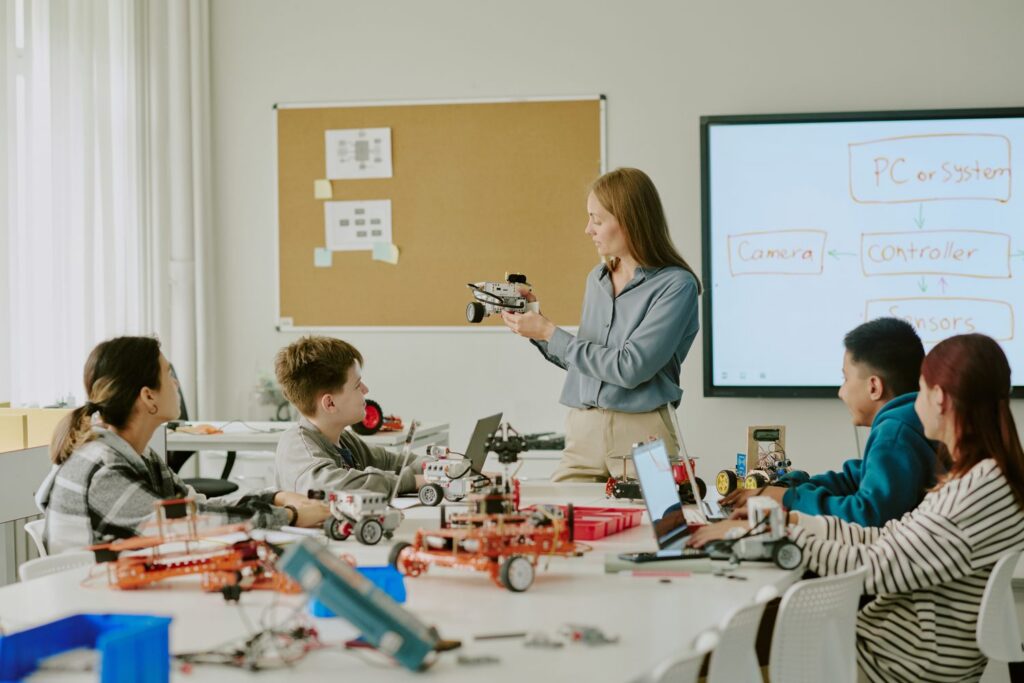
For many years, digital education focused on helping students use computers, online platforms and basic software. These skills remain important, but they are no longer sufficient. Today’s students are growing up in a world where algorithms shape what they see, what they read and sometimes even how opportunities are presented to them.
The World Economic Forum’s Future of Jobs Report 2025 identifies AI and big data, networks and cybersecurity, and technological literacy among the fastest-growing skills for the coming years. At the same time, it highlights the continued importance of human skills such as analytical thinking, resilience, leadership and collaboration.
This means that the future of education should not be reduced to technical training. Students need to understand AI, but they also need to question it. They need to learn how to use digital tools while developing creativity, judgement, empathy and responsibility.
AI literacy means being able to ask questions such as:
- What data was used to train this system?
- Could this tool reproduce bias?
- Who benefits from this technology?
- What should remain a human decision?
- How can AI be used to support learning without replacing critical thinking?
These questions are just as important as knowing how to use the tool itself.
A human-centred approach to AI in education
International organisations have already stressed the need for a careful and human-centred approach to AI in education. UNESCO’s guidance on generative AI in education and research calls for policies that protect data privacy, support human capacity and ensure ethical, safe, equitable and meaningful use of these technologies.
This is particularly important in schools, where students’ data, learning progress and personal development must be protected. AI tools may offer opportunities for personalised learning, accessibility and educational support, but they can also create new risks if they are adopted without safeguards.
UNESCO has also warned that AI and digital technologies affect access, equity, quality and governance in education. Its work on AI and the right to education highlights concerns related to privacy, bias, accountability, digital exclusion and the need to ensure that technology enhances, rather than undermines, education for all learners.
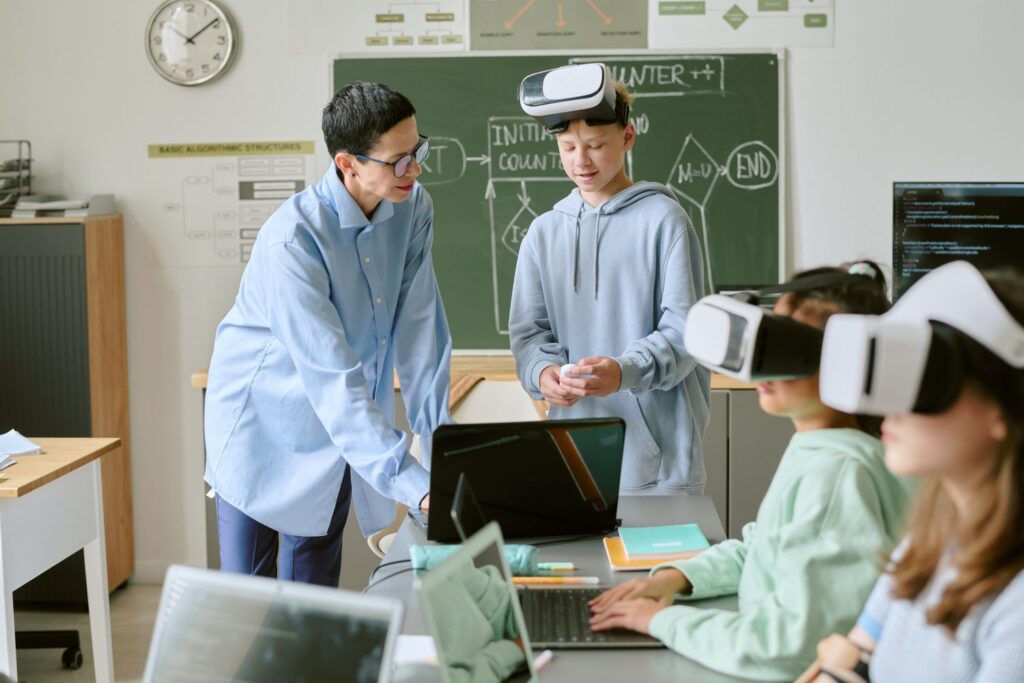
In this context, AI should not be seen as a replacement for teachers. Teachers remain essential because education is not only about information. It is about guidance, trust, motivation, social interaction and human development. AI can support teaching, but it cannot replace the professional judgement and emotional intelligence that educators bring to the classroom.
The European context: AI literacy as a shared responsibility
In Europe, the conversation around AI literacy is also becoming more concrete. The EU Artificial Intelligence Act includes AI literacy obligations, which started to apply on 2 February 2025. Article 4 requires providers and deployers of AI systems to ensure a sufficient level of AI literacy among staff and other people dealing with AI systems on their behalf, taking into account their knowledge, experience, education and the context in which the systems are used.
For schools and education stakeholders, this reinforces an important message: AI literacy cannot be left to chance. Educational communities need practical guidance, teacher training and clear frameworks to decide when, how and why AI should be used.
The European Commission’s ethical guidelines on the use of AI and data in teaching and learning are particularly useful in this regard. They aim to help teachers and educational staff understand and engage in the ethical use of AI and data, while addressing the need for critical AI literacy, legal awareness and responsible classroom practices.
This European approach makes one thing clear: AI in education should not only be about efficiency. It should also support inclusion, transparency, fairness and meaningful learning.

Opportunities and risks in the classroom
AI can offer valuable opportunities for education. It can help teachers prepare materials, adapt activities, provide feedback, support accessibility and make some administrative tasks easier. For students, it can open new ways to explore ideas, practise skills and receive personalised support.
But these benefits come with risks.
One of the most important concerns is data privacy. Educational AI tools may collect sensitive information about students, including learning patterns, performance, behaviour or personal inputs. Without strong safeguards, this data can be misused or exposed.
Another major risk is algorithmic bias. AI systems are trained on data, and data can reflect existing inequalities. If these systems are used to guide learning paths, assess performance or recommend opportunities, biased outputs can have real consequences for students.
There is also the risk of over-reliance. If students use AI only to get fast answers, they may weaken their ability to think independently, solve problems, write, research or reflect. In this sense, AI literacy should help students understand when AI is useful, when it is limited and when human judgement must come first.
Why STEAM is the right framework for AI literacy
AI literacy fits naturally within a STEAM education approach. Science, Technology, Engineering and Mathematics help students understand how AI systems are built, how data works and how technological solutions are developed. But the Arts and humanities add something equally important: creativity, ethics, communication, social awareness and critical reflection.
This combination matters because artificial intelligence is not only a technical issue. It is also a cultural, social and human issue.
Through STEAM, students can explore AI from different angles. They can learn how algorithms work, but also discuss how automated decisions affect people. They can create with AI, but also question originality, authorship and responsibility. They can use digital tools, but also reflect on fairness, inclusion and human values.
This multidisciplinary approach is especially relevant for inclusive education. It allows students with different interests and strengths to engage with AI. Some may be drawn to coding or data. Others may connect through design, storytelling, ethics, communication or problem-solving. By opening different entry points, STEAM can make AI literacy more accessible and meaningful for more learners.

Preparing students to think, not only to use
The goal of AI literacy in education should not be to turn every student into an AI expert. The goal is to prepare young people to live, learn and participate in a society shaped by artificial intelligence.
That means helping them become informed users, critical thinkers and responsible creators. It means teaching them to understand both the potential and the limits of AI. It means giving them the confidence to ask questions, recognise risks and imagine better ways to use technology.
For STEAMbrace, this is closely connected to the broader mission of promoting inclusive, creative and gender-responsive STEAM education. If AI is becoming part of the future of learning and work, then all students — especially girls and young women who remain underrepresented in many STEM fields — should have the opportunity to understand it, question it and help shape it.
AI literacy is not just a digital skill. It is a future skill, a civic skill and a STEAM skill. And the classroom is one of the most important places to begin.